
The Future of MEP Engineering: 5 Technologies to Watch
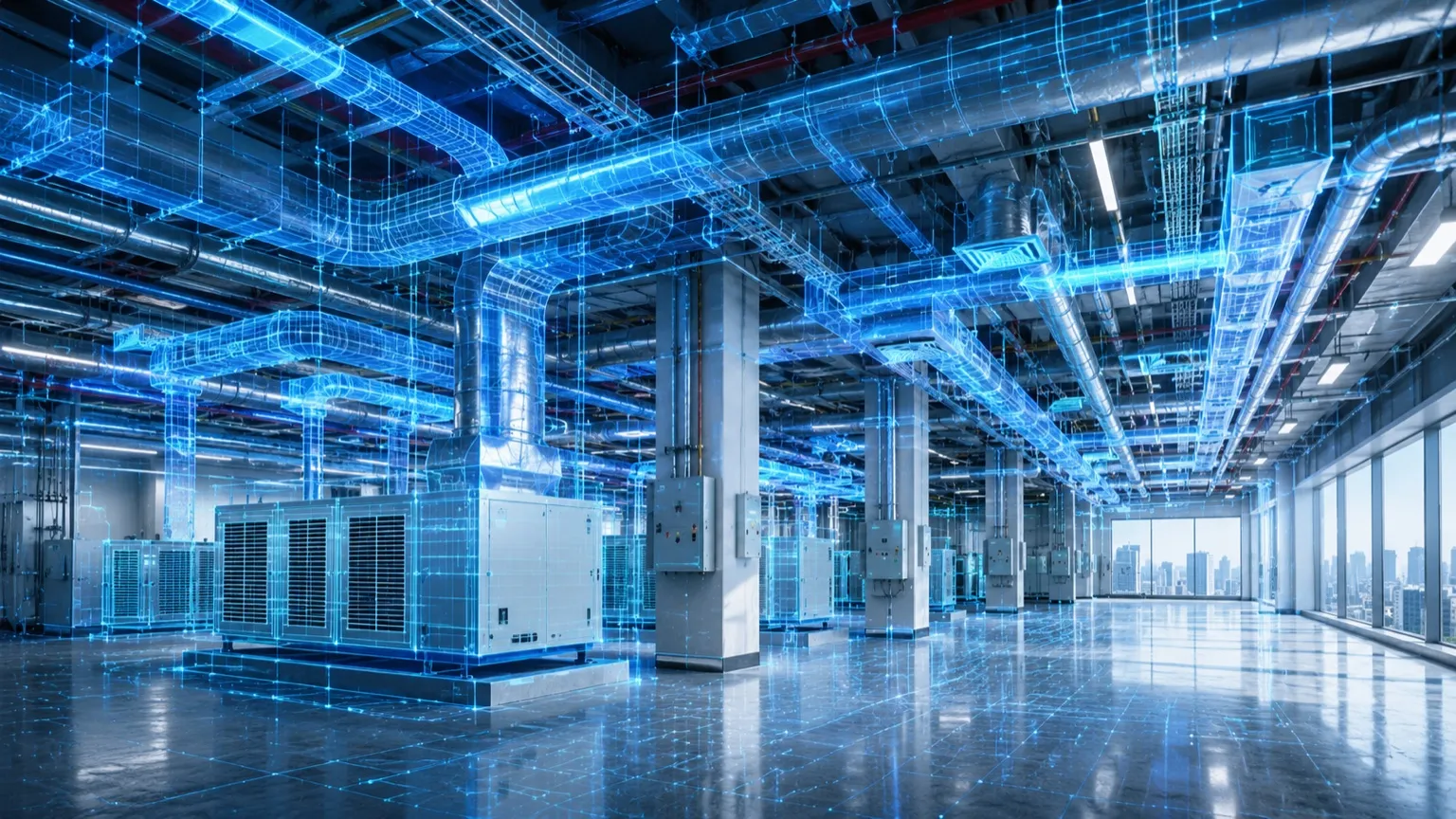
The MEP industry is going through a real transformation. Five technical shifts are changing how we design, build and operate buildings — and the engineers who adopt them now will lead the next decade.
1. AI-powered BIM coordination
Clash detection that once took weeks now happens in real time. AI is catching MEP conflicts before they ever reach the field, cutting rework costs by up to 30%.
2. Digital twin technology
Live-connected building models enable predictive maintenance across HVAC, electrical and plumbing — cutting downtime and extending equipment life long after handover.
3. Modular & prefabricated MEP
Off-site fabrication of MEP assemblies is accelerating timelines by up to 40%, while improving quality control and reducing on-site waste.
4. IoT-enabled building systems
Smart sensors embedded in MEP infrastructure stream real-time performance data, enabling energy optimisation that can cut consumption by 20–35%.
5. Net-zero MEP design
Heat-recovery systems, VRF technology and greywater recycling are becoming standard practice as projects drive toward net-zero performance.
At Secured Engineers Pvt. Ltd., we bring this engineering-first mindset to every MEPF and Solar EPC project. Talk to our team about designing your next building for the long term.
More insights
VRF vs Chiller Plant: Which HVAC System Should You Choose in India?
A direct, India-specific comparison of VRF and chilled-water plants — by capacity, running cost, plant room, payback and the building types each one suits best.
Solar EnergyWhy Most Industrial Solar Underperforms (It Starts on Day 1)
Solar is not a product you buy — it is an engineering outcome. The decisions made before a single panel goes up quietly decide whether your plant saves money or loses it for 25 years.