
What You Specified Is Not What's in Your Wall: The Substitution Scam in Plain Sight
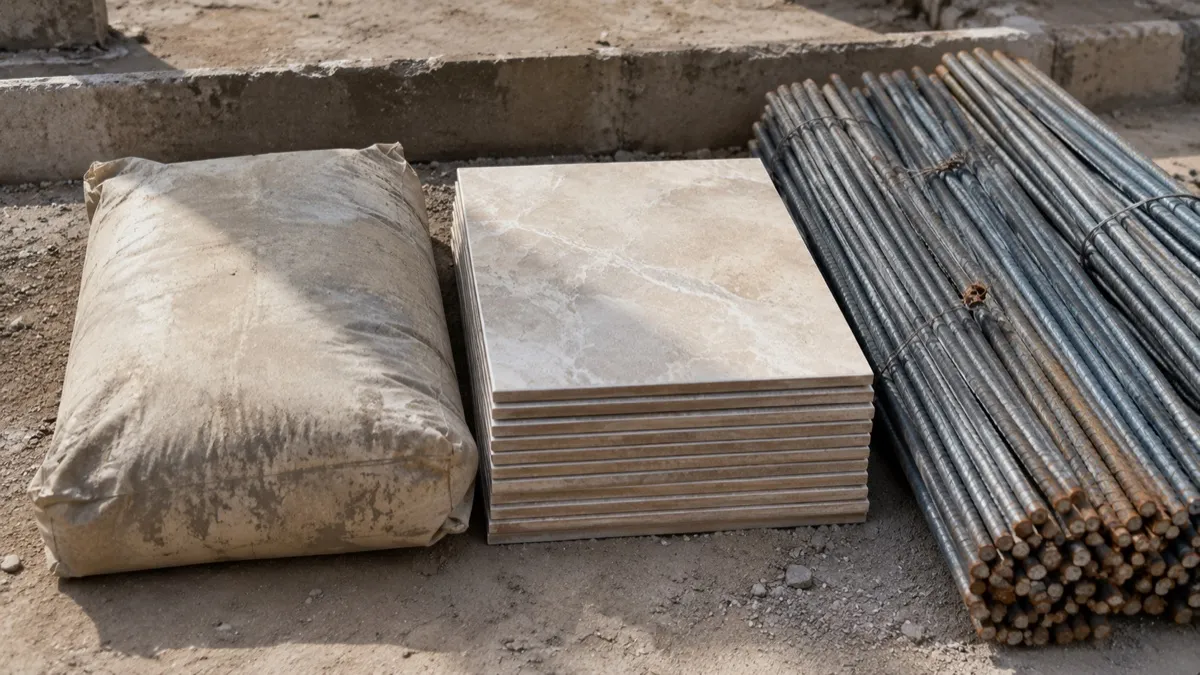
You specify Kajaria tiles for the kitchen at ₹180 a square metre, 53-grade cement, and 8 mm deformed steel bars. You sign the drawings, check progress, leave. Three weeks later you pick up a tile sample and it doesn't feel right — the surface is slightly rough. The invoice tells the story: your Kajaria has become a local brand at ₹65 a square metre. Same colour, similar look, completely different product. "Madam, the client wanted to save money — same quality, I saved them ₹15,000." The client is delighted. You're standing on a specification that has been violated in a way invisible to the untrained eye. This isn't a one-off — for many contractors, it's the business model.
Why substitution happens
Contractors don't swap materials to ruin your design; they do it because margins on Indian construction projects are thin — often 8–12% — and clients always ask to cut cost. The contractor's realistic options are: use cheaper materials, cut labour quality, or go bankrupt building to spec. Most choose cheaper materials, and they choose the ones nobody notices immediately. They won't touch structural steel where failure kills people — but they will switch the tiles, thin the paint, drop the cement grade, and stretch the rebar spacing. Nobody dies, nobody notices for months or years, and when it fails the architect gets blamed while the contractor is long gone. In one Mohali project the spec called for adhesive mortar at ₹450 a bag for large-format tiles; after two months the contractor quietly switched to ordinary cement mortar at ₹180. The tiles held for three years, then began cracking and falling — and when the architect was called back, the contractor had vanished. The whole system is built so that cutting corners makes the contractor money and the architect carries the blame. Your job is to flip that equation.
The three silent swaps
- Tiles: the easiest to substitute because quality differences — water absorption, surface finish, chip and frost resistance — are invisible on day one. A Ludhiana flat had ₹320 marble-finish tiles swapped for an ₹85 lookalike; eighteen months later water marks appeared and the entire floor was replaced at ₹2,50,000, to save ₹18,000 originally.
- Cement grade: invisible until the structure cracks. A Jalandhar building specified 53-grade for high humidity got 43-grade instead; three years on, columns showed hairline cracks and remediation cost around ₹25 lakhs — to save roughly ₹12,000.
- Steel: lower grade (Fe-415 for Fe-500), smaller diameter (6 mm for 8 mm), or wider spacing. A Mohali project had 8 mm bars quietly replaced with 6 mm; five years later, under heavy rainfall load, the structure was at risk and reinforcement cost about ₹40 lakhs.
The defence: make substitution impossible, traceable, or too risky
You can't catch every swap — but you can make it expensive and visible enough that most contractors won't try. The book's material-control system runs across the whole project:
- Specify by exact brand, product name and code — "KAJARIA MOZAIQUE 600×600, SHADE CREAM, KM-2405-03," not "ceramic tiles, cream." For steel, name the mill and grade; for cement, the grade is printed right on the bag.
- Approve real samples from the actual batch, not a showroom display, and require a sample installation before full roll-out.
- Inspect on delivery: check packaging, invoices, batch numbers and certificates, and photograph every material next to its approved sample with the invoice number visible.
- Test the critical stuff: third-party concrete cube tests at 7 and 28 days, tensile tests on steel samples, certificates of conformance per batch.
- Link payment to verification: no payment for a material until it's confirmed on site against the spec. In one Chandigarh project this single rule — no payment until a material is photographed on site beside its approved sample — drove substitution to nearly zero, simply because the process was too transparent to game.
- Schedule surprise inspections: random, unannounced site visits asking to see the cement or steel being used that very day. In Jalandhar, an architect who required concrete testing every 500 cubic metres found substitution stopped entirely — the contractor knew testing was happening and the risk of being caught outweighed the saving.
An on-site Approved Material Board — every approved sample glued up with its name, code, supplier and cost — turns the whole process transparent. One Ludhiana project displayed all 35 material types on a board; the supervisor checked every delivery against it and substitutions dropped to zero. A simple WhatsApp trail (photo of material plus invoice, written approval back) creates a permanent record that has saved many architects from being blamed for failures they didn't cause.
Why an integrated contractor removes the incentive entirely
Material substitution thrives in the gap between the person who specifies and the person who buys. Secured Engineers Pvt. Ltd. closes that gap. As an integrated MEPF and execution partner, we specify, procure and install under one accountable roof — so there's no third party quietly pocketing the difference between your tile and a cheaper one. Brands and grades are locked at specification, materials are verified and photographed on delivery, critical concrete and steel are tested, and you get a documented material report at handover. What you specified is what ends up in your wall — because the same team is answerable for both.
This is Chapter 10 of Er. Ankur Kaplesh's "From AutoCAD to Actual Site — Why Indian Buildings Never Match the Drawing," 20 pain points and 20 solutions drawn from real Indian sites. Get notified at launch for the full book — and if you want a project where the spec is the spec, get a free MEP quote from Secured Engineers Pvt. Ltd.
More insights
VRF vs Chiller Plant: Which HVAC System Should You Choose in India?
A direct, India-specific comparison of VRF and chilled-water plants — by capacity, running cost, plant room, payback and the building types each one suits best.
Solar EnergyWhy Most Industrial Solar Underperforms (It Starts on Day 1)
Solar is not a product you buy — it is an engineering outcome. The decisions made before a single panel goes up quietly decide whether your plant saves money or loses it for 25 years.