
The Column That Wasn't on the Drawing — How One Beam Ruins a Living Room
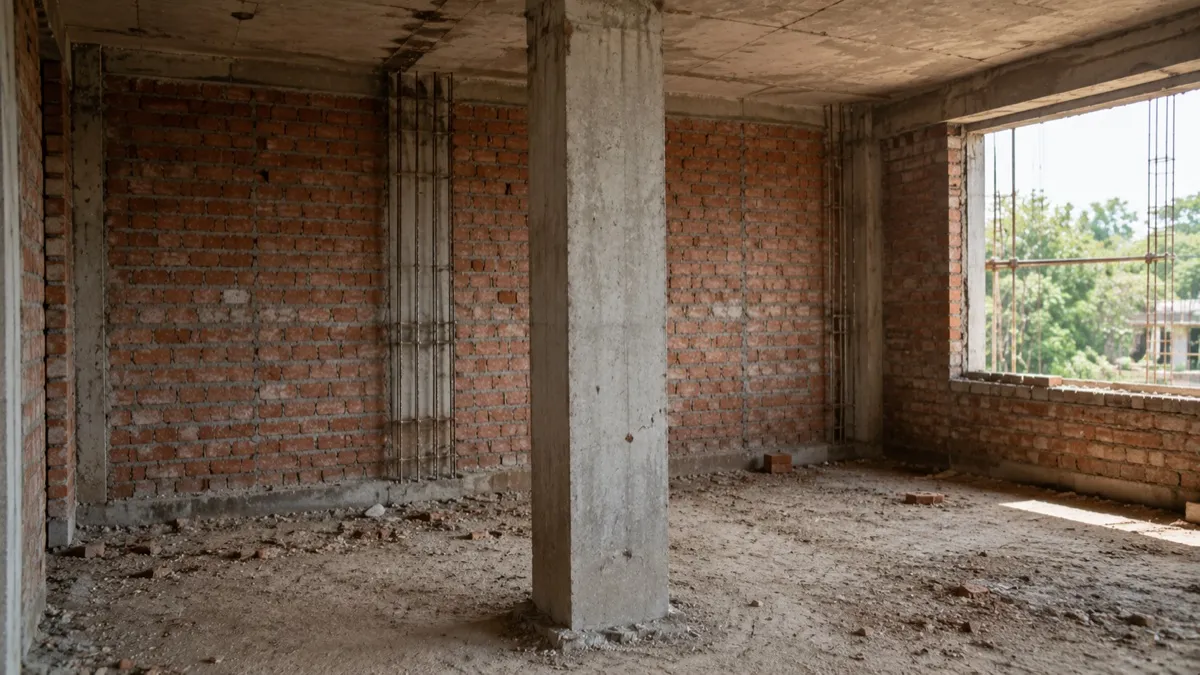
You design a beautiful four-bedroom apartment in Delhi. The living and dining area is open — 6 metres by 8 metres, clean sight lines, perfect for entertaining. The structural engineer takes your plan, works his load paths, and stamps it. Then the building goes up. The columns rise out of the slab and there it is: a 350 mm × 350 mm RCC column standing right in the middle of your open living room. Not on the edge. In the middle. The sofa now faces a pillar. The dining table breaks into two. The client is furious, the architect is blamed, and the structural engineer shrugs: "the building can't stand without it." This happens in around 60% of Indian residential projects.
Who decided this? A communication failure, not a structural one
The sequence is depressingly predictable. The architect designs the open layout first, hands it over and says "design the structure." The structural engineer sees a 6-metre span — long enough to need deep beams — and drops in an intermediate column to halve it to 3 metres on each side. Much easier and cheaper to engineer. The drawing comes back with a column in the middle, and by then the architectural design is effectively dead. The real root cause: architect and structural engineer don't collaborate before the design is finalised.
Why the grid and the architecture fight
An RCC structure runs on a grid. Six metres is the threshold — below it you can use shallow 300–400 mm beams; above it, beams get deep, complex and expensive. So the structural engineer optimises for minimum material, minimum beam depth and maximum speed. The architect optimises for open space, flexible floor plates and clean sight lines. These two goals are genuinely incompatible — and in Indian practice the structure almost always wins, with the architecture forced to adapt around the columns after the fact.
The beam that ate your ceiling height
The same conflict shows up vertically. You plan a 3,000 mm floor-to-floor height with a 2,800 mm clear ceiling. But a 6-metre span can demand a 600 mm-deep beam — too deep to hide in a 200 mm slab zone. Suddenly the clear height drops toward 2,400 mm and the room feels cramped, because modern interiors want 2,600 mm minimum. The architect's options are bad: raise the whole building's floor height (more concrete, more steel, possible zoning-height conflicts) or accept a thick beam slashing across the ceiling. Usually the exposed beam wins, and the living room looks industrial by accident.
When structure dictates design: a Chandigarh example
On a luxury apartment building in Sector 5, Chandigarh, the developer wanted open-plan living for premium market appeal. The architect drew an open 6 m × 8 m living-dining and a 4 m × 5 m open kitchen. The structural engineer's response: "I can do it, but I need intermediate columns to break the 8-metre span — and the kitchen needs columns too." Six columns appeared in the common areas. The open-plan concept was finished. The flat became a set of disconnected, compartmentalised rooms instead of the flowing space that justified its price — and the loss of premium positioning ran into serious money across the saleable area. The engineer optimised the building's efficiency; the design, the marketability and the project's profitability all paid for it.
The right approach: collaborate before the design is frozen
None of this is inevitable. The book's solution is straightforward — bring structure and architecture together before the layout is locked. This isn't about overruling the structural engineer; it's about giving him the architectural constraints early, while changing them still costs nothing:
- Establish the span grid early: ask the structural engineer for optimal spans in writing. For a typical residential build, 5.5–6 m is cost-effective, up to 7 m is acceptable, and 8 m+ means deep beams and trouble.
- Design to the grid: organise rooms in structural modules so columns land at corners and edges — defining spaces rather than interrupting them.
- Coordinate beam depth to ceiling height: tell the engineer the clear height you need (say 2,600 mm) and the depth you can spare, and let him size beams to fit — even if that means shallower beams or post-tensioning in a few critical bays.
- Walk through it together: review the drawing as a team and make conscious trade-offs. Moving one column might cost a transfer girder; sometimes that's worth it, sometimes it isn't — but the decision happens upfront, not during construction.
And where a column simply must stay, the book offers honest options: clad it in stone or wood and make it a feature, wrap it in shelving or a bench to make it functional, or — only for critical locations — pay for a transfer girder or moment connection to remove it. Each is a deliberate choice, not a nasty surprise.
Why an integrated team kills the surprise column
The surprise column survives because architects and structural engineers work in separate silos, passing drawings back and forth instead of designing together. Secured Engineers Pvt. Ltd. works the opposite way. Our integrated model puts structural, MEPF and execution thinking around one table from the start, so the column grid, the beam depths, the services routing and the spatial design are reconciled before a drawing is issued for construction — not discovered when the slab is already cast. A few hours of genuine coordination prevents the kind of redesign and lost resale value that can run into lakhs on a single luxury unit.
This is Chapter 7 of Er. Ankur Kaplesh's "From AutoCAD to Actual Site — Why Indian Buildings Never Match the Drawing," a field guide to 20 pain points and 20 solutions. Get notified at launch for the full book — and if you want a project where the structure and the design actually agree with each other, get a free MEP quote from Secured Engineers Pvt. Ltd.
More insights
VRF vs Chiller Plant: Which HVAC System Should You Choose in India?
A direct, India-specific comparison of VRF and chilled-water plants — by capacity, running cost, plant room, payback and the building types each one suits best.
Solar EnergyWhy Most Industrial Solar Underperforms (It Starts on Day 1)
Solar is not a product you buy — it is an engineering outcome. The decisions made before a single panel goes up quietly decide whether your plant saves money or loses it for 25 years.