
Elevate the Array, and the Land Underneath Doesn't Have to Sit Idle.
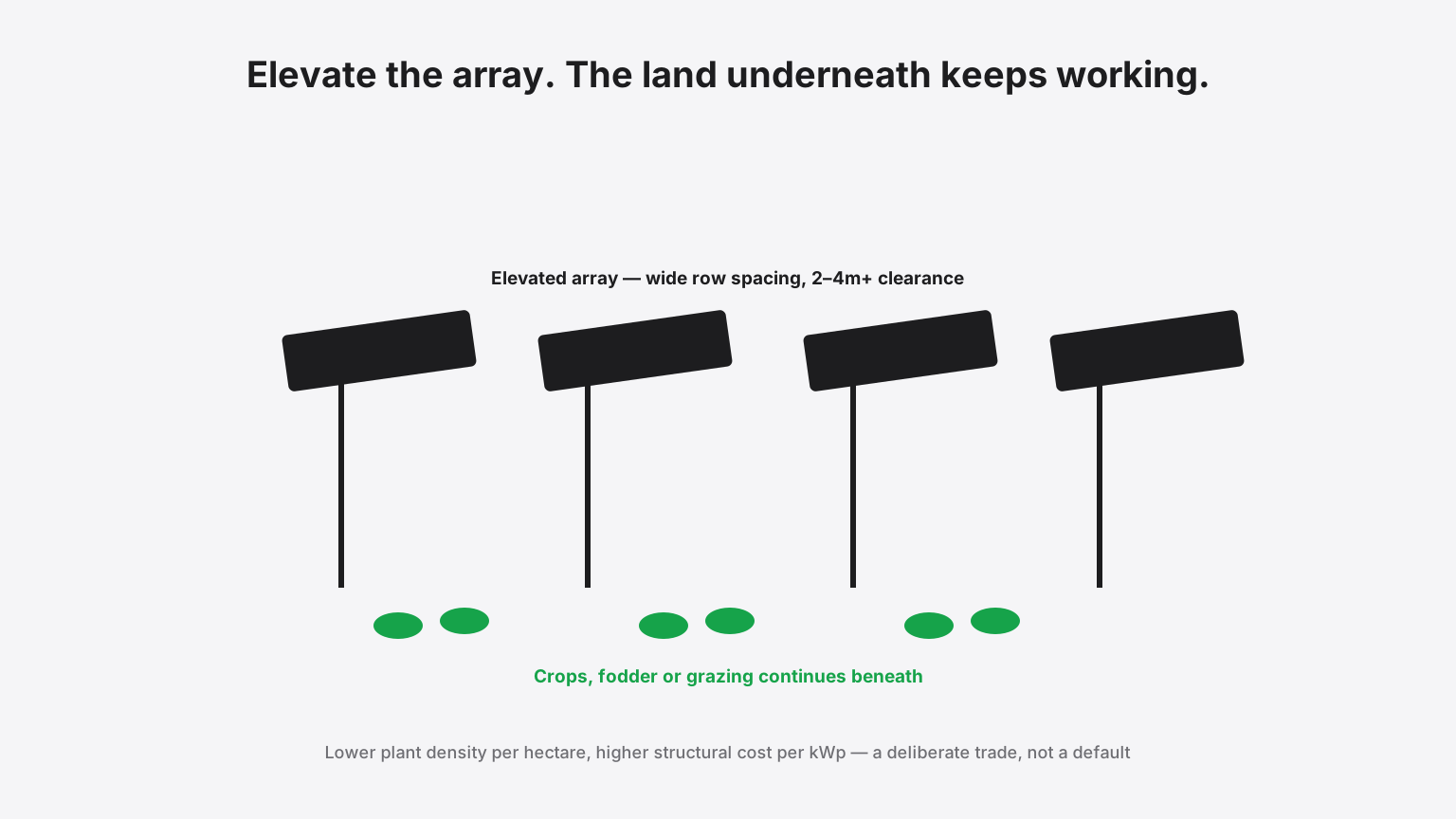
A large industrial buyer sourcing power through a captive ground-mount plant or an open-access PPA (see our open access vs rooftop captive guide) is, indirectly, a land-use decision-maker. Standard ground-mount racking sits low and dense, which is the cheapest way to build a solar plant — and which also takes the land fully out of any other use for the 25-year life of the plant. Agrivoltaic design raises the array and widens the row spacing so that agriculture — typically shade-tolerant crops, fodder, or grazing — continues underneath. It's a genuine option, not a default, and the trade-offs are worth understanding before it's assumed away either direction.
Why an industrial buyer would care
- Land-lease and community relations — where the plant sits on leased agricultural land, a dual-use design can materially change the terms and durability of that relationship over a 25-year contract, compared to land that visibly stops producing anything the surrounding community values.
- State policy alignment — several Indian states now recognise or incentivise agrivoltaic and dual-use ground-mount configurations within their solar and land-use policy; this can affect approvals timelines and, in some cases, eligibility for specific programmes. Policy specifics are state-by-state and change; confirm current position before it factors into a site decision.
- Optionality if land ownership or use changes over the life of a long PPA or captive structure.
What it actually costs
| Standard ground-mount | Agrivoltaic (elevated, dual-use) |
|---|---|
| Low structure height, dense row spacing | Elevated structure (often 2-4m+ clearance), wider row spacing for access and light |
| Lower steel and foundation cost per kWp | Meaningfully higher steel and foundation cost per kWp |
| Maximum plant capacity for the land area | Lower plant density per hectare — the same land yields fewer kWp |
| No agricultural coordination required | Crop selection, irrigation and farming access all need to be designed and agreed alongside the electrical plant |
The honest summary: agrivoltaic design lowers the electrical capacity you get per hectare and raises the structural cost per kWp, in exchange for the land continuing to produce a second output and, in some cases, better policy or community standing. It is a decision to make deliberately against your specific land, lease terms and state policy — not something to default into on the assumption that it's simply "better" land use.
Where it makes sense for an industrial buyer
Most sensible on leased land where the lease terms or community relationship benefit from continued agricultural output, on larger open-access plants where the density loss is easier to absorb than on a tightly-sized captive plant, and in states where policy meaningfully favours the configuration. Least sensible when the land is owned outright with no lease or community pressure, and the buyer's priority is simply the maximum capacity the site can deliver.
What we do differently
For clients evaluating open-access or large captive ground-mount solar, our Solar EPC team models both configurations against your actual land, lease and state-policy position — so a dual-use design gets chosen because the numbers and the land terms support it, not on the strength of the pitch alone.
More insights
CAPEX vs OPEX Solar for Factories — the 10-Year Total Cost Compared
Own the plant or buy the power? The CAPEX-vs-OPEX solar decision looks financial, but the 10-year total cost turns on clauses most buyers never read.
Solar EnergyThree Vendors, One Roof, Three Different Generation Figures.
Solar yield estimates for the same roof routinely differ by double digits. The gap is rarely the panels — it is what each model assumed about shading, soiling, temperature and losses, and almost none of it is visible in the headline number.