
The Solar Quote Guarantees Generation. Read What Happens When It Misses.
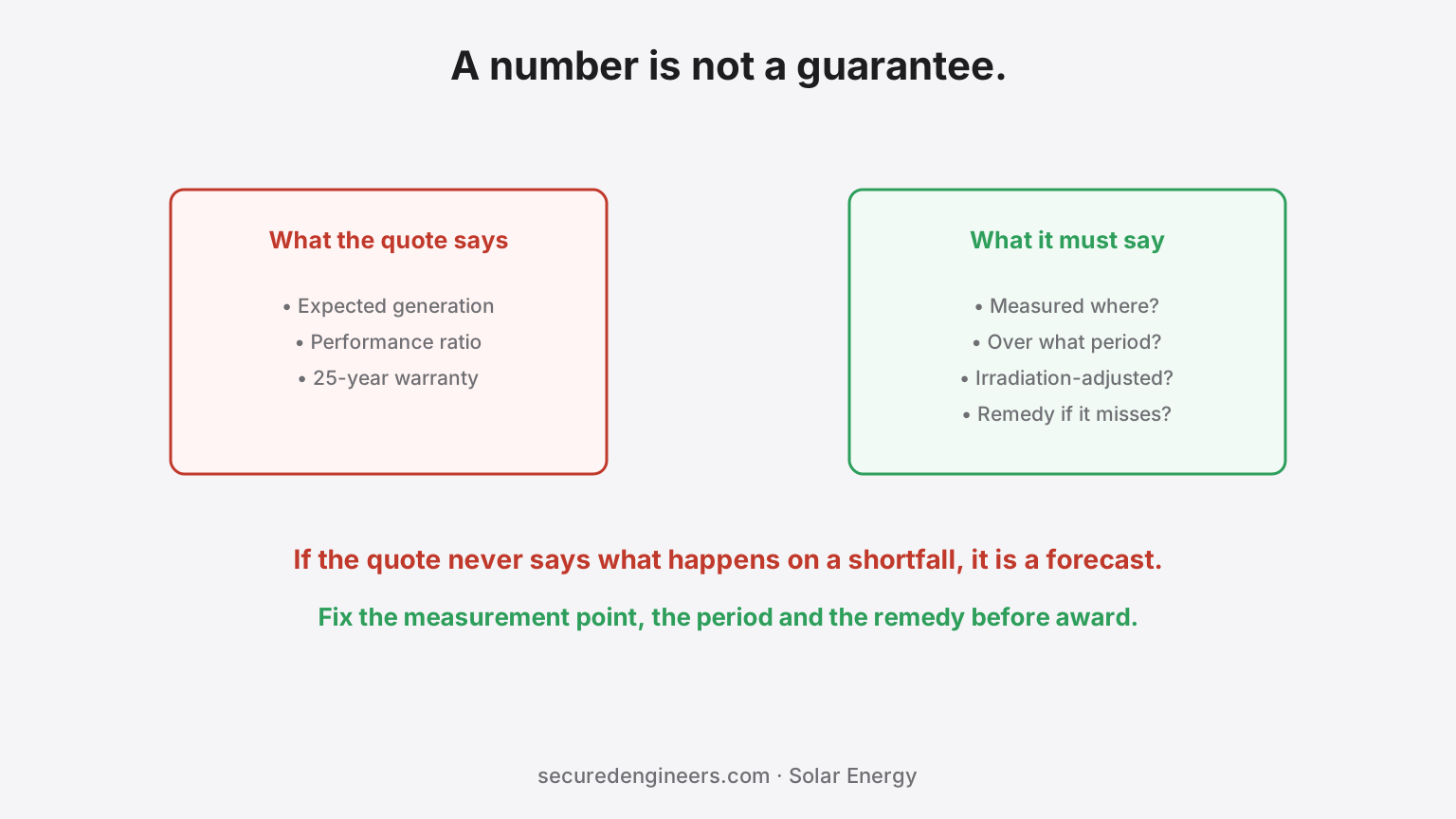
Rooftop solar is sold on a number: expected annual generation, or a performance ratio. It is the number the payback is built on, and it is usually the least contractually specified thing in the quotation.
The question that separates a real guarantee from a marketing figure is simple: if the plant generates less than promised, what happens? If the quote does not answer it, the figure is a forecast, not a guarantee.
What to establish before signing
- How is generation measured? At the inverter, or at the export meter? They differ, and the difference is cabling and transformer losses. A guarantee against inverter output can be met while your bill barely moves.
- Over what period? A single month is weather noise. A guarantee is meaningful over a year, adjusted for actual irradiation — otherwise a cloudy year discharges the obligation.
- Is it irradiation-adjusted? A fair guarantee compares against the sunlight actually received, not a fixed number. Without this, both parties are arguing about the weather.
- What is the remedy? Compensation for the shortfall, free rectification, extended O&M — or nothing? This is the clause that determines whether a guarantee exists at all.
- What voids it? Soiling and shading are commonly excluded. Reasonable, but only if the cleaning obligation is defined and someone is contractually doing it.
Where real plants lose output
| Cause | Typically whose problem? |
|---|---|
| Soiling — dust, bird droppings, industrial deposition | Client's, unless cleaning is in the O&M scope |
| Shading from later construction or plant growth | Client's, and rarely modelled at design stage |
| DC cabling losses on long runs | Contractor's — a design decision |
| Inverter clipping from a poor DC:AC ratio | Contractor's — a sizing decision |
| Module degradation beyond the warranty curve | Module manufacturer's, if the warranty is bankable |
| Grid unavailability or net-metering limits | Usually nobody's, unless anticipated in design |
The rows worth negotiating are the contractor's — cabling and inverter sizing are design decisions, and they are permanent. Everything else is either operational or someone else's warranty.
The guarantee is only as good as who stands behind it
A twenty-five year module warranty is a claim against the manufacturer, not the installer, and it is worth what that manufacturer will be worth in year fifteen. Module bankability — whether the manufacturer will still be there to honour it — is a more useful screening question than the warranty length.
The same applies to the EPC's own guarantee. A performance obligation from a contractor with no O&M presence in your region is difficult to enforce even when it is genuinely owed.
Model it yourself before you compare
Run your own numbers before comparing quotes, so you are evaluating the guarantee rather than the promise: our solar calculator and shadow-free area calculator give an independent baseline, and why industrial solar underperforms covers what actually goes wrong after commissioning. Structural capacity is a separate gate — see rooftop structural loading.
What we do differently
Our Solar EPC scope states the measurement point, the adjustment basis and the remedy in writing before award, and we handle the net-metering approvals ourselves rather than treating the DISCOM as your problem — because a generation figure nobody has defined how to measure is not a guarantee.
More insights
You Were Going to Build a Parking Shed Anyway. Put Solar on It Before the EV Chargers Go In.
Factories with EV logistics fleets, hotels, and corporate campuses adding EV charging usually treat the charger and the parking structure as two separate decisions. A solar carport combines them — shaded parking plus a generation source sized to actually offset the new charging load, rather than dumping it straight onto the grid connection.
Solar EnergyRooftop solar without roof leaks — penetrations, ballast and the monsoon test
The plant works and the roof does not. Leak complaints arrive with the first monsoon, months after the installer demobilised. Here is how the detail is done properly.