
The Open-Access PPA Promised Cheaper Power Than Your Roof. Read the Charges Schedule First.
Somewhere in 2025 or 2026, most sizeable North Indian factories got the pitch: sign a power purchase agreement with an off-site solar park, wheel the energy through the grid under open access, and buy power meaningfully below your industrial DISCOM tariff — no capex, no roof work, big numbers. The pitch is real. So is the fine print, and the fine print is where open-access economics are actually decided.
How the two models work
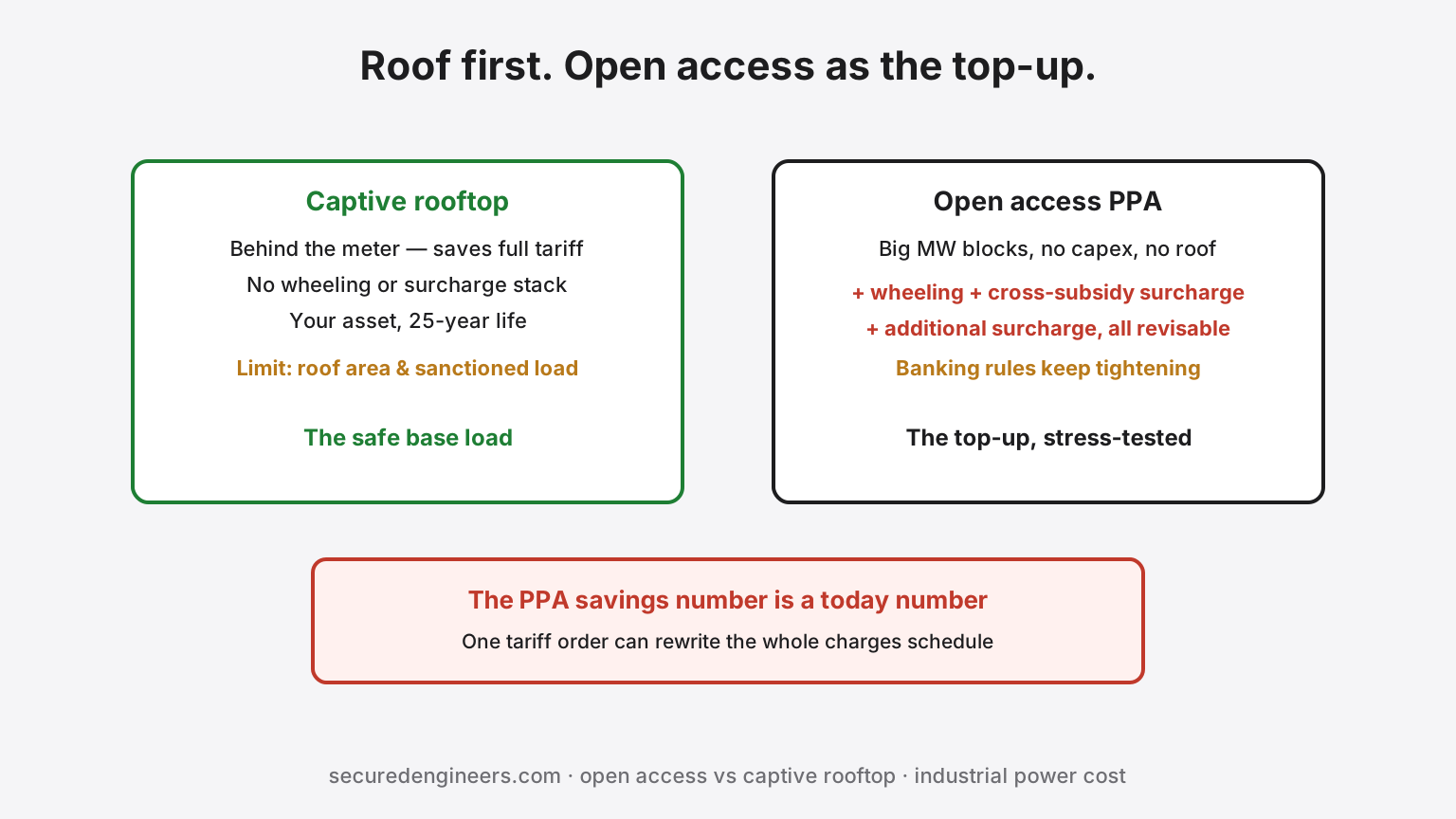
Captive rooftop: you (or a captive structure) own a plant on your own roof; generation offsets your consumption directly behind the meter. Savings equal your full retail tariff for every unit self-consumed. The constraint is physical — roof area and structural capacity cap the plant size, and your sanctioned load caps what net-metering frameworks will register.
Open access / third-party PPA: a developer builds a large plant elsewhere; you contract for its output and the energy is wheeled to you over the transmission and distribution network. The plant can be far bigger than your roof allows. But the delivered price is the PPA rate plus a stack of regulated charges — wheeling, transmission, cross-subsidy surcharge, additional surcharge, banking charges — each set by the state regulator and each revisable.
The decision variables that actually matter
| Variable | Rooftop captive | Open access PPA |
|---|---|---|
| Eligibility threshold | Any connection; sized within sanctioned-load rules | Historically 1 MW+ contracted demand; green energy open access rules lowered the bar substantially, but state adoption varies |
| Size ceiling | Roof area and structure — check yours with our plant area calculator | Effectively your contracted demand; roof is irrelevant |
| Tariff certainty | High — you avoid the retail tariff, whatever it becomes | Lower — open-access charges are revised in tariff orders, and states have repeatedly raised surcharges when industrial migration hurt DISCOM revenue |
| Banking of surplus | Net-metering rules, state-specific | Banking windows have tightened across states — monthly banking shrinking toward slot-wise or none, which erodes the value of daytime-heavy solar delivery |
| Exit and control | Your asset, your roof, 25-year life | Long-tenor contract with termination clauses; developer counterparty risk |
Why the charge stack is the real risk
Cross-subsidy surcharge and additional surcharge exist precisely because industrial consumers cross-subsidise other categories: when a factory exits DISCOM supply, the DISCOM loses margin, and regulators have consistently used surcharges to claw part of it back. Several states have also periodically restricted banking or redefined it into narrow time slots. None of this makes open access a bad deal — large consumers with strong daytime load routinely do very well — but it means the savings number on the PPA term sheet is a today number, resting on a charges schedule one tariff order away from revision. Model the deal with surcharges at plausible future levels, not just current ones.
Who open access genuinely suits
The model earns its keep for consumers whose load dwarfs any conceivable rooftop: continuous-process plants running flat through daylight hours, multi-shift operations with high daytime consumption that can absorb solar delivery as it arrives rather than leaning on banking, and groups able to take a captive equity stake in the generating plant — the captive open-access route, where genuine shareholding in the generator changes the surcharge treatment materially in most states and is the structure behind most of the deals that survive tariff-order churn. Conversely, a factory whose consumption is modest, seasonal, or evening-weighted is the worst candidate: every unit that can't be consumed as delivered leans on banking provisions that states keep narrowing, and the modelled savings evaporate fastest exactly where the load profile fits worst. The honest first step is a year of consumption data against a solar delivery curve — before anyone shows you a term sheet.
Roof-first is usually the safer sequencing
For most industrial consumers the robust strategy is layered: fill the roof first, because behind-the-meter units are insulated from the entire open-access charge stack and from banking-rule churn — those savings depend on nothing but the sun and your own load. Then contract open access for the balance your roof can't serve, sized against your genuine surplus demand. Getting the sequencing right also depends on grid realities: your sanctioned load bounds what both models can register against — size it with our sanctioned load calculator — and any load enhancement or new HT connection the plan assumes will move at DISCOM speed, which in North India is its own project, as our HT connection delays guide lays out.
Deciding with numbers, not brochures
The comparison worth doing is delivered ₹/kWh over ten years, both models, with the open-access case stress-tested for surcharge revisions and banking restrictions. Our Solar EPC team builds exactly that comparison — and because we engineer the rooftop side ourselves, we have no structural bias toward the model that needs less engineering.
More insights
PM Surya Ghar Is a Residential Scheme. Your Factory's Solar Incentives Work Differently.
PM Surya Ghar dominates solar-incentive coverage in India — and it's a residential rooftop scheme your factory or hotel isn't eligible for. Commercial and industrial buyers work a different set of levers: accelerated depreciation, open access, and industrial net-metering rules that are more restrictive, not more generous, than the residential ones.
Solar EnergyYour Biggest Daytime Load and Your Solar Peak Happen at the Same Hour.
Cooling demand and solar generation both peak with the sun. That coincidence is the strongest argument for rooftop solar on an air-conditioned building — and it only pays out if the array is sized against the cooling profile rather than the roof area.