
Your DG Is a ₹30/kWh Habit. Here Is What Every Unit Actually Costs.
Ask a factory owner what their DG power costs and the usual answer is a shrug: "diesel hai, kya karein." The set was bought years ago, the fuel goes in, production doesn't stop. It feels like a fixed cost of doing business in Punjab, Haryana or UP.
It isn't. It is a per-unit decision you are making every hour the set runs — and once you put diesel, grid and solar on the same table, most plants discover they are voluntarily buying the most expensive electricity available in India.
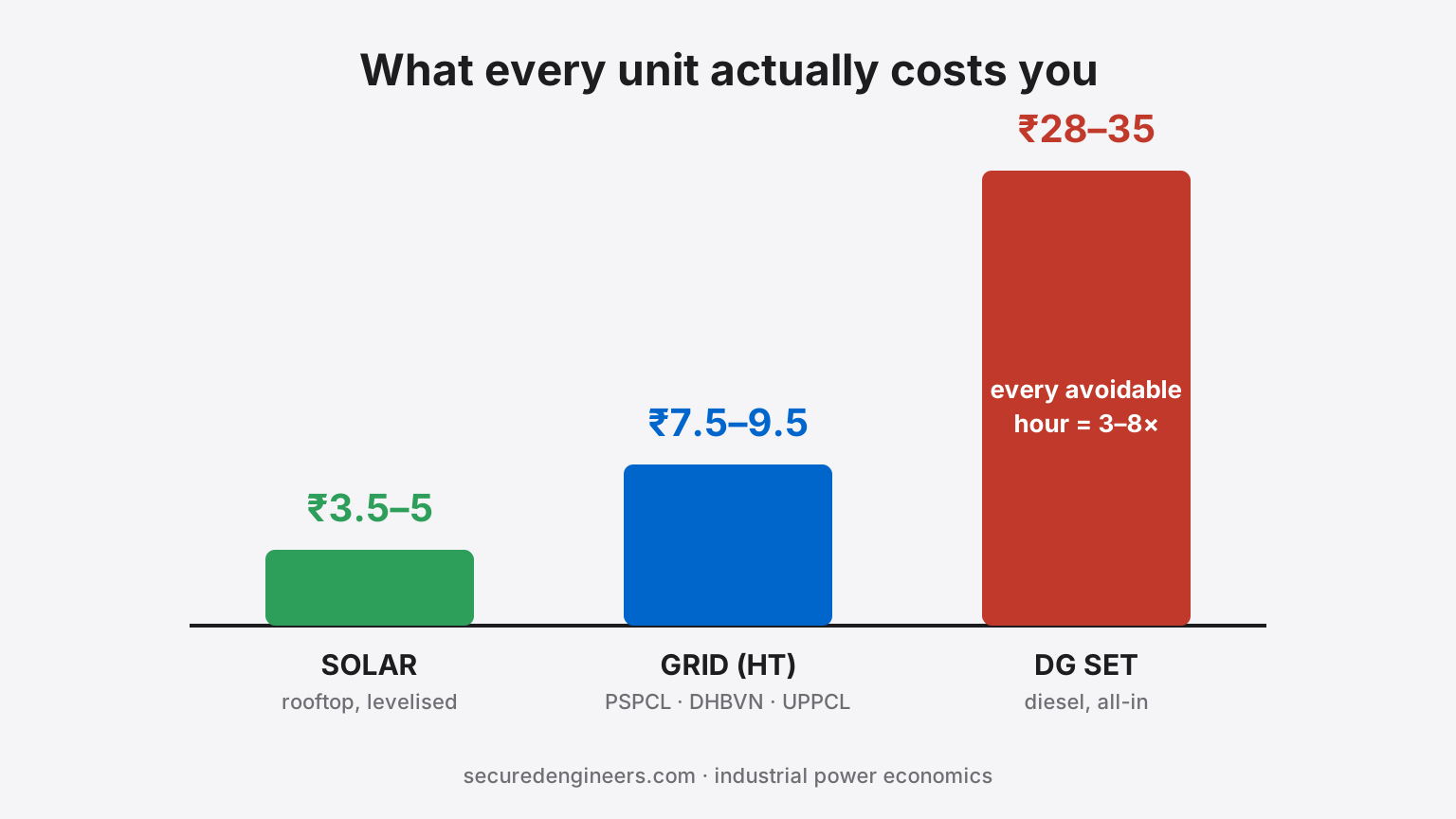
The one table that settles it
Indicative all-in generation cost per kWh for a North Indian industrial consumer (2026 conditions — run your own numbers, links below):
| Source | ₹ / kWh (indicative) | What's inside the number |
|---|---|---|
| DG set (diesel) | ₹28–35 | Diesel at ~₹90/L ÷ 3–3.8 kWh/L at decent load = ₹24–30 fuel alone; plus lube, filters, service, and the capital you burn per running hour |
| Grid (HT industrial) | ₹7.5–9.5 | Energy + demand charges + surcharges across PSPCL / UHBVN-DHBVN / UPPCL-NPCL tariffs (and worse if your power factor drifts) |
| Rooftop solar (captive) | ₹3.5–5 | Levelised over 25 years — panels, inverters, structure, O&M. Daytime units only, but factories are daytime animals |
Read the ratios, not the decimals: a DG unit costs roughly 3–4× a grid unit and 6–8× a solar unit. Every hour of avoidable DG running is a 3–8× surcharge on your own production.
Why your DG units cost even more than you think
- Part-load murder. A 500 kVA set carrying 150 kVA burns disproportionate fuel per useful unit — specific consumption degrades badly below ~50% load. Oversized "safety" sets are the most common self-inflicted wound; size honestly with the DG sizing calculator.
- The invisible hours. Night security load, one compressor left on, a canteen — sets idling at 10% load through the night convert diesel into noise. Metering DG output separately is a ₹15,000 fix that pays for itself in a month.
- Maintenance debt. Worn injectors and clogged filters quietly push consumption 10–20% above nameplate — an AMC line item that funds itself in fuel.
- NCR's regulatory clock. In Delhi-NCR districts, GRAP season restricts DG operation outright — the economics question becomes a compliance question every winter. A plant that needs DG hours in November has a design problem, not a fuel problem.
The cheapest reliable megawatt is a designed mix
- Fix the grid side first: right contract demand, clean power factor, and a stable HT connection (stuck connections push plants onto diesel for months)
- Put solar on every viable roof: at ₹3.5–5/kWh it undercuts even the grid; size it against your daytime base load, then test the economics with the solar financial calculator
- Demote the DG to what it is: an insurance policy — sized for the true essential load, auto-started, metered, serviced, and priced per hour so everyone in the plant knows what a DG hour costs
- Kill avoidable transitions: most DG hours in NCR/Punjab plants are not outages — they are slow grid restorations, unattended changeovers and "chalne do" inertia
A quick worked example
A Ludhiana fastener unit runs its 380 kVA set ~400 hours/year at an average 180 kW. That is ~72,000 kWh of diesel power: at ₹30/kWh ≈ ₹21.6 lakh, versus ₹6.1 lakh on grid — a ₹15 lakh annual premium. Half those hours were grid-available (changeover delays, planned "safety" running). The fixes — auto-changeover, DG metering, one AMC — cost under ₹4 lakh, once.
FAQs
What does DG power actually cost per unit?
Fuel alone at current diesel prices runs ₹24–30/kWh at healthy load; add lubricants, service and capital recovery and ₹28–35/kWh all-in is typical. At poor part-load it can exceed ₹40. Check your own set with the DG running cost calculator.
Is rooftop solar really cheaper than grid power?
On levelised cost, almost always — ₹3.5–5/kWh against ₹7.5–9.5 grid. The constraint is roof area and daytime coincidence, both of which favour factories. Net-metering rules add nuance — covered separately.
Should I buy a bigger DG for future expansion?
Usually no — oversizing punishes you every running hour via part-load consumption. Size for the true essential load and plan parallel sets for growth.
Can you work out the right power mix for our plant?
Yes — solar feasibility, DG sizing and power-factor correction are scoped as part of design, against your tariff and load profile. Start here.
Related services
More insights
What to check during electrical testing and commissioning
Energisation is earned by test records. The tests our electrical engineers run — and the values they record — before a factory's installation is offered to the Electrical Inspector and the DISCOM.
ElectricalYour Panel Passed Inspection. Its Breakers Are Rated Below Your Actual Fault Current.
A breaker that trips fine on overload can still fail catastrophically on a real short circuit if its interrupting rating is below the site's actual fault level. Fault-level coordination is the study most factory panels never get — until an incident makes it mandatory retroactively.
More on Electrical & Power · all insights