
Green Hydrogen Needs a Lot More Solar Than the Slide Deck Shows.
Green hydrogen is produced by running an electrolyzer on renewable electricity to split water into hydrogen and oxygen. For industries where electrification alone can't replace process heat or a chemical feedstock — steel, fertiliser, refining, some cement and chemical processes — hydrogen is one of the few realistic decarbonisation paths on the table. It's also, for the great majority of Indian industrial buyers evaluating it today, a direction to plan toward rather than a project to sign an EPC contract for this year.
Why the solar requirement is bigger than it looks
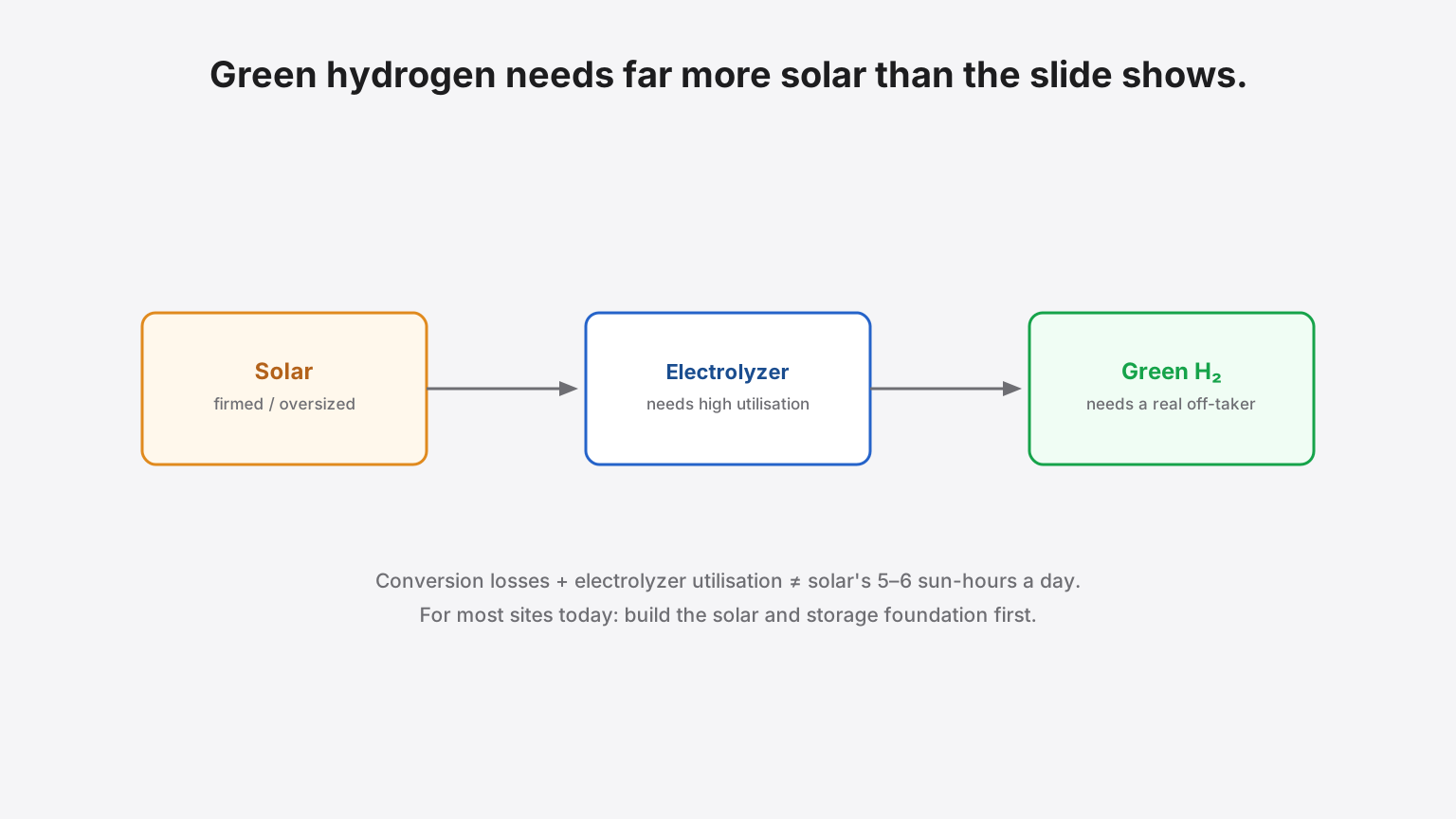
Electrolysis carries real conversion losses, and the electrolyzer itself needs a high utilisation factor to make the capex work — which means it needs a firmed, near-continuous power supply, not solar's roughly 5-6 sun-hours a day. In practice that means either a solar-plus-storage system dramatically oversized relative to the electrolyzer's rated capacity, or a hybrid supply blending solar with grid or other renewable power to keep the electrolyzer running through the hours solar isn't producing. Either route needs several multiples more solar capacity, land and capital than the headline "solar-powered hydrogen" framing suggests.
What has to be true before it's a real project
| Requirement | Where it typically stands for an Indian industrial buyer today |
|---|---|
| Dedicated or firmed renewable capacity at electrolyzer scale | Usually needs open-access solar plus storage at a scale most single-site industrial buyers haven't built yet — see our open access guide for what that capacity commitment looks like even before hydrogen enters the picture. |
| Water availability for electrolysis | Site- and region-specific; a real constraint in water-stressed industrial belts. |
| A genuine end-use for the hydrogen | Process heat conversion, feedstock substitution or fuel-cell use all need their own capex and process changes on the consuming side — hydrogen production without a ready off-taker is a stranded asset. |
| Economics vs the process it replaces | Still closing, but not yet closed, against fossil-fuel process heat for most applications at most sites. |
What's realistic to do now
For most industrial buyers, the honest near-term step isn't a hydrogen project — it's building the renewable capacity base (rooftop, open access, storage) that a future hydrogen or any other deep-decarbonisation option will eventually need anyway. A site that has already solved its solar, storage and open-access position is years ahead of one that hasn't, regardless of which specific decarbonisation technology it eventually adopts. Chasing hydrogen before that foundation exists usually means paying pilot-scale costs for a demonstration, not a return.
What we do differently
Our Solar EPC and open-access advisory work builds the renewable capacity foundation — rooftop, ground-mount, storage, open-access contracts — that positions an industrial site for whatever its next decarbonisation step turns out to be, hydrogen included, rather than treating it as a separate project with no relationship to the solar already on the roof.
More insights
That Cheap Module Quote May Not Be an Eligible Module Anymore. ALMM List-II Changed the Rules.
From June 2026, ALMM compliance extends to solar cells (List-II), not just modules. A module that was fine to buy last year may now be ineligible for government schemes and net metering — and the cheapest quote on your table is the most likely to be built on non-compliant cells.
Solar EnergyYour Biggest Daytime Load and Your Solar Peak Happen at the Same Hour.
Cooling demand and solar generation both peak with the sun. That coincidence is the strongest argument for rooftop solar on an air-conditioned building — and it only pays out if the array is sized against the cooling profile rather than the roof area.