
Why Most Industrial Solar Underperforms (It Starts on Day 1)
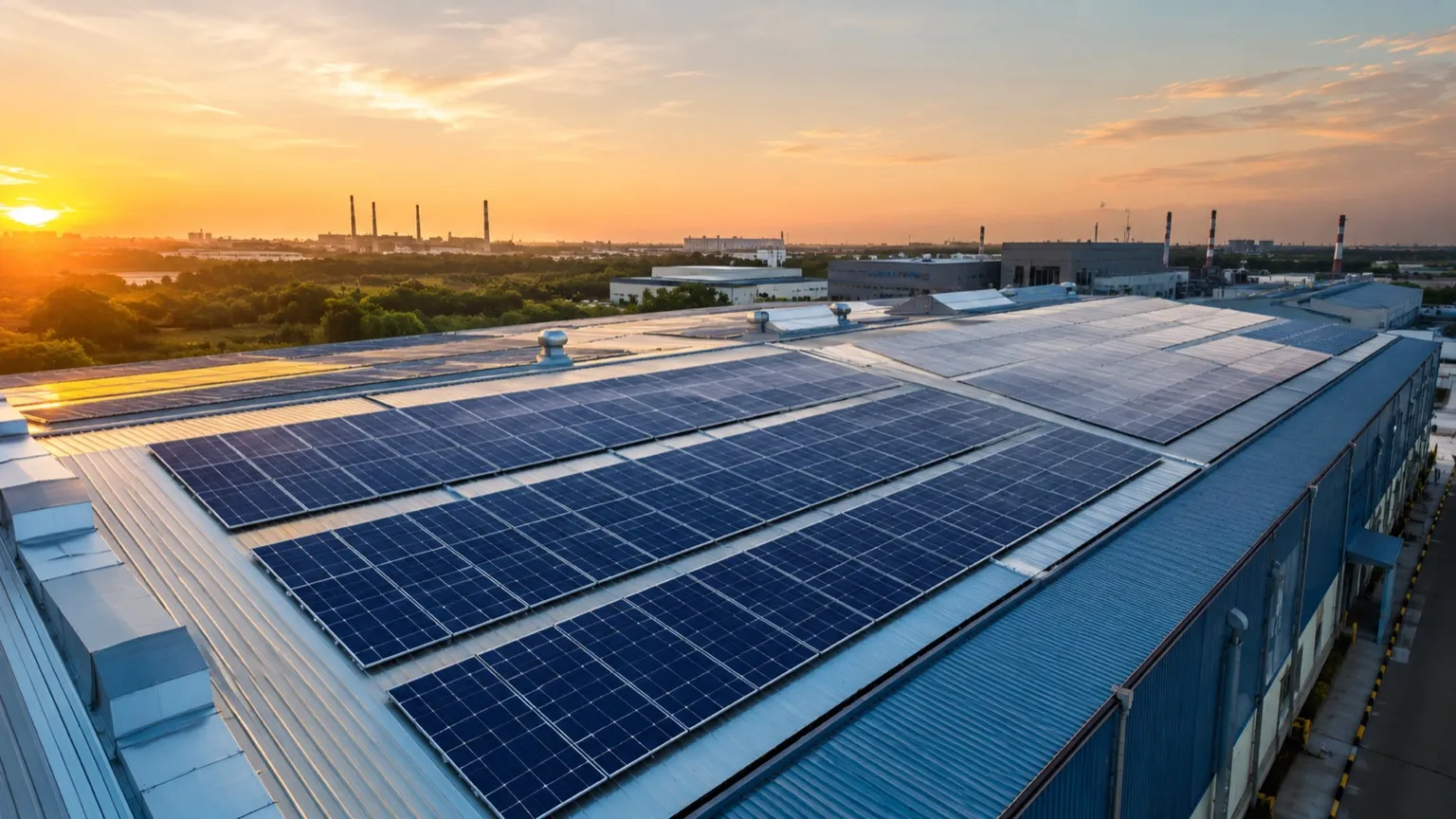
Most solar plants do not fail after 10 years. They fail from Day 1 — because of decisions made before a single panel is installed. A weak Solar EPC does not just bolt panels to a roof; it silently kills up to 30% of your yield over the life of the system.
Here is the uncomfortable truth most contractors will not say: solar is not a product, it is an engineering outcome. A ₹2 crore system deserves more than a catalogue quote.
The Day-1 mistakes that cost you for 25 years
- Wrong DC/AC ratio: Oversize or undersize the array against the inverter and you lose peak-hour production every single day.
- No shadow analysis: One unshaded design assumption and a single shaded string can drag down the output of an entire block.
- Poor cable sizing: Undersized DC/AC cabling bleeds energy as heat — hidden losses you pay for, invisibly, for years.
- Wrong inverter selection: The cheapest inverter often means early failure, warranty headaches and downtime when you can least afford it.
Design for yield, not for the quote
A system engineered for your actual load, your site conditions and long-term performance behaves completely differently from one sized off a price list. If the design is not built around those three things, you are not saving money — you are losing it slowly.
At Secured Engineers Pvt. Ltd., we design for 25-year yield, not contractor margin — with proper DC/AC ratios, shadow modelling, correct cable sizing and the right inverter for your plant.
Curious what your roof could deliver? Try our solar savings calculator, then ask us for an engineered quote with exact, site-specific numbers.
More insights
When One Inverter Fails, How Much of Your Plant Fails With It?
The inverter decision quietly sets your solar plant’s availability, monitoring granularity and 12-year replacement bill. String, central, or micro — the honest selection logic for Indian C&I rooftops, beyond brand loyalty.
Solar EnergyElevate the Array, and the Land Underneath Doesn't Have to Sit Idle.
Large ground-mount captive or open-access solar plants use land that could otherwise stay in agricultural use. Agrivoltaic design — elevating and spacing the array so farming continues beneath it — is a real option for industrial buyers structuring these deals, with real structural cost and yield trade-offs, not a default.