AI video analytics, VMS software and face recognition systems — the PGAK platform, delivered by Secured Engineers for factories, campuses and cities
AI CCTV cameras are the headline. The purchase is the platform behind them: the VMS software that records and manages hundreds of cameras across sites, the analytics that watch them so a guard does not have to, the face recognition at the gate, the ANPR on the road — and the integration that makes a camera, a door and a fire alarm behave as one system. We design, install and commission all of it on the PGAK platform, with the cabling, power and approvals in the same contract.
Secured Engineers is an authorised channel partner of PGAK Innovations Pvt. Ltd.
15+ years · 535+ projects · ELV, electrical, fire & approvals under one contract
Five PGAK products, one platform — sized for big sites
Product details and platform figures are as stated by PGAK Innovations Pvt. Ltd. (10 Oct 2026).
VMS software
One platform that streams, records, searches and manages every camera on a site — or across a city — with the analytics built in rather than bolted on.
AI video analytics
An analytics layer that reads live and recorded video to detect, alert and report — on the PGAK VMS, or on the cameras and VMS a site already has.
Face recognition system
Finds and matches faces in live feeds and recorded video, manages watchlists and alerts, and plugs into access control and attendance.
ANPR and traffic management (ITMS)
Monitors, detects, enforces and reports on road traffic from one platform — a highway tunnel, a toll plaza or a city junction — with evidence that holds on a challan.
Cloud CCTV (VSaaS)
The same video management and analytics delivered from the cloud — no servers on site, paid for as the camera count grows.
Where we come in
Survey, camera schedule, fibre and cabling, power, servers, deployment, integration, commissioning, training, handover, AMC — our scope, line by line.
City surveillance, industrial estates, campuses: what a 200-to-2,000-camera project needs
Thirty cameras on a recorder is a purchase. Two hundred cameras across a township, a campus or an industrial estate — with a command and control centre, ANPR at the gates and analytics on the perimeter — is a project, and it fails on the parts no brochure lists: the fibre backbone, the power at every pole, the server room, the retention maths and the integration with everything already on site.
- No fixed camera or user limit on the PGAK VMS; computing nodes register themselves as sites are added
- One console for many sites — a command and control centre for an estate, a municipal body or a multi-plant group
- Traffic enforcement and tolling modules for highway, tunnel and city tenders — incident detection, e-challan, free-flow tolling
- Integration with access control, intrusion, fire alarm and public address — the interfaces that usually fall between contractors
- One contractor for the cabling, the power, the servers and the software, with the approvals in the same scope
How we scope it
| Step | What it fixes |
|---|---|
| Site survey and camera schedule | Each camera named for the analytic it must serve — resolution, lens, height and night performance follow from that |
| Network and fibre backbone | Bandwidth per camera, PoE budgets, fibre between buildings, certified and labelled |
| Power, UPS and earthing | Every pole and every rack powered and protected — electrical scope, not an afterthought |
| Servers, storage, edge | Sized from retention days and analytics load, not from a catalogue |
| Software and analytics | VMS, analytics, face recognition, ANPR and traffic modules deployed and configured to your policy |
| Integration and commissioning | Cause-and-effect matrix signed off; acceptance test against the camera schedule; operators trained |
Industrial estates we work in · Data centres · Campuses · Turnkey MEPF contracting
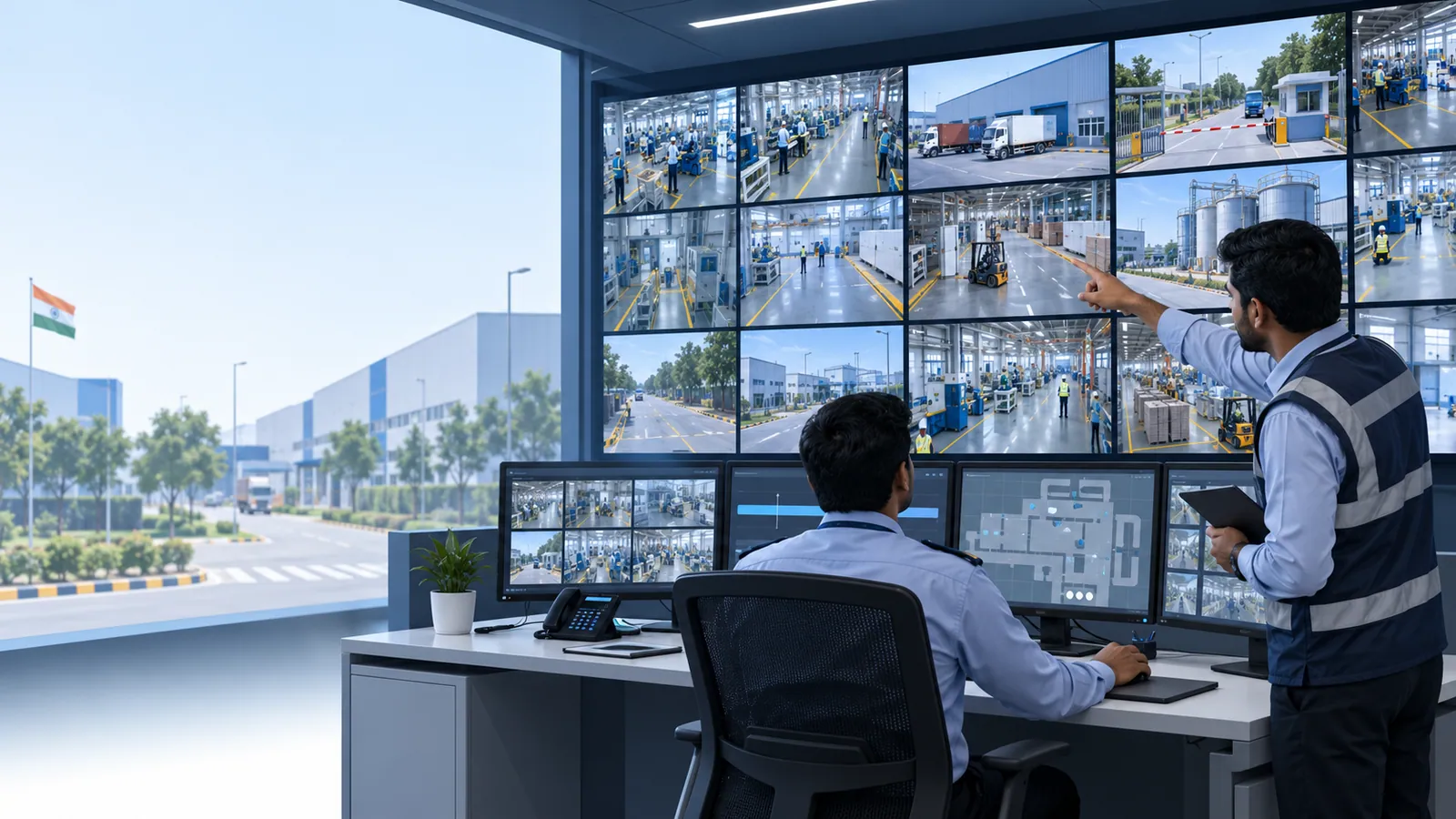
VMS software — PGAK Video Management System
One platform that streams, records, searches and manages every camera on a site — or across a city — with the analytics built in rather than bolted on.
What it does
- Live view of many cameras and many sites in one operator console
- Event-based recording, with quality and duration set per camera
- Playback with a timeline, bookmarks and search
- Rule-based alerts and event management in real time
- Built-in AI analytics — 100+ use cases
- Attribute search that follows a person from camera to camera
- Face recognition and video summarisation to shorten forensic review
- Role-based access, audit trails and multi-user operation
- Supervisor-defined layouts, operator screen monitoring and built-in messaging
- Encrypted analytics engines and video watermarking
- Desktop, web and mobile clients
- Command-and-control and smart storage management modules
Where it runs
| Deployment | Single site to city-wide, multi-site deployments; computing nodes register themselves · Runs on Windows, Linux, UNIX and macOS · Databases: MS-SQL, MySQL, PostgreSQL, Oracle and MongoDB · Virtualisation: VMware, KVM and QEMU |
|---|---|
| Platform and security | OWASP-certified application; VAPT-tested · TLS 1.3 with certificate-authenticated exchanges · Integrates with access control, alarm and fire systems — 50+ integrations |
| Typical buyers | Industrial facilities, Aviation, Smart cities, Roads and traffic, Retail, Banking, Education, Data centres, Hospitality |
| Platform figures | No fixed limit on cameras or users · 100+ analytics use cases · 50+ integrations |
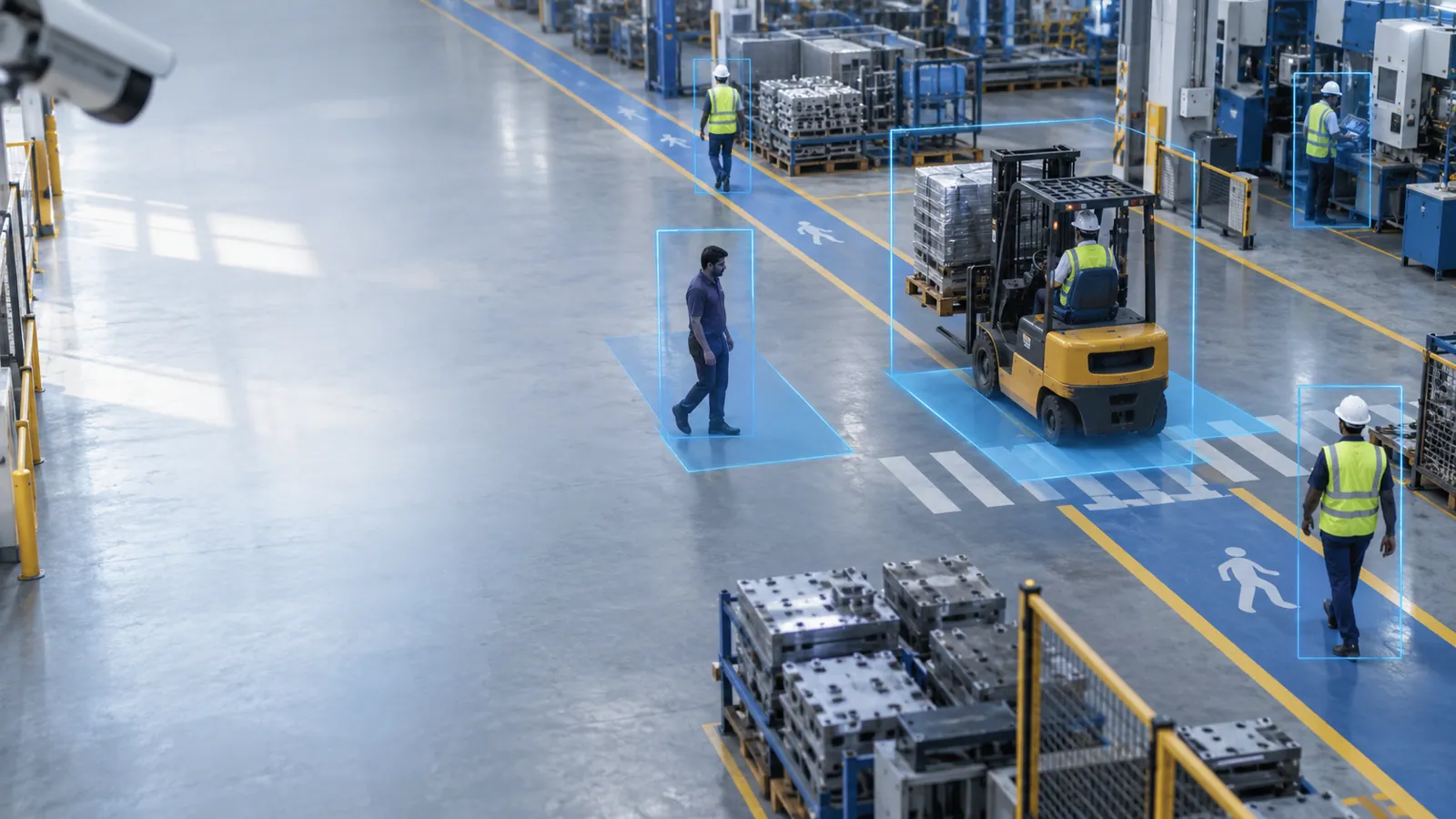
AI video analytics software — PGAK Video Analytics
An analytics layer that reads live and recorded video to detect, alert and report — on the PGAK VMS, or on the cameras and VMS a site already has.
What it does
- Industrial safety: PPE detection, hazard identification, workplace-compliance and personnel monitoring
- People: counting and tracking, face analytics, wanted-person recognition, women-safety analytics
- Crowd and traffic: density, flow patterns and compliance violations
- Vehicles: vehicle analytics
- Objects and behaviour: object analytics, anomaly and behavioural-pattern detection
- Retail: demographics, behaviour tracking and loss prevention
- Urban and municipal: garbage-overflow detection, illegal construction, encroachment of public space
- Healthcare: patient monitoring, fall detection and automated emergency response
- Forensics: attribute-based smart search and video summarisation
- Automated alert generation and an integration framework for third-party systems
Where it runs
| Deployment | Edge, on-premise or cloud; fog computing splits the processing between the edge and the centre · One camera to thousands · Camera-agnostic — works with any camera, operating system or VMS, so the existing cameras stay · Integrates with VMS, access control and enterprise security systems |
|---|---|
| Typical buyers | Manufacturing, Warehousing, Aviation, Smart cities, Banking, Education, Energy, Retail, Highway tunnels, Data centres, Hospitality, Healthcare |
| Platform figures | 100+ analytics |
Perimeter intrusion detection and PPE detection are the two analytics factories ask for first: a virtual fence on the boundary cameras, and helmet, vest and zone compliance on the shop floor — both on the cameras already installed where the lens allows it.
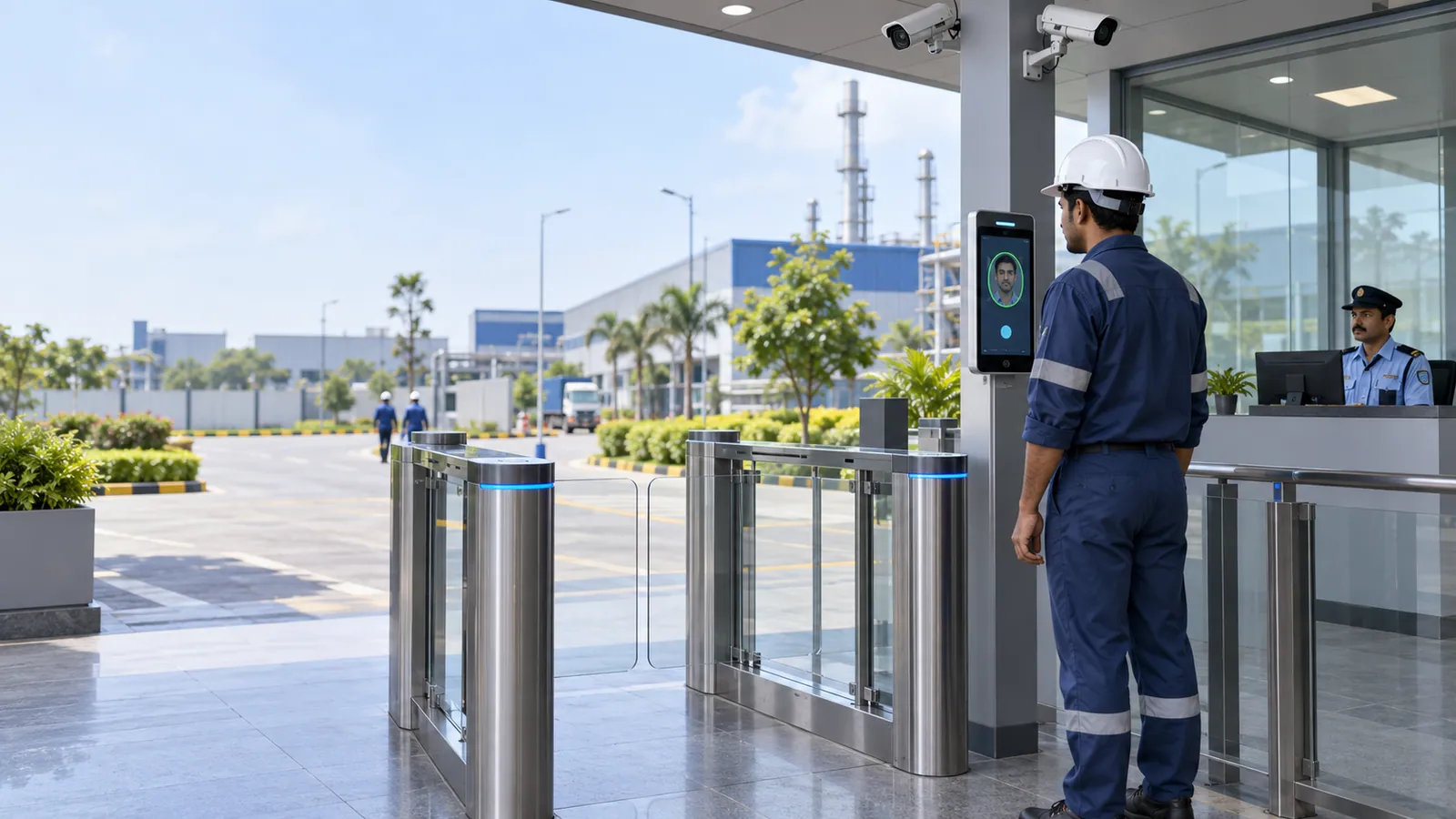
Face recognition system and face recognition attendance — PGAK FRS
Finds and matches faces in live feeds and recorded video, manages watchlists and alerts, and plugs into access control and attendance.
What it does
- Real-time face detection across multiple camera feeds
- Matching against face databases, with confidence scores
- Category-based watchlists with configurable alert rules
- Forensic search of recordings by facial attributes
- Offline recognition in stored video or still images
- Recognition through masks, cosmetics and partial occlusion
- Faces as small as 30 × 30 pixels
- Behaviour analytics: aggression, man-down and suspicious activity
- Integration with access control, attendance and security systems
- One interface for command centres, mobile devices and field teams
Where it runs
| Deployment | On-premise, cloud or hybrid · Uses existing IP cameras; integrates with POS and access-control units · Load-balancing modes N:1, N:N and N:0 |
|---|---|
| Platform and security | OWASP-compliant; VAPT-tested · Encryption at rest, in transit and in use |
| Typical buyers | Law enforcement, Enterprise security, Retail, Hospitality, Education, Airports and stadiums |
| Platform figures | Model trained on 100+ million faces · Minimum face size 30 × 30 px · No fixed database limit |
A face recognition attendance system is the same engine at the gate: enrolment with consent, a match at the turnstile, and the attendance record in your HR system — no cards to lose and no buddy punching.
ANPR cameras and intelligent traffic management system (ITMS) — PGAK ATMS
Monitors, detects, enforces and reports on road traffic from one platform — a highway tunnel, a toll plaza or a city junction — with evidence that holds on a challan.
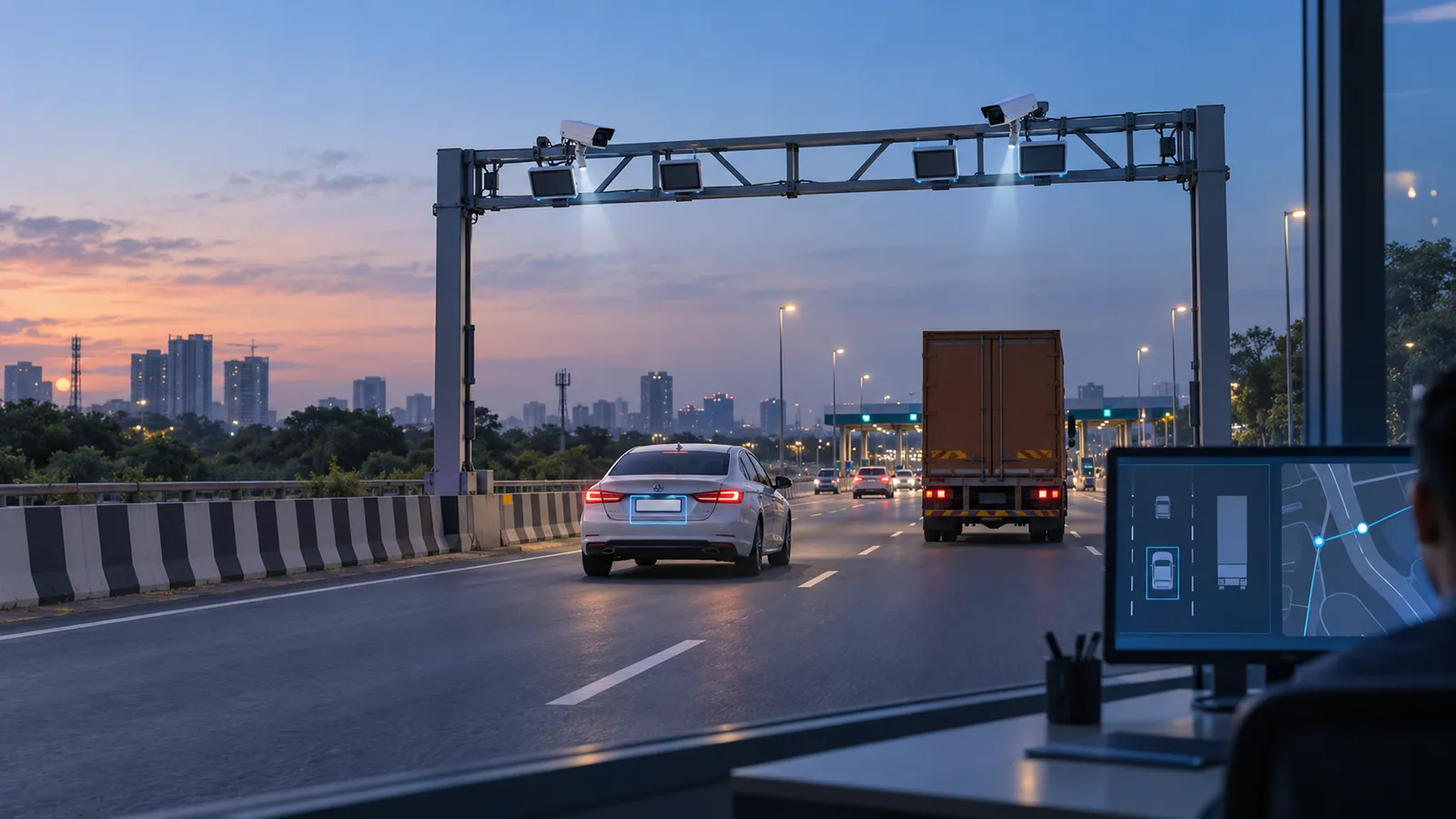
What it does
- Live video and traffic monitoring, with dashboards and video walls
- Incident detection on highways and in tunnels — stalled vehicles, congestion, hazards
- Violation detection and recording — over-speeding, wrong-way driving, helmet-less and triple riding among them
- Sectional (average) speed enforcement
- Automated evidence capture and e-ticket / e-challan generation
- Investigation and playback with timeline, bookmarks and search
- Alerts to command centres for dispatch
- Vehicle-actuated speed displays (radar + LED)
- Multi-lane free-flow tolling with Vahan and bank integration
- Third-party integration with traffic controllers, radar and emergency networks
Where it runs
| Deployment | Edge-to-cloud architecture with secure APIs · AI-enabled cameras for incident detection; HD PTZ cameras roughly every kilometre for corridor monitoring · RFID, ANPR, radar and LiDAR options for free-flow tolling · One interface for command centres, mobile units and field teams |
|---|---|
| Platform and security | OWASP compliance |
| Named sub-systems | ATMS — advanced traffic management · VIDES — video incident detection and enforcement · VASD — vehicle-actuated speed display · TMCS — traffic monitoring and control · MLFF — multi-lane free-flow tolling |
| Typical buyers | City traffic police, Highways and expressways, Tunnels, Toll operators, Industrial townships |
| Platform figures | 14 incident types · 8 violation types · Incidents flagged in under 90 seconds |
For an industrial estate or township the same platform runs ANPR at the gates, internal-road speed enforcement and visitor-vehicle logs; for a highway or municipal tender it runs the full ITMS stack.
Cloud CCTV and VSaaS — PGAK Cloud Video
The same video management and analytics delivered from the cloud — no servers on site, paid for as the camera count grows.

What it does
- Cloud-hosted video management with no on-premise servers
- AI analytics for behaviour analysis and security insight
- Multi-site, multi-tenant management from one dashboard
- Business-intelligence dashboard and operational reports
- Live feeds, alerts and forensic evidence on mobile and web
- Role-based permissions
- Built-in backup and disaster recovery
- Third-party integration with access control and business systems
- Dedicated account management and proactive monitoring
Where it runs
| Deployment | Single site to multi-site · Pay-as-you-grow: storage, analytics and camera capacity billed as used — OPEX, not CAPEX · Hosting region, retention and bandwidth are confirmed for your site before you commit |
|---|---|
| Platform and security | Encrypted video and data |
| Typical buyers | Corporate offices, Manufacturing, Retail chains, Financial services, Education |
AI CCTV camera, or AI on the CCTV you already have?
Most sites asking for AI CCTV cameras already own a few hundred cameras that work. The PGAK analytics layer is camera-agnostic: it runs on existing cameras, recorders and VMS, so the first step is a readiness check of what is installed — which cameras can serve which analytic from where they are, and which need a better lens, a new position or a replacement.
- Keep the cameras where resolution, angle and lighting already suit the analytic
- AI cameras at the edge for remote gates and long perimeters where there is no server close by
- Replace selectively — a face-recognition gate needs a different camera from a yard overview
| Compliance point | How it is handled |
|---|---|
| Camera interoperability | ONVIF-conformant IP cameras; each model is checked against the platform's compatibility list before quoting |
| CCTV system design | IEC 62676 for the surveillance system; TIA/EIA-568 for the cabling it rides on |
| Face data and video of people | Personal data under the DPDP Act, 2023 — purpose, notice, retention and access decided with you and configured into the system |
| Evidence | Watermarking, audit trails and role-based access, so a recording can be produced and defended |
An industrial CCTV installation company and ELV contractor — not a software reseller
- Site survey and a camera schedule that names the analytic each camera must serve
- Structured cabling, switching and fibre, certified and labelled — the ELV backbone every system rides on
- Power, UPS and earthing for the camera network, the server room or the edge units — electrical scope
- Servers, storage and edge hardware sized from the retention period and the analytics load
- Deployment and configuration of the VMS, the analytics, face recognition, ANPR or the traffic modules
- Integration with access control, intrusion, fire alarm and public address, with a cause-and-effect matrix you sign off
- Commissioning, operator training and the acceptance test against the camera schedule
- Handover with administrator credentials in your name, configuration backups and the as-built device list
- Annual maintenance, health monitoring and storage reviews under our AMC
- PGAK keeps what is PGAK's: software licences, version updates and warranty terms
Secured Engineers is an authorised channel partner of PGAK Innovations Pvt. Ltd. Product details and platform figures on this page are as stated by PGAK Innovations Pvt. Ltd.
ELV on our project record
ELV projects from our published record — the surveillance, access control and cabling scope a video platform plugs into. None of them is recorded as a PGAK platform deployment.
Operational Excellence for a Logistics Major
Turnkey multi-trade logistics & warehousing project · Nahar Logistics
Hospitality · Ludhiana, PunjabFire Fighting & ELV for Benson Hotel
Two-trade hospitality project · Benson Hotel
Manufacturing · Mohali, PunjabFire Fighting & ELV for Vibracoustic Plant
Two-trade manufacturing project · Vibracoustic
Get a video platform proposal
Tell us the site, how many cameras you have or plan, and what each one must catch. We come back with the platform, the analytics that fit your lenses, and what the servers, cabling and integration add up to.
Thank you. Our engineering team will review your requirement and contact you shortly.
If it's urgent, call +91 70099 85817 or message us on WhatsApp.
AI video analytics, VMS and face recognition — straight answers
Do we need AI CCTV cameras, or can our existing CCTV become AI?
Usually the second. PGAK's analytics layer is camera-agnostic — it runs on the cameras, recorders and VMS a site already has — so an existing CCTV system becomes an AI CCTV system without replacing the cameras. AI cameras with analytics on board still make sense at remote gates and on long perimeters where there is no server nearby. The survey decides which, camera by camera, from the lens, the distance and the analytic you want.
What is VMS software, and why does a large site need it?
VMS software — a video management system — is the platform that records, displays, searches and manages every camera from one console, across many sites. A recorder per building works until the thirtieth camera; after that you need one system that handles events, user roles, retention and the integration with access control and fire alarm. PGAK's VMS states no fixed camera or user limit; its computing nodes register themselves as the deployment grows.
What is an ANPR camera?
An ANPR camera reads number plates automatically — automatic number plate recognition — and matches them against lists: vehicles allowed through a factory gate, vehicles that have overstayed in a yard, or, on a city road, vehicles that jumped a signal or exceeded the speed limit. On the PGAK platform the plate read, the image and the time are stored together, which is what makes the record usable as evidence.
Is a face recognition attendance system allowed in a factory or office in India?
Face data is personal data under the Digital Personal Data Protection Act, 2023, so a deployment needs a stated purpose, notice to the people it covers, a retention period and controlled access. The system enforces what you decide — watchlist categories, retention, role-based access, audit trails, encryption — and your legal or HR team sets the policy. We configure to the policy; we do not write it for you.
On-premise or cloud?
Both are on the menu. The VMS and the face recognition system deploy on-premise, in the cloud or as a hybrid; the analytics run at the edge, on-premise or in the cloud; the cloud CCTV option is cloud-only and billed as the camera count grows. We decide with you on retention, bandwidth, who must see the video from where, and whether a server room on site is a cost or an asset.
What does Secured Engineers do, and what stays with PGAK?
We survey the site, prepare the camera schedule, lay and certify the cabling and network, provide the power, UPS and earthing, supply and rack the servers or edge units, deploy and configure the software, integrate it with access control, fire alarm and public address, commission, train your operators and hand over with the administrator credentials in your name. Software licences, updates and warranty terms are PGAK's.
What does a video analytics project cost?
The software is licensed per camera and per analytic, on top of the hardware, cabling, integration and commissioning we supply. We price it per site from a camera schedule, so the number depends on how many cameras, which analytics and how long you keep the video. PGAK offers a free readiness check of your existing cameras; we can arrange one before you commit.
Start from the camera schedule, not the brochure
Send a site plan, an RFP or a list of your cameras and what you want each one to catch. We will come back with the platform, the analytics that fit the lenses you have, and what the servers, cabling and integration add up to.