
The Site Is Insured. The Chiller That Failed on Test Is Probably Not.
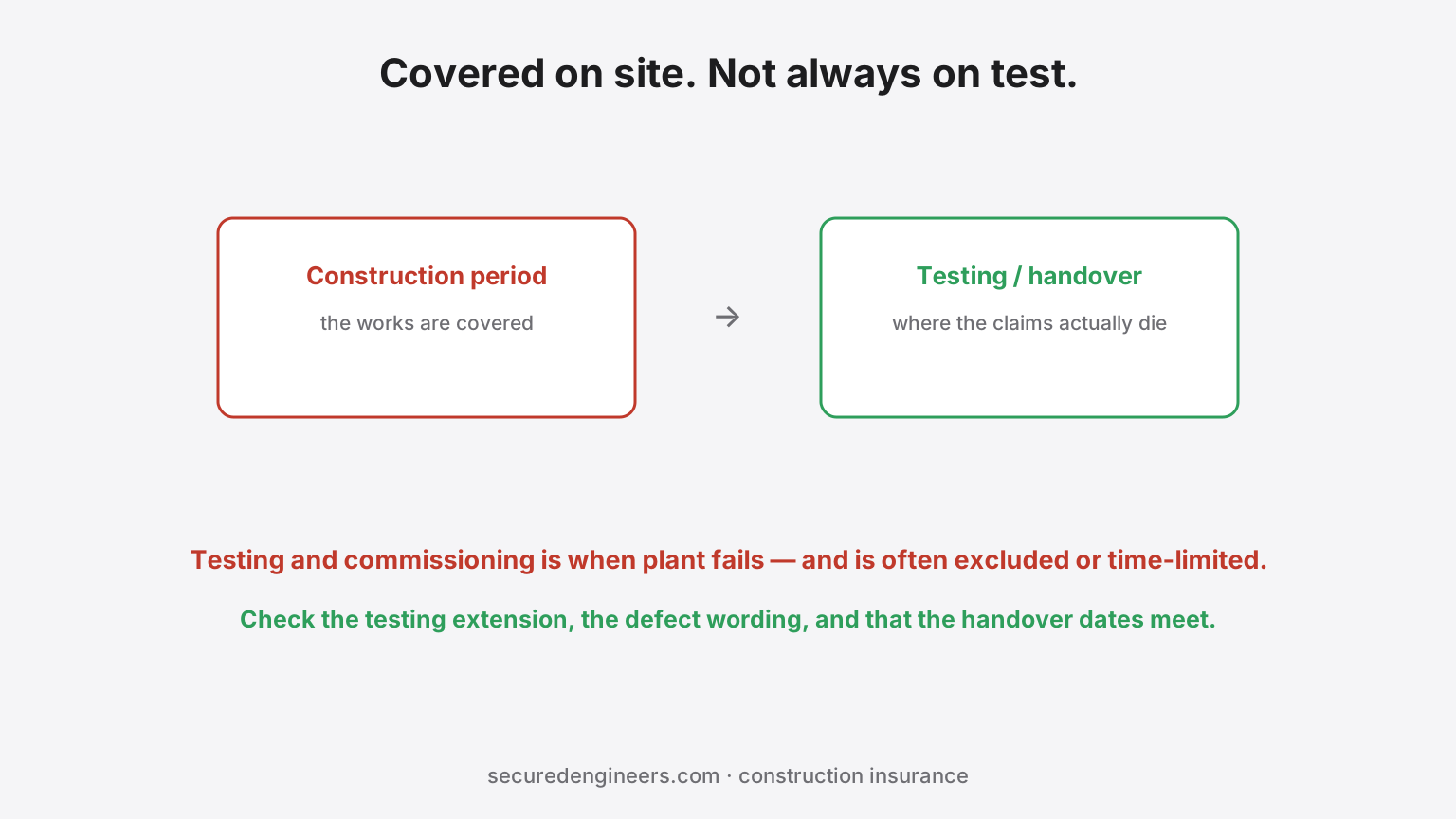
Industrial projects carry construction insurance as a matter of course — contractors all-risk, or erection all-risk where plant is being installed. The policy is arranged, the certificate is filed, and everyone assumes the works are covered.
They largely are. The exposures that catch MEP packages sit in the exclusions and in the dates, and both are readable before anything goes wrong.
The three gaps that recur
- Testing and commissioning. Many policies treat the testing period differently, or exclude it, or cover it only for a stated number of days. This matters because commissioning is precisely when MEP equipment is most likely to fail — first energisation, first full load, first pressure test. An extension is usually available, and usually has to be asked for.
- Defective design, material or workmanship. Policies commonly exclude the cost of rectifying the defective item itself, while covering resulting damage to other property — and the wording varies considerably in how far that goes. A pump that fails because it was wrongly selected, and floods a plant room, produces a claim where part is covered and part is not.
- The handover gap. Construction cover ends at practical completion or handover; the operational property policy starts when the owner puts it on risk. If those dates do not meet exactly, there is a window where an installed, commissioned, valuable plant room is insured by nobody.
Questions worth asking before the policy is bound
| Question | Why it matters on MEP |
|---|---|
| Is testing and commissioning covered, and for how long? | The highest-risk period for installed plant |
| Does the maintenance/defects period extension apply? | Covers work done during defect liability |
| Is free-issue client equipment covered while in our custody? | Client-supplied chillers and DG sets are often high value |
| Is there cover for existing property on a brownfield site? | Retrofit work happens inside a running plant |
| Do construction and operational cover dates actually meet? | The handover gap |
| Who is named — main contractor, subcontractors, client? | Decides who can actually claim |
Why brownfield deserves separate thought
A retrofit in a running factory carries an exposure a greenfield job does not: damage to existing plant and to production. A construction policy covering "the works" may not cover the client's operating equipment surrounding those works, and business interruption to the client is usually a different policy again.
Anyone planning MEP work inside a live plant should establish that boundary before mobilising, not while assessing damage. The phasing question is covered in retrofitting without stopping production.
What we do differently
We confirm the testing-and-commissioning position and the handover dates as part of mobilisation rather than assuming the certificate on file answers it — because the moment plant is most likely to fail is the moment cover is most likely to be narrow. Related: commissioning and the handover documentation gap and defect liability disputes.
General information, not insurance advice. Policy wordings differ — read yours, or have a broker read it.
More insights
Your MEP Contractor Left. So Did the Only People Who Understood the System.
Design drawings show what was intended. As-built drawings should show what was actually installed — but they routinely don't, because site changes during execution never get fed back into the drawing set. Combined with a generic O&M manual instead of one specific to the installed system, the facility team inherits a working building with no reliable record of why it works or how to fix it when it stops.
Project ManagementManaging Multiple Contractors? Here's Why Your Project Keeps Falling Behind
Separate Electrical, HVAC, Plumbing and Fire Fighting contractors mean four schedules, four drawing sets and four points of failure — here's what that costs, and how one MEPF EPC partner fixes it.