
Your Warehouse Is in Nagpur Now. Your MEP Contractor Options Still Aren't.
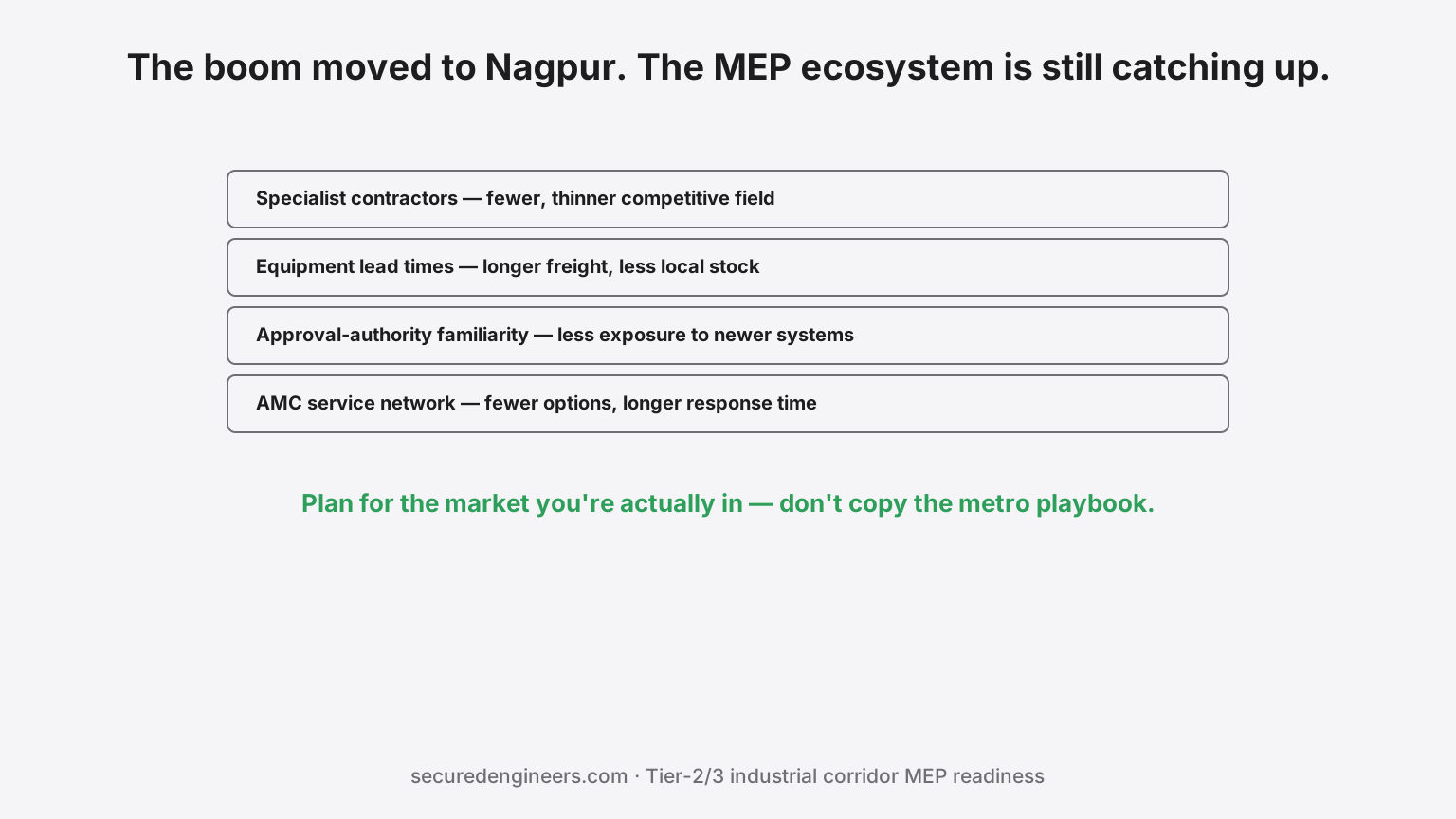
The growth story in Indian real estate and industrial development has genuinely shifted. Rooftop solar adoption in 2026 is being driven by Tier-II and Tier-III cities — Lucknow, Nagpur, Surat, Varanasi and Ernakulam among the fastest-growing markets — rather than the metros. Warehousing and logistics absorption is following the same pattern, with dedicated freight corridors and new industrial parks opening demand in Tier-II and III markets described as "the next frontier," anchored by corridors like the Delhi-Mumbai Industrial Corridor. This is real, durable growth. What it's outrunning: the mature MEP contractor base, specialist equipment vendor network, and experienced local approval-authority relationships that a metro project takes for granted and a Tier-2/3 project often has to build from a much thinner starting point.
What's actually different about executing MEP outside a metro
| Factor | Metro market | Typical Tier-2/3 growth market |
|---|---|---|
| Specialist contractor availability | Multiple experienced fire, HVAC and electrical specialists competing for the work | Fewer qualified specialists — projects sometimes rely on contractors executing this scale or system type for the first time locally |
| Equipment and material lead times | Local stock or short lead times for common equipment | Longer lead times, more freight cost, less local stock of specialised components |
| Local approval-authority familiarity | Fire department and building authorities experienced with the specific system types and documentation | Less consistent familiarity with newer system types (e.g., high-density fire suppression, complex ELV integration) — the same enforcement-consistency issue covered in NBCS 2026 adoption can be more pronounced locally |
| AMC and after-sales service network | Multiple service providers within a short response radius | Fewer options, longer response times for critical system maintenance and breakdowns |
Where this gap actually costs a project time and money
- Tender processes returning fewer, less experienced bids — a thinner competitive field makes the L1 backfire risk worse, not better, since there's less genuine competition to keep quality and pricing honest
- Skilled manpower availability compounding the shortage covered generally in workforce risk — a Tier-2/3 project often has to import skilled labour from elsewhere, adding cost and coordination complexity a metro project doesn't face to the same degree
- Longer equipment lead times undermining the realistic project timeline a schedule was built around, unless the procurement plan explicitly accounts for the longer supply chain to a Tier-2/3 site
- Post-handover AMC and maintenance reliability weaker than metro projects assume by default — the same lifecycle economics apply, but the practical service-provider options to execute that maintenance plan are genuinely thinner locally
What a realistic Tier-2/3 project plan accounts for
- Wider contractor sourcing from day one — don't assume the local market alone will produce enough qualified bidders; plan to bring in specialist contractors from established markets where the local base is thin, and price that mobilisation cost in from the start
- Longer procurement lead times built into the schedule explicitly, not assumed equal to a metro project's timeline for the same equipment
- Early, direct engagement with local fire and building authorities on any system type they may have less experience approving — walking through the design proactively rather than discovering unfamiliarity at submission stage
- An AMC and maintenance strategy that accounts for a thinner local service network — this might mean training in-house facility staff more thoroughly, negotiating remote-support provisions, or accepting a longer response-time SLA than a metro project would tolerate, but deciding this deliberately rather than discovering it during the first breakdown
- Realistic workforce planning that may require importing skilled trades rather than assuming full local availability, budgeted and scheduled accordingly
Why this is a planning problem, not a reason to avoid Tier-2/3 markets
None of this makes Tier-2/3 industrial and warehousing investment a bad idea — the growth is real and the underlying economics are sound. It does mean the MEP execution plan needs to be built for the market it's actually in, not copied from a metro playbook and assumed to transfer directly. A project that plans around the thinner contractor base, longer lead times and less mature approval ecosystem from day one executes smoothly; one that assumes metro conditions discovers the gap mid-project, when it's expensive to fix.
Our turnkey execution team has delivered MEP scope across Tier-2 and Tier-3 markets specifically, with the sourcing and scheduling approach built for that context rather than a metro assumption transplanted onto a different market.
FAQs
Is MEP execution genuinely harder in Tier-2/3 cities, or just different?
Both — the underlying engineering is the same, but the contractor base, equipment lead times and local approval-authority experience are thinner, which changes how a project needs to plan sourcing, scheduling and maintenance.
Should we expect the same tender competition in a Tier-2/3 market as a metro?
Not by default — plan to widen sourcing beyond the immediate local market if the initial tender response is thin, rather than accepting a weak field and risking the L1 backfire pattern.
How should AMC planning differ for a Tier-2/3 facility?
Expect a thinner local service-provider network and plan accordingly — more thorough in-house staff training, negotiated remote-support provisions, or a realistic response-time SLA, decided deliberately rather than discovered during a breakdown.
Can you execute MEP scope for our Tier-2/3 city project?
Yes — with sourcing and scheduling built for that market's actual conditions. Get in touch.
More insights
The Retrofit Quote Was Cheaper. The Shutdown It Required Cost Ten Times More.
Brownfield MEP work is priced like greenfield work — by material and labour — but its real cost is production downtime. A retrofit plan that ignores how the plant keeps running is not cheaper; it has simply moved the largest cost line off the quotation and onto the operations budget.
Project ManagementManaging Multiple Contractors? Here's Why Your Project Keeps Falling Behind
Separate Electrical, HVAC, Plumbing and Fire Fighting contractors mean four schedules, four drawing sets and four points of failure — here's what that costs, and how one MEPF EPC partner fixes it.