
Supplying a PSU? Your Invoice Now Has to Go on TReDS.
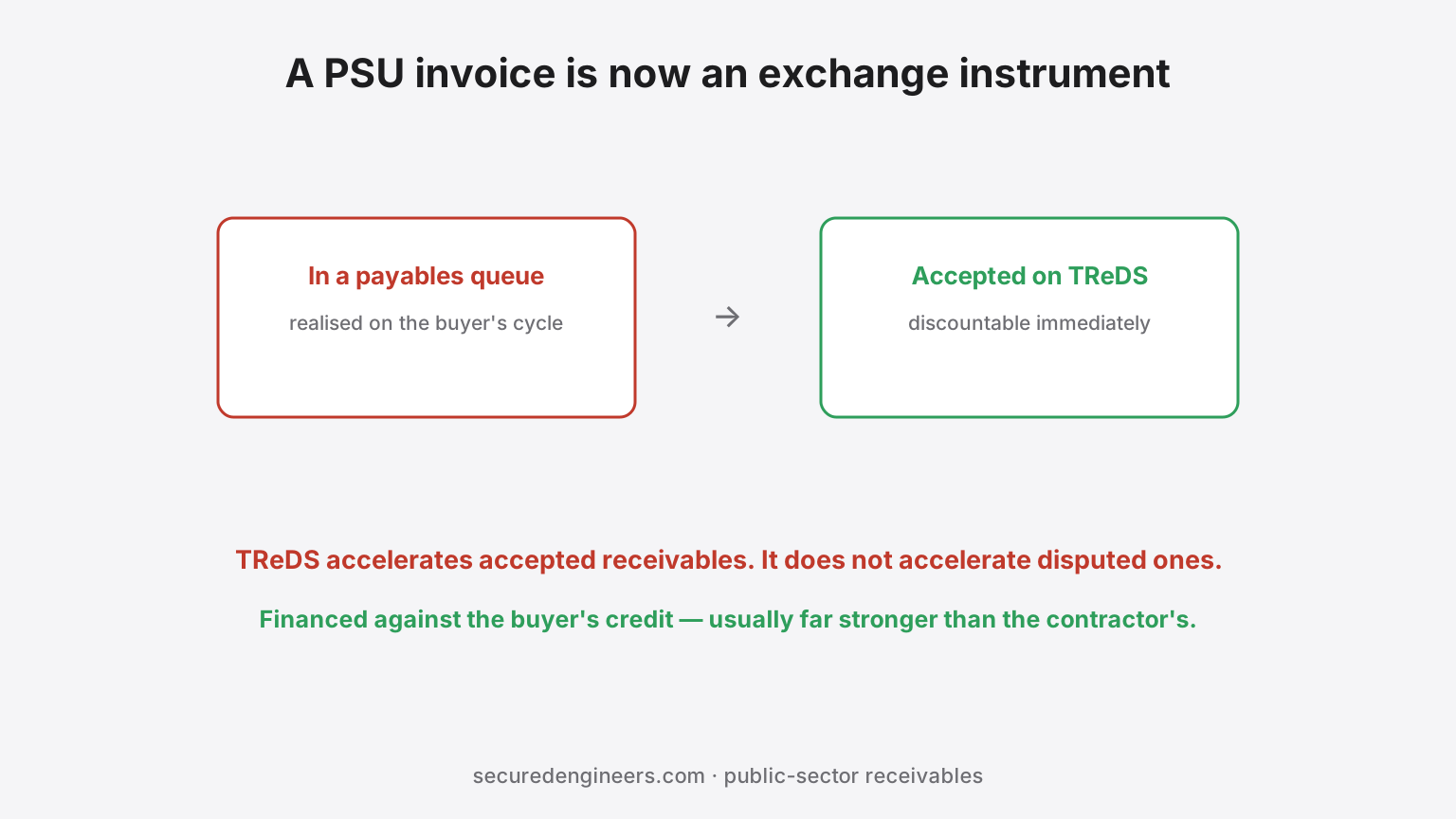
Among the less-discussed provisions of the MSME Development (Amendment) Bill, 2026 is one that changes cash flow for anyone doing public-sector work: every central public sector enterprise must settle invoices for goods or services procured from MSMEs on the Trade Receivables Discounting System.
What TReDS actually is
TReDS is a regulated electronic platform on which trade receivables are financed. In outline: the supplier uploads an invoice, the buyer accepts it, and financiers bid to buy that accepted receivable at a discount. The supplier takes payment immediately at the discounted value; the financier collects from the buyer on the due date.
The mechanism that matters is the acceptance step. Once a buyer accepts an invoice on the platform, it becomes a recognised obligation on a regulated exchange rather than an entry in a payables ledger that can be queried indefinitely.
What changes for a contractor on PSU work
| Before | With mandatory TReDS |
|---|---|
| Invoice sits in the buyer's payables queue | Invoice is uploaded and requires an accept/reject decision |
| Realisation depends on the buyer's cycle | Once accepted, the receivable can be discounted immediately |
| Financing is against your balance sheet | Financing is priced against the buyer's credit — usually far stronger for a CPSE |
| Disputes surface at payment time | Disputes surface at acceptance, earlier and more visibly |
The third row is the one contractors underrate. Discounting on a CPSE's credit standing is normally cheaper than borrowing on the credit of a mid-sized contracting business — so the cost of carrying the receivable falls, not just the wait.
What it does not do
It does not resolve whether the work was done. Acceptance is still a decision the buyer makes, and a contested measurement or an incomplete document set will stall at that step exactly as it stalled before. TReDS accelerates accepted receivables; it does not accelerate disputed ones.
Which puts more weight on the documentation. If your bills are supported by measured, verified quantities and a complete handover set, acceptance is routine. If they are not, moving the process onto a platform simply makes the gap visible sooner.
What to prepare
Get registered on a TReDS platform if you supply CPSEs and are not already. Confirm your MSME registration is current, since eligibility runs through it. And tighten the billing pack — measurement sheets, test certificates, approved drawings — because acceptance is now the gate, and it arrives earlier than payment used to.
Related: writing a BOQ that cannot be gamed and why technical bids get disqualified.
What we do differently
On public-sector work our billing pack is prepared to be accepted rather than to be argued about — item-wise measurement to IS/CPWD norms, with the test and commissioning documentation attached. See testing & commissioning.
General information, not legal or financial advice. Confirm current platform and eligibility requirements before relying on this.
More insights
Your Government Tender Was Rejected on Page 3. Nobody Opened the Price Envelope.
Government and PSU MEP tenders reject more bids on technical eligibility than on price — a missing certificate, an EMD in the wrong format, a turnover figure one lakh short of the threshold. The financial bid never gets opened. What actually disqualifies technical bids, and the pre-submission checklist that prevents it.
Costing & ProcurementYou Are Probably Paying for kVA You Never Use — or Getting Fined for kVA You Touched Once
Two lines on your electricity bill quietly outrank the energy charge: billing demand and time-of-day adjustments. Both are tunable. Most factories have never tuned either — they set contract demand at connection time and never looked again.