
SBJ Nirmal Rotavator-Parts Distribution Warehouse — Ludhiana — Electrical, Low Voltage, Fire Fighting
The electrical, ELV and fire-fighting package for a new single-span distribution warehouse at a rotavator-parts manufacturer in Ludhiana district — delivered as one scope, and in operation in the company photographs of October 2026.
Project details as published in our Company Profile 2025. Full technical values, test records and approval documentation are available on request.
Project snapshot
- Client
- SBJ Nirmal Products (SBJ Forging Pvt. Ltd.)
- Industry
- Warehousing & Logistics
- Location
- Ludhiana, Punjab
- Project type
- Turnkey multi-trade distribution warehouse project
- Services delivered
- Electrical, Fire Protection, Low Voltage / ELV
- Project status
- Completed
Scope
- Electrical
- Low Voltage
- Fire Fighting
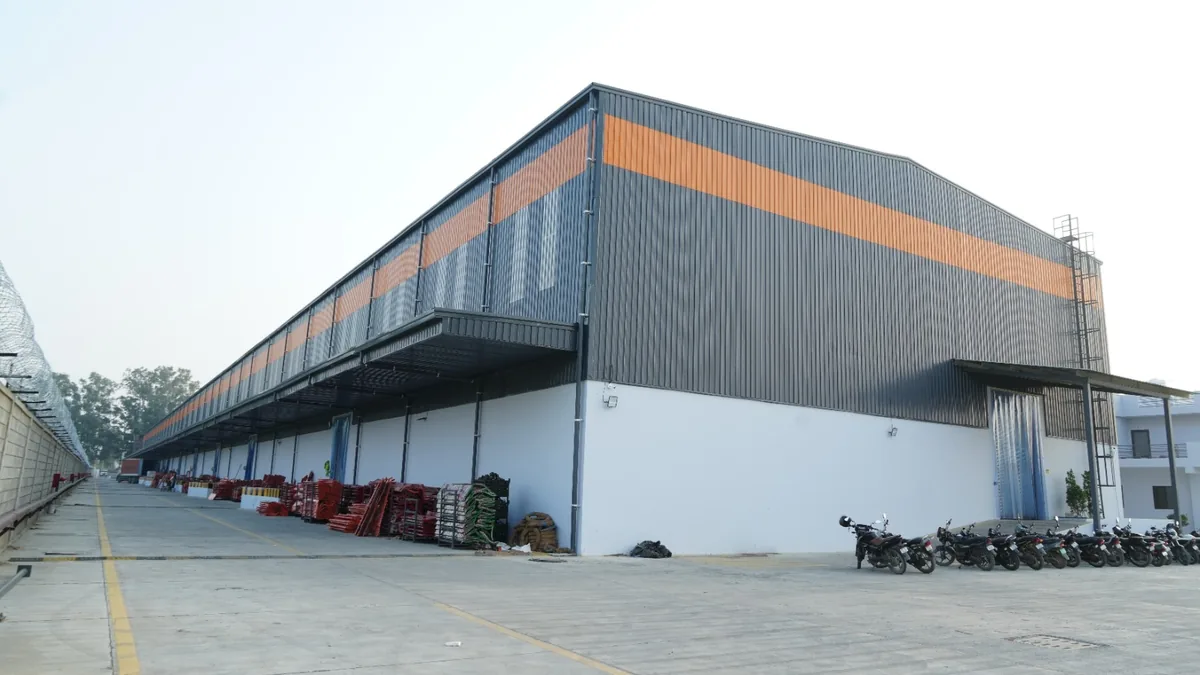
- Single-span pre-engineered warehouse with loading docks along one long face
- Three trades in one package: electrical, ELV (low voltage) and fire fighting
- Client: SBJ Nirmal Products — rotavator and tiller parts, Ludhiana district
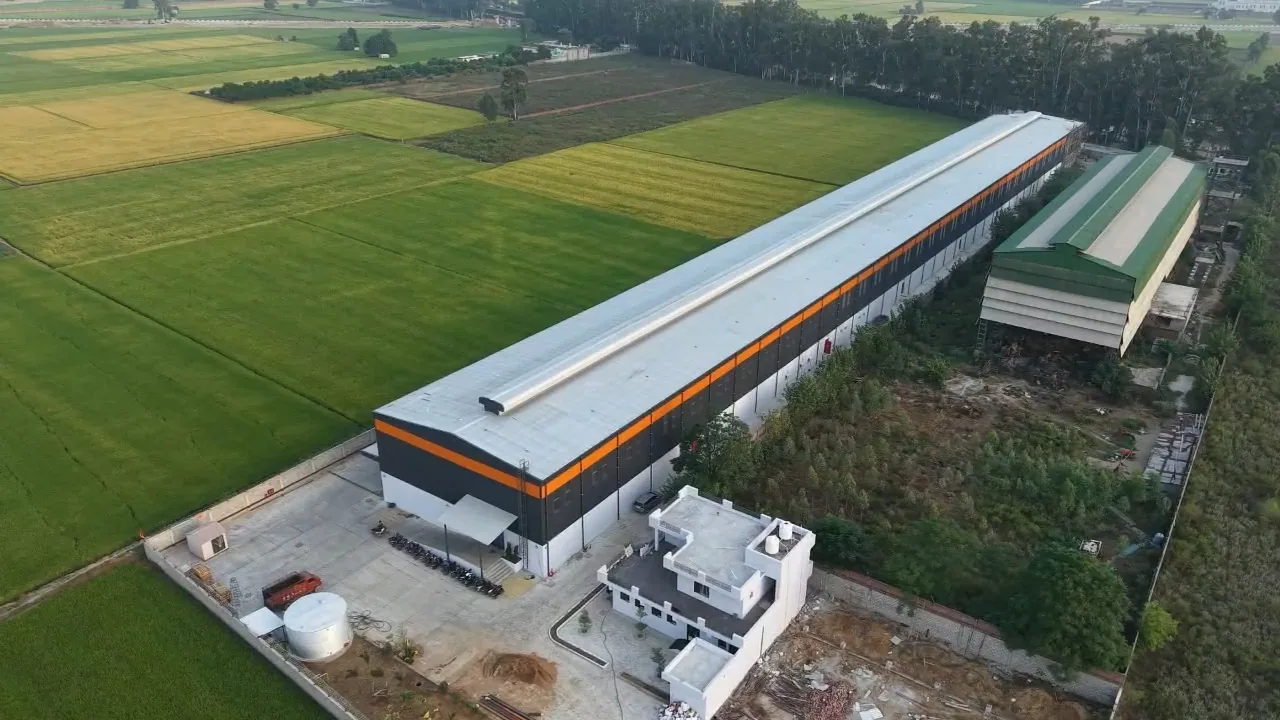
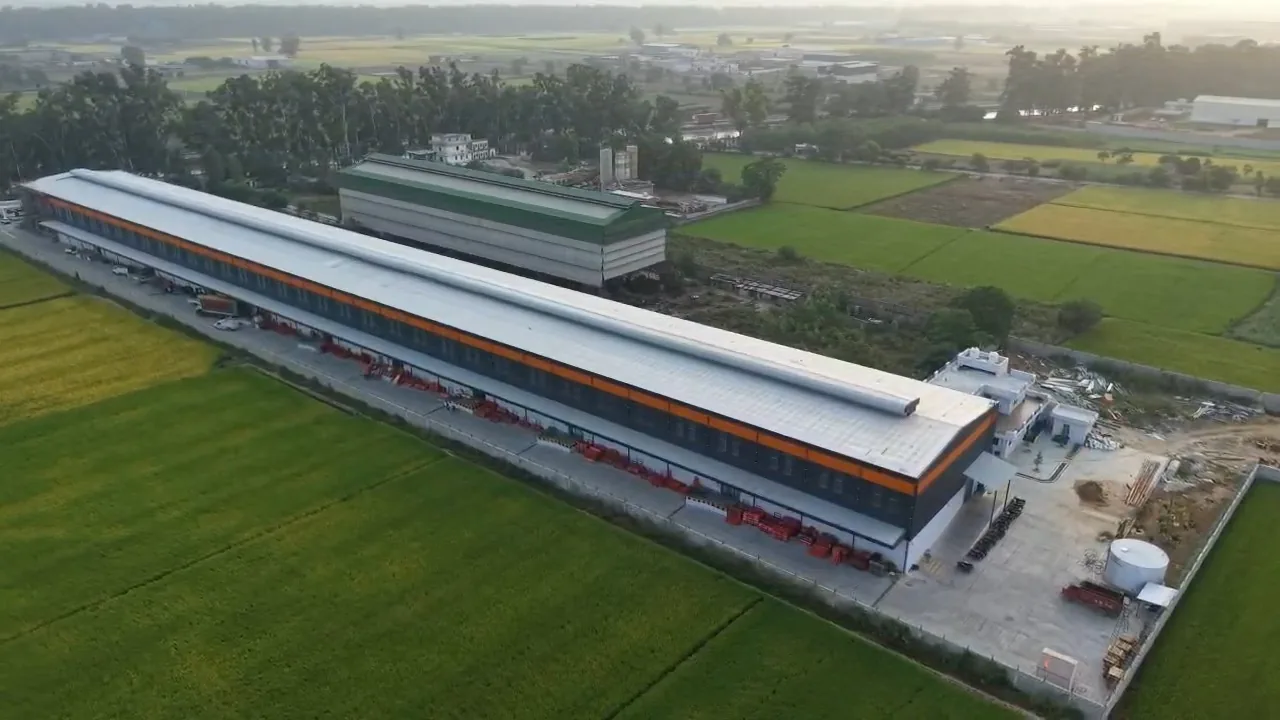
- In operation — company photographs and drone footage, October 2026
Engineering challenge
- The client makes rotavator and tiller parts — blades, shafts, yokes and gearbox components — and supplies them through a dealer network across India, which is how SBJ Nirmal describes its own business. The new building is a distribution warehouse for that stock: a single-span pre-engineered shed with loading docks along one long face and an office block at the end.
- A warehouse of this shape is one long room. Every service — power, low-voltage cabling, detection and fire water — has to travel the full length of the building and serve two different places at once: the storage floor, and the dock edge where vehicles stand.
- The stock decides the engineering. Steel parts do not burn, but pallets, packaging and vehicles at the docks do, and the company's own catalogue lists gear oil and greases alongside the parts — so the fire protection is designed for the wrapper and the lubricants, not for the steel. Racked parts also need enough light to read a part number on the rack, and power and data where picking and dispatch actually happen.
- Three trades, one handover. The electrical distribution, the ELV systems and the fire-fighting installation were delivered by Secured Engineers as a single package, so the interfaces between them — the fire system’s electrical supply, low-voltage cabling sharing containment routes with power, the office served separately from the floor — sat with one team rather than being split across contractors.
Our solution
- Electrical: the power distribution for the warehouse floor, the loading docks and the office block, with the lighting the floor needs.
- ELV: the low-voltage systems a dispatch operation runs on, cabled on routes planned together with the power rather than after it.
- Fire fighting: the fire-protection installation for a racked parts warehouse, designed for the stored hazard rather than for the steel on the racks.
- All three delivered by one team, with the interfaces between the trades coordinated in-house.
Approvals
Work of this scope typically runs through the following statutory approvals, which we manage end to end:
Outcome
- A working warehouse. The company photographs and drone footage of October 2026 show the building in operation: stock staged on the dock side, vehicles at the bays, the office block occupied.
- Three trades handed over by one contractor, so the client has a single point of responsibility for the power, low-voltage and fire systems the building runs on.
- Capacities, equipment makes, test and commissioning records and the approvals obtained are held in the project file and are not published on this page yet. A buyer evaluating similar work can ask for them.
Project images
Site footage
Lessons and engineering considerations
- Length is the electrical design problem in a single-span shed. Sub-distribution placed along the building keeps cable sizes and voltage drop sensible; one board at the end of a long warehouse does not.
- Keep the fire-water infrastructure off the truck lane. On a dock-side warehouse the long face is for vehicle movement, so hydrant points, water storage and the pump installation are better reached from the ends and the service side.
- Light for reading, not for walking. Racked steel parts need a lighting level at which labels and part numbers can be read on the rack, and high-bay fittings have to be laid out around the purlins and the ridge ventilator rather than on a flat grid.
- Fix the ELV points before the racking plan is final. Scanner points at the dispatch bays, camera coverage of the dock edge and data to the office are far cheaper to route while the containment is open than after the racks are in.
- Plan the containment for the whole length on day one. A later rack line, scanner point or camera should be an addition to a route that already exists, not a new route across a working floor.
- A parts warehouse is a non-combustible load in a combustible wrapper. Blades and gears do not burn; pallets, packaging, lubricants and vehicles do, and the fire system has to be designed for them.
Industrial zones with similar work
More projects
Browse all delivered projects by sector and city.
Fire Safety at the Indian Army's Largest Tankage Project
Fire-safety works for the Indian Army's largest petroleum tankage project.
Urban InfrastructureChandigarh Sectors 32 & 43 — Consultancy
A published consultancy reference for Sectors 32 and 43, with a documented BOQ and drawing revision submission for the Sector 43 parking project.
Distribution WarehouseWarehouse MEPF Delivered in 37 Days
Complete turnkey MEPF for a distribution warehouse, executed in 37 days.
Ready to start your project?
Get a free consultation and quote. We design, prepare and file your approvals, and execute — you deal with one team.