
The Factory Layout Was Fixed for Production Flow. It Fixed the MEP Cost Too.
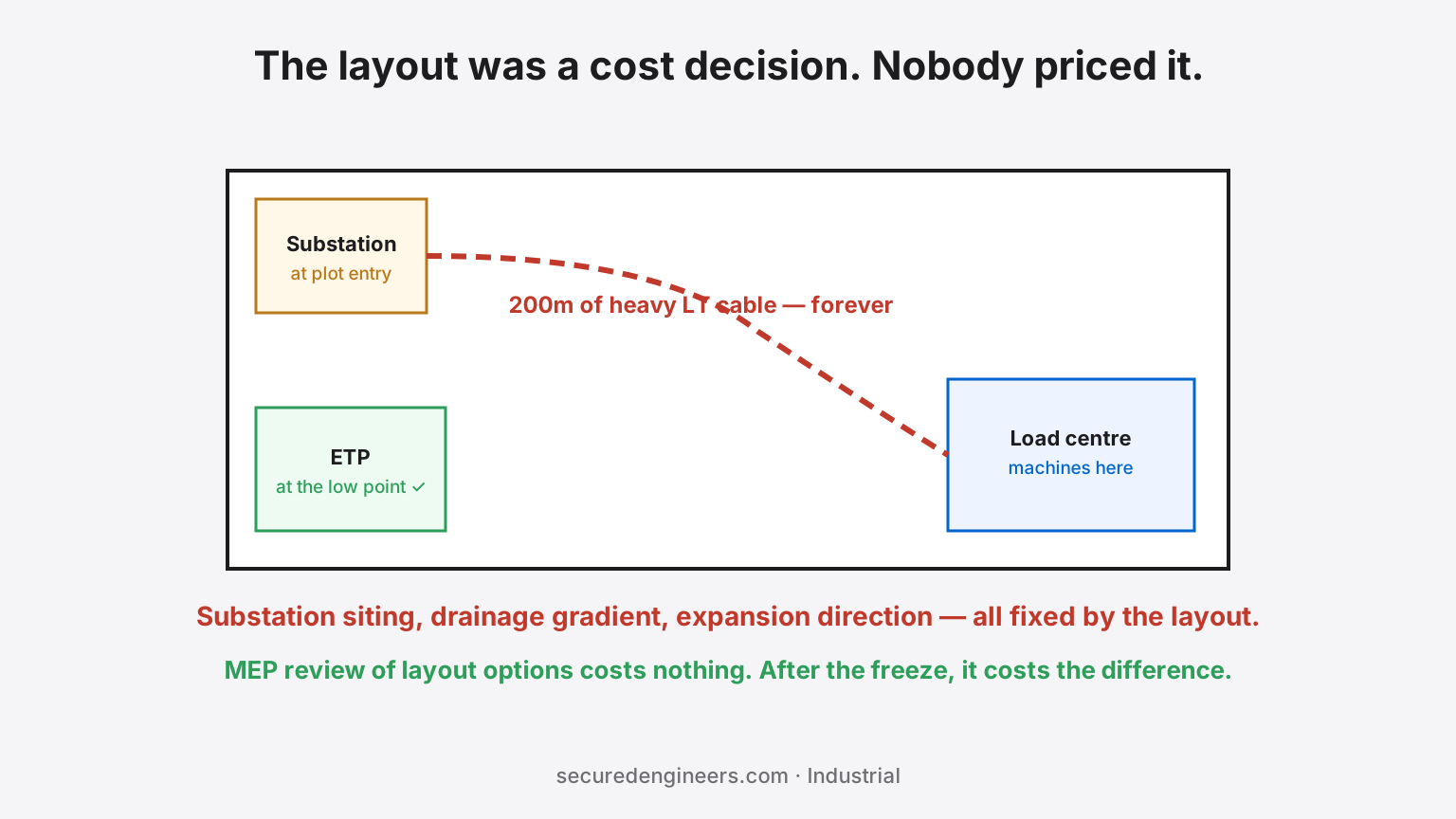
A factory layout is developed to optimise one thing: the movement of material through the process. That is the correct primary objective — it drives throughput, which is why the plant exists. The problem is the sequence that usually follows, where a layout is frozen on production grounds and then handed to the MEP team to service.
By that point a set of decisions with large and permanent cost consequences has already been taken, without anyone having evaluated them as cost decisions. Layout does not just influence MEP cost; it substantially determines it.
What layout silently decides
- Utility routing distance — where the substation, compressor house, chiller plant and pump room sit relative to the loads they serve. Every extra metre is cable, pipe, pressure drop and permanent pumping energy.
- Substation position — placed at the plot entry for supply-authority convenience but far from the load centre, it commits the plant to long, heavy, expensive LT runs and avoidable voltage drop for its whole life.
- Drainage gradients — effluent flows downhill. A process generating effluent placed at the low point of the site is cheap to drain; the same process at the high end may need pumping in perpetuity.
- Expansion direction — whether the next shed can be fed from existing infrastructure or needs a second substation and its own utilities. This is usually decided accidentally.
- Hazardous area boundaries — where flammable storage or process sits relative to everything else sets the classified zones, and therefore how much equipment has to be specified to a higher standard.
The recurring expensive patterns
| Layout decision | MEP consequence |
|---|---|
| Substation at plot boundary, load centre 200m away | Heavy LT cabling, voltage drop, and permanent losses — or a second transformer later |
| Utilities block placed on the expansion side | Phase 2 either builds around it or relocates it; both are expensive |
| Effluent-generating process at the site high point | Permanent effluent pumping instead of gravity drainage |
| Compressor house remote from the highest air demand | Continuous pressure drop, oversized compressors, wasted energy for the plant's life |
| No service corridor planned between sheds | Every future service run is surface-routed or trenched through working areas |
Why this is worse in a relocation
Factory relocations carry a specific version of this trap: the new site is laid out to replicate the old plant's production flow, because that flow is known to work. But the utilities at the new site — supply point, water source, discharge point, plot gradient — are different, and a layout copied from elsewhere inherits none of that context. The production logic transfers; the utility logic does not.
The cheap intervention
MEP input at layout stage costs almost nothing and is almost never sought. It does not mean production flow yields to services — it means the two or three layout options that production is choosing between get evaluated for utility cost before one is frozen, rather than after. In most cases the differences between viable production layouts are small, and the MEP cost differences between them are not.
The questions worth answering before freezing a layout: where is the electrical load centre and can the substation sit near it; which direction does the site expand and what is in the way; where does effluent naturally flow; and what is the longest compressed-air and chilled-water run the layout creates.
What we do differently
We prefer to be involved while the layout is still options rather than a drawing — evaluating utility routing, substation siting and expansion capability across the alternatives under our Design & Approvals scope, and delivering the result as turnkey EPC. The savings available at layout stage are structural and permanent; the savings available after it is frozen are neither.
More insights
Land Got Expensive, So the Factory Went Vertical. The MEP Design Didn't Follow.
Multi-storey industrial buildings are becoming common as land prices push factories vertical instead of horizontal — but MEP design habits built for single-storey sheds don't automatically transfer. Fire compartmentation, vertical risers and floor-by-floor load all need rethinking.
IndustrialMoving the Machines Is the Easy Half of Moving a Factory
Riggers can shift a press in a weekend. What stretches into months is everything around it: power sanction and CEIG at the new premises, fire NOC from scratch, compressed air and utilities re-laid, and approvals that do not transfer with the trucks. A relocation is an MEP project wearing a logistics costume.