
You're Still Burning Diesel to Heat Water. A Heat Pump Delivers the Same Heat for a Fraction of the Energy.
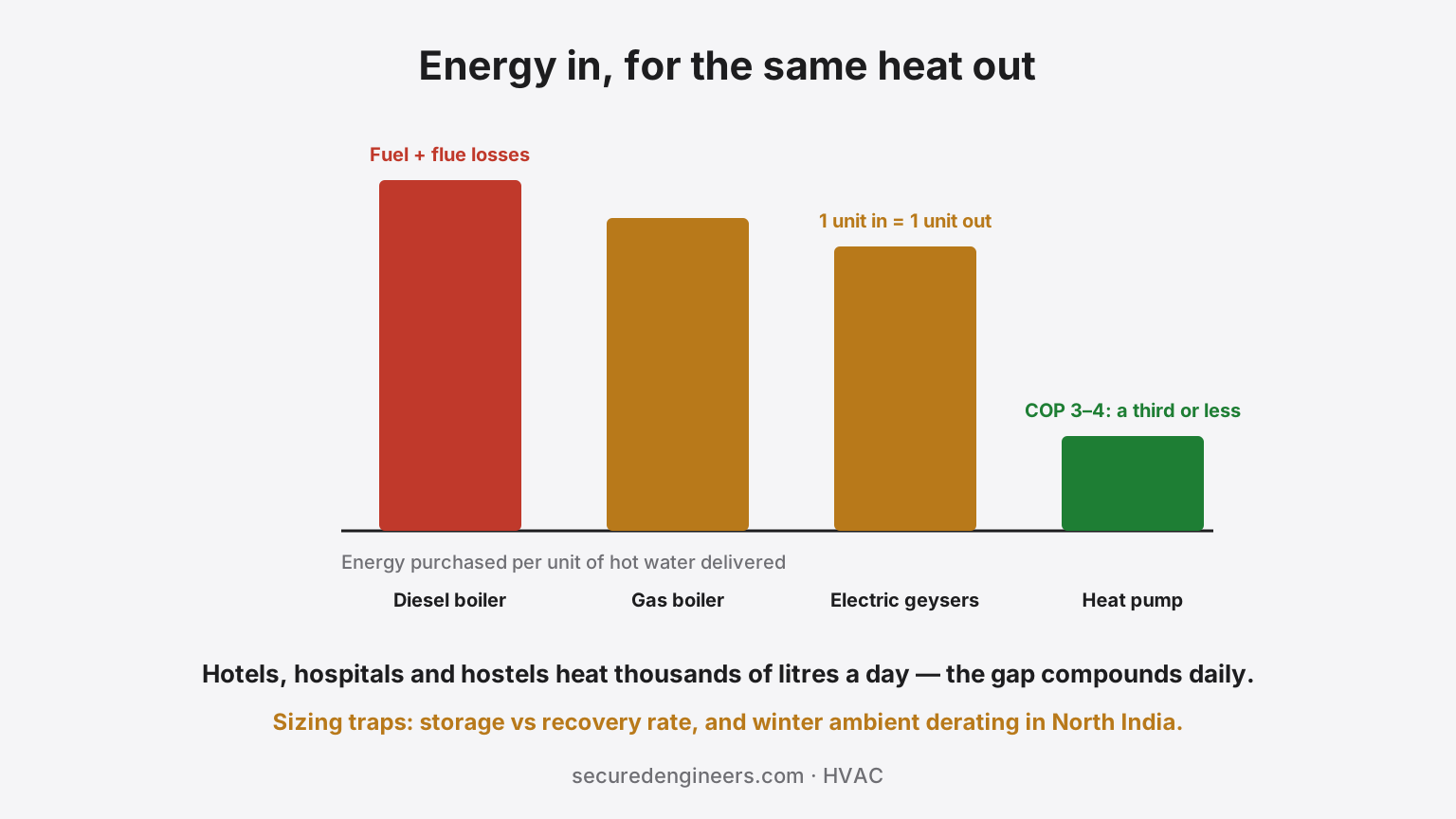
Every hotel, hospital, hostel and food-processing plant has a large hot-water load, and most Indian facilities still serve it the way they did twenty years ago: a diesel or gas boiler, or banks of electric resistance heaters. All three turn one unit of input energy into at most one unit of heat. A heat pump doesn't generate heat — it moves it from the outside air into the water, and in Indian ambient conditions it typically moves three to four units of heat for every unit of electricity it consumes. That multiple — the COP — is the entire story, and it's why 2026's combination of rising diesel and gas prices, stable-to-falling solar-backed electricity costs, and a broad policy push toward electrification has tipped the economics decisively for large hot-water loads.
The economics in one table
| Heat source | Energy in per unit of heat out | What drives its cost |
|---|---|---|
| Diesel boiler | More than 1 (combustion + flue losses) | Diesel price — historically volatile, structurally rising; plus storage, handling and pollution-board attention |
| Gas boiler | More than 1 | Gas price and connection availability — better than diesel, still a fuel bill that only trends up |
| Electric resistance (geysers) | Exactly 1 | Full commercial tariff on every unit of heat — simple, but the most expensive per unit at scale |
| Air-source heat pump | Roughly one-third to one-quarter | Same tariff, but 3–4 units of heat per unit purchased; pairs naturally with rooftop solar |
At the loads these facilities run — thousands of litres a day, every day — the operating-cost gap between "1 unit in per unit of heat" and "a third of a unit in" typically pays back the heat pump's higher capital cost in a small number of years, not decades. For hospitals there's a second driver: removing a diesel boiler removes fuel storage, combustion and flue-gas issues from a compliance file that fire and accreditation audits already scrutinise closely — see our hospital MEP compliance guide.
The sizing traps that generate the horror stories
Where heat pumps get a bad name, the machine is rarely the problem — the sizing is. Three traps recur:
- Confusing recovery rate with storage. A boiler brute-forces its way through a morning peak; a heat pump heats water more slowly and relies on a properly sized storage tank charged over more hours. Size the tank for the peak-draw profile — a hotel's 7–9 a.m. checkout surge, a hospital's shift patterns — not just the daily total. Undersize storage and the system "fails" every morning while performing exactly to spec.
- Ignoring winter ambient derating in North India. An air-source heat pump's capacity and COP fall as ambient drops. A machine selected on its 25°C catalogue rating will underdeliver on a 5°C January morning in Punjab or NCR — precisely when hot-water demand peaks. Selection must be made at winter design ambient, which typically means a larger machine or more storage than the summer numbers suggest.
- Sizing from guesswork instead of a demand calculation. Hot-water demand scales with occupancy, fixture count and use pattern — work it through properly (our water demand calculator covers the cold-and-hot water basis) before anyone quotes a machine.
The hybrid design that removes the risk
The mature configuration for critical loads isn't heat-pump-only — it's heat pump as the workhorse with a small backup: a compact electric or existing boiler element that covers the coldest mornings and lets the heat pump be sized for the realistic 95% of the year rather than the extreme day. The backup runs a handful of hours annually, the heat pump carries everything else, and the facility keeps redundancy that hospitals in particular should never give up. Retrofits fit this pattern naturally — the old boiler stays as standby for its remaining life instead of being scrapped on day one.
Getting it designed rather than sold
Heat-pump hot water sits across two disciplines — thermal plant selection and hydraulics/storage design — which is why it belongs with an MEP designer rather than an equipment dealer. Our HVAC & Mechanical team handles selection and winter-derated sizing; our Plumbing & Public Health scope covers the storage, circulation and mixing design that determines whether the guest at the tap ever notices the difference. Done together, the result is a hot-water plant that costs a fraction to run and nobody thinks about — which is the point.
More insights
Your Chiller Plant Has Run at Full Speed Since 2012. Your Cooling Load Hasn't.
Many older Indian industrial chiller plants still run constant-speed — full power whenever they're on, regardless of actual cooling load. A VFD retrofit lets the plant match output to real demand, and on a plant that's rarely at peak load, the energy savings are large enough to pay the retrofit back fast.
HVACIs Your HVAC Costing You More Than It Should?
Poorly maintained commercial HVAC can waste up to 40% more energy every month. A simple, disciplined maintenance routine pays for itself many times over.