
Your Chiller Plant Has Run at Full Speed Since 2012. Your Cooling Load Hasn't.
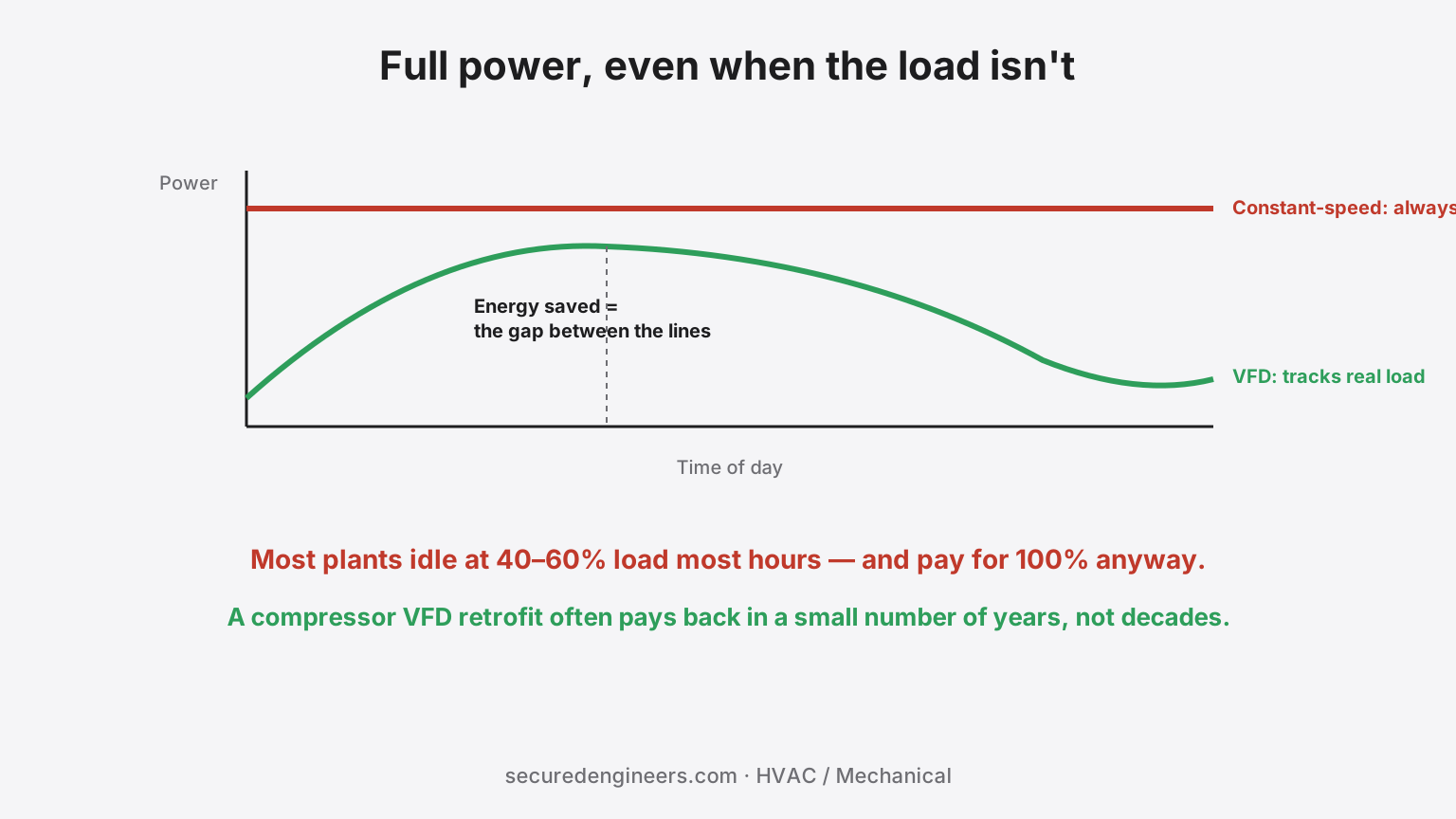
Our VRF vs chiller vs ductable comparison covers choosing the right system for a new building. This is the sequel problem: what to do with a chiller plant that was the right choice a decade ago and is now running exactly the way it did on day one — constant-speed compressors, full power whenever the plant is switched on, no matter whether the actual cooling load is 100% or 40% of design.
Why constant-speed plants waste so much
Cooling load varies constantly — with outside temperature, occupancy, process heat load, and time of day — and it is very rarely at design-peak. A constant-speed chiller has essentially one operating point: full output. Older plants handle load variation by cycling compressors on and off (crude, hard on equipment) or by riding artificially high, rather than by genuinely reducing output to match real-time demand. Every hour the plant runs above what's actually needed is energy paid for and not used.
A Variable Frequency Drive (VFD) retrofit on the compressor motor changes this fundamentally — the compressor's speed, and therefore its output, tracks the actual load in real time. On a plant that spends most of its operating hours below peak load (which describes the large majority of real-world chiller plants), the energy saved by not running at full speed unnecessarily is the entire basis of the retrofit's payback.
What a retrofit actually involves
| Component | Retrofit scope |
|---|---|
| Compressor motor | VFD added to allow variable-speed operation instead of fixed-speed run/stop |
| Control system | Upgraded to modulate compressor speed against real-time load (often supply/return water temperature or a BMS setpoint) |
| Condenser/pump matching | Cooling tower fans and pumps often benefit from their own VFDs so the whole plant — not just the compressor — tracks load, not just the compressor |
A partial retrofit (compressor only) still captures real savings; a full plant retrofit (compressor + condenser fans + pumps, all load-following) captures significantly more, because a plant is only as efficient as its least-optimised component.
Where this pays back fastest
The best retrofit candidates are plants that run long hours with genuinely variable load — process cooling with shift-based demand, commercial buildings with strong day/night occupancy swings, manufacturing with seasonal production variation. A plant that already runs near-constant peak load year-round has less to gain; a plant that idles at 40–60% load for most of its hours (which is the common case) can see energy reduction large enough to pay back the retrofit investment in a small number of years, not decades — and unlike a full plant replacement, it's done without touching the chiller itself or the building's cooling capacity.
Run your own numbers on cooling load and plant sizing with our chiller capacity calculator, then talk to our HVAC/Mechanical team about whether your existing plant is a retrofit candidate before considering a full replacement.
More insights
Your Architect Chose the Glass. Your Electricity Bill Is Paying for It.
The showroom looks stunning and never gets cold enough. The west-facing offices cook every afternoon. The AC plant was sized by thumb rule for a building whose façade admits a small furnace of solar heat every clear day. How glazing decisions drive HVAC destiny — and what to do at design, and after.
HVACVRF, Chiller or Ductable? The 45°C Question Every North Indian Building Must Answer Once
Pick wrong and you live with it for 15 years: oversized chillers idling at 30% load, VRF gasping at 47°C on a Ludhiana rooftop, ductables strung across a building that outgrew them. The honest decision framework, with North-India-specific caveats.