
The STP Meets Its Rated Capacity. It Still Cannot Handle a Shift Change.
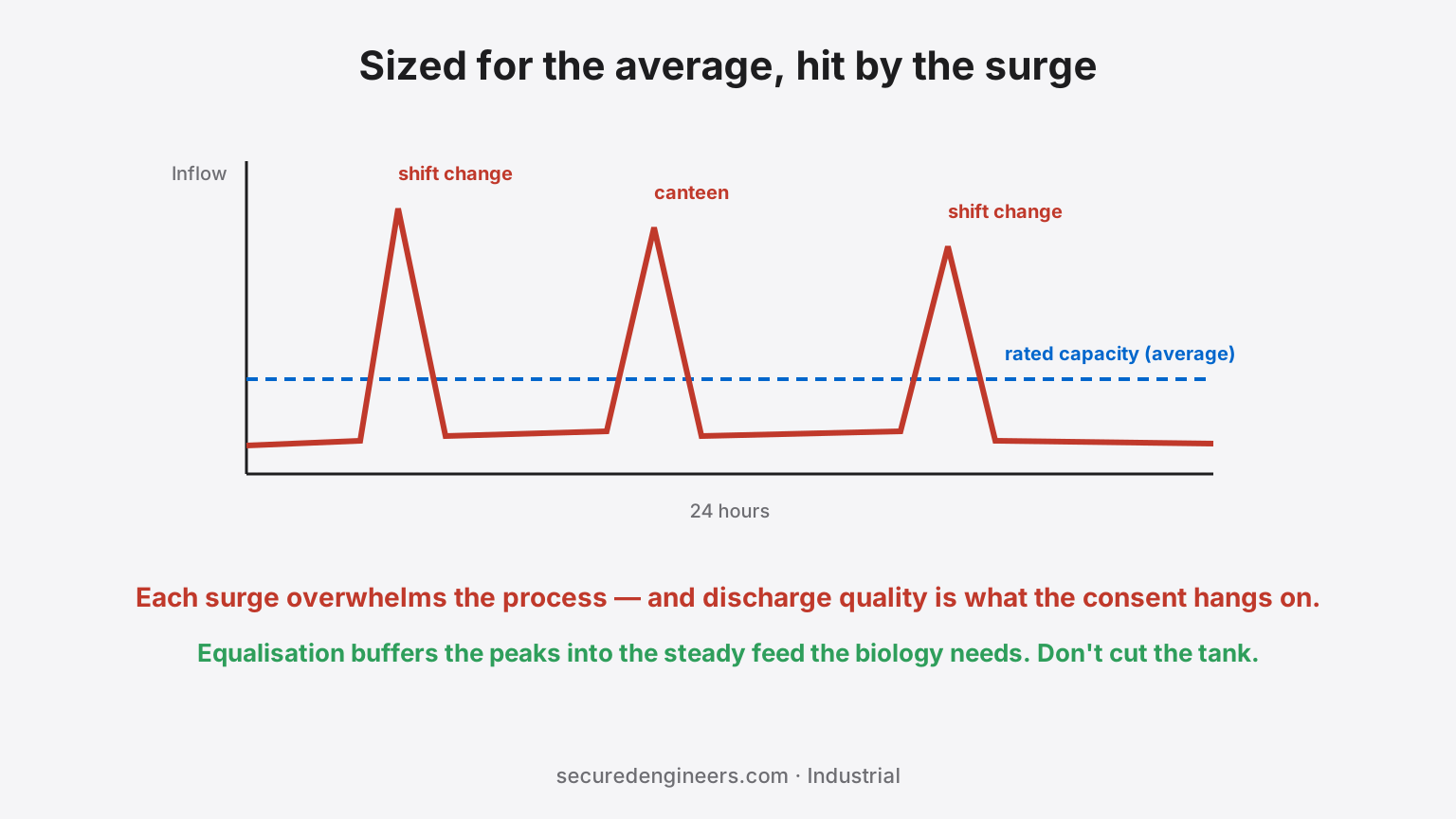
An STP is specified as a number — so many kilolitres per day — and that number comes from average daily flow. It is the right way to size the biological process and the wrong way to describe what the plant actually has to survive, because sewage does not arrive at an average rate.
On an industrial site it arrives in surges tied to shift patterns, and a plant that comfortably handles the daily volume can still be overwhelmed three times a day when it receives a large fraction of that volume in a short window.
The three things average flow does not capture
- Peak factor — the ratio of peak hourly flow to average hourly flow. On a factory with concentrated shift changes and canteen use, this is materially higher than on a residential building where usage spreads across the day.
- Load variation, not just flow variation — the organic strength of the influent changes with what the plant is doing. Canteen discharge is very different from washroom discharge, and process effluent different again.
- Startup and idle behaviour — a biological process needs continuous feed to keep its culture alive. A factory that shuts for a week does not simply pause its STP; it starves it, and the plant needs time to recover afterwards.
Why industrial STPs fail differently from residential ones
| Factor | Residential | Industrial |
|---|---|---|
| Flow pattern | Two moderate daily peaks, otherwise steady | Sharp surges at shift change and meal breaks |
| Influent strength | Fairly consistent | Varies with production and canteen activity |
| Weekly pattern | Higher at weekends | Can drop to near zero on a plant holiday |
| Consequence of failure | Nuisance, complaints | Pollution-board non-compliance affecting the consent to operate |
That last row is the one that changes the commercial stakes. For an industrial facility, an STP that cannot meet its discharge parameters is not a facilities problem — it is a threat to the pollution-board consent the plant operates under.
Equalisation is usually the answer
The standard engineering response to surge is an equalisation tank sized to buffer peak flow and release it to the treatment process at a controlled rate. It converts a variable input into something close to the steady feed the biology actually wants, and it is frequently the component that gets trimmed when a quotation is being made competitive — because it is a tank, and a tank looks like a container rather than like process equipment.
Removing or undersizing equalisation is the most common way a correctly-rated STP ends up unable to hold its discharge quality.
What to establish before sizing
Get the actual flow pattern rather than the headcount-derived average: when people arrive, when the canteen runs, when the plant washes down, and what happens on a shutdown week. Establish influent strength rather than assuming domestic-strength sewage. Then size the process for average and the hydraulics and equalisation for peak. Our STP capacity calculator gives an indicative starting capacity, but treat it as an input to that conversation rather than a specification — and confirm discharge parameters with your state pollution control board, since those govern what the plant must actually achieve.
What we do differently
We size treatment plants under our Plumbing & Public Health scope against the site's real flow pattern and shift structure, with equalisation treated as process equipment rather than as an optional tank — because on an industrial site the consent to operate depends on the plant holding quality during the surge, not on average.
More insights
Land Got Expensive, So the Factory Went Vertical. The MEP Design Didn't Follow.
Multi-storey industrial buildings are becoming common as land prices push factories vertical instead of horizontal — but MEP design habits built for single-storey sheds don't automatically transfer. Fire compartmentation, vertical risers and floor-by-floor load all need rethinking.
IndustrialMoving the Machines Is the Easy Half of Moving a Factory
Riggers can shift a press in a weekend. What stretches into months is everything around it: power sanction and CEIG at the new premises, fire NOC from scratch, compressed air and utilities re-laid, and approvals that do not transfer with the trucks. A relocation is an MEP project wearing a logistics costume.