
Specify coastal HVAC protection before comparing equipment prices
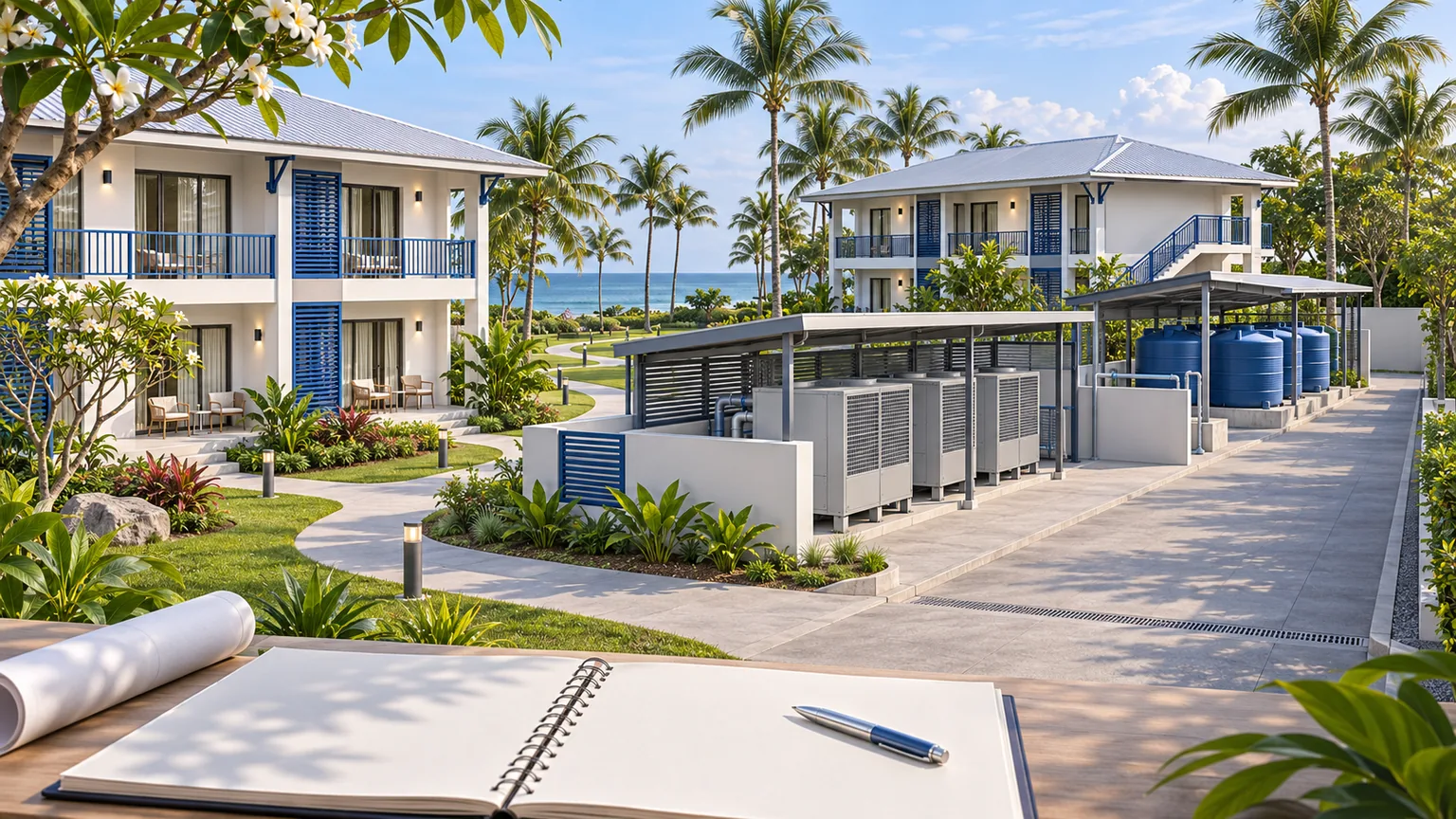
Coastal HVAC protection should follow the actual site exposure and the complete equipment construction, not a generic marine-grade label. Compare coils, casing, fasteners, electrical enclosures, maintenance requirements and warranty conditions together. Obtain manufacturer confirmation for the selected configuration and duty. Remote specification review can make offers comparable; the local designer verifies exposure, placement and installation requirements.
Two outdoor HVAC units have similar duty and price, but their corrosion-protection scope may be very different. One offer describes a coil treatment; another describes the casing. Neither statement alone explains how the complete unit is intended to withstand its installation environment.
For a Fujairah coastal hotel or commercial site, describe the actual exposure before asking suppliers to price protection. Distance from the coast is useful context, but equipment position, shelter, airborne contaminants, maintenance access and operating conditions also matter. Not every site requires the same construction or a marine product.
Prepare an exposure brief the supplier can assess
Provide the site and equipment location, photographs, proposed orientation and the surrounding building arrangement. Identify direct exposure, nearby exhausts or process contaminants, washdown practices and maintenance constraints. Distinguish observed conditions from assumptions.
Ask the local designer to confirm the exposure basis and placement requirements. A remote desktop assessment cannot establish every local environmental condition or the effects of a final rooftop layout.
Compare protection component by component
| Component or interface | Evidence to request |
|---|---|
| Heat-exchanger coil | Exact materials, treatment, coverage and relevant manufacturer limitations |
| Casing and base | Construction, finish, edges, drainage and treatment of site damage |
| Fasteners and connections | Materials and compatibility with adjacent components |
| Electrical enclosures | Selected construction and suitability for the installation environment |
| Factory modifications | Effect of the selected protection option on duty, pressure drop or other performance |
| Site installation | Required handling, supports, repairs and exclusions for modifications |
| Maintenance | Cleaning method, intervals or inspection requirements set by the manufacturer |
This comparison is manufacturer-neutral. Carrier’s marine condensing-unit information illustrates that coil materials, protective treatments and cabinet construction are separate options. It does not establish that a marine unit is necessary for every coastal building or that one named treatment suits every exposure.
Ask what the coating description actually covers
Terms such as protected, coated or coastal-duty should be tied to a specified product and configuration. Request the manufacturer’s technical evidence and the conditions under which it applies. Identify surfaces or components not covered by the stated treatment.
Do not convert a laboratory test duration into an assumed number of service years. The project decision should consider the manufacturer’s stated application limits and warranty terms, together with the actual environment and maintenance plan. A single test label cannot predict the complete installation’s lifetime.
Keep the selected performance and protection linked
Illustrative substitution: a vendor offers a different coil-protection option after the unit has been selected. The review asks for confirmation of the resulting performance and any revised maintenance or warranty conditions. The original selection sheet should not be assumed to cover the changed configuration without evidence.
Likewise, consider installation details that could undermine the intended protection. The local team should review handling, damaged finishes, dissimilar-material interfaces and access for the manufacturer’s maintenance requirements. These details belong in the procurement and installation scope, not only in an operating manual delivered at completion.
Read the warranty alongside the maintenance obligation
Record exclusions related to environment, cleaning, coating damage or site modification. Identify what evidence the owner must retain and whether the facilities team can realistically perform the required maintenance. A product that depends on inaccessible routine cleaning may be a poor fit for the proposed roof arrangement.
Keep the cost comparison at the same boundary. Include agreed protection options, access provisions, maintenance and replacement implications rather than comparing bare equipment prices. Where lifecycle costs are assessed, state the assumptions; do not promise a fixed service life from a material description.
Request a coastal specification comparison
Send the exposure brief, site photographs, equipment selections and competing offers through the RFQ page. Ask for a component-level protection matrix, missing manufacturer evidence and a list of design or maintenance dependencies.
Secured Engineers provides remote engineering and procurement-document review from India. The appointed local designer and contractors verify the environment, accept the equipment and execute the installation. Manufacturers confirm product suitability and warranty conditions. The review helps the owner buy a clearly defined protection package suited to the documented project conditions.
Sources and project references
Use the document edition and requirements that apply to your project and decision date.
Related planning resources
Frequently asked
Does every coastal property need marine-grade HVAC equipment?
No. Assess the actual exposure, duty, placement and maintenance conditions with the local designer and manufacturers. A broad label should not replace a component-level specification and documented suitability.
Can salt-spray test hours predict service life?
Do not assume a direct conversion to years in service. Review the test’s scope, the manufacturer’s application guidance and warranty conditions, together with the actual environment and maintenance plan.
Is coil coating enough to assess corrosion protection?
No. Casing, fasteners, electrical enclosures, interfaces, installation damage and maintenance also affect the equipment package. Compare the complete selected configuration.
Related remote design support
More on HVAC & Mechanical · all insights