
Your Tenants Think CAM Is a Scam. Your Meters Can't Prove Otherwise.
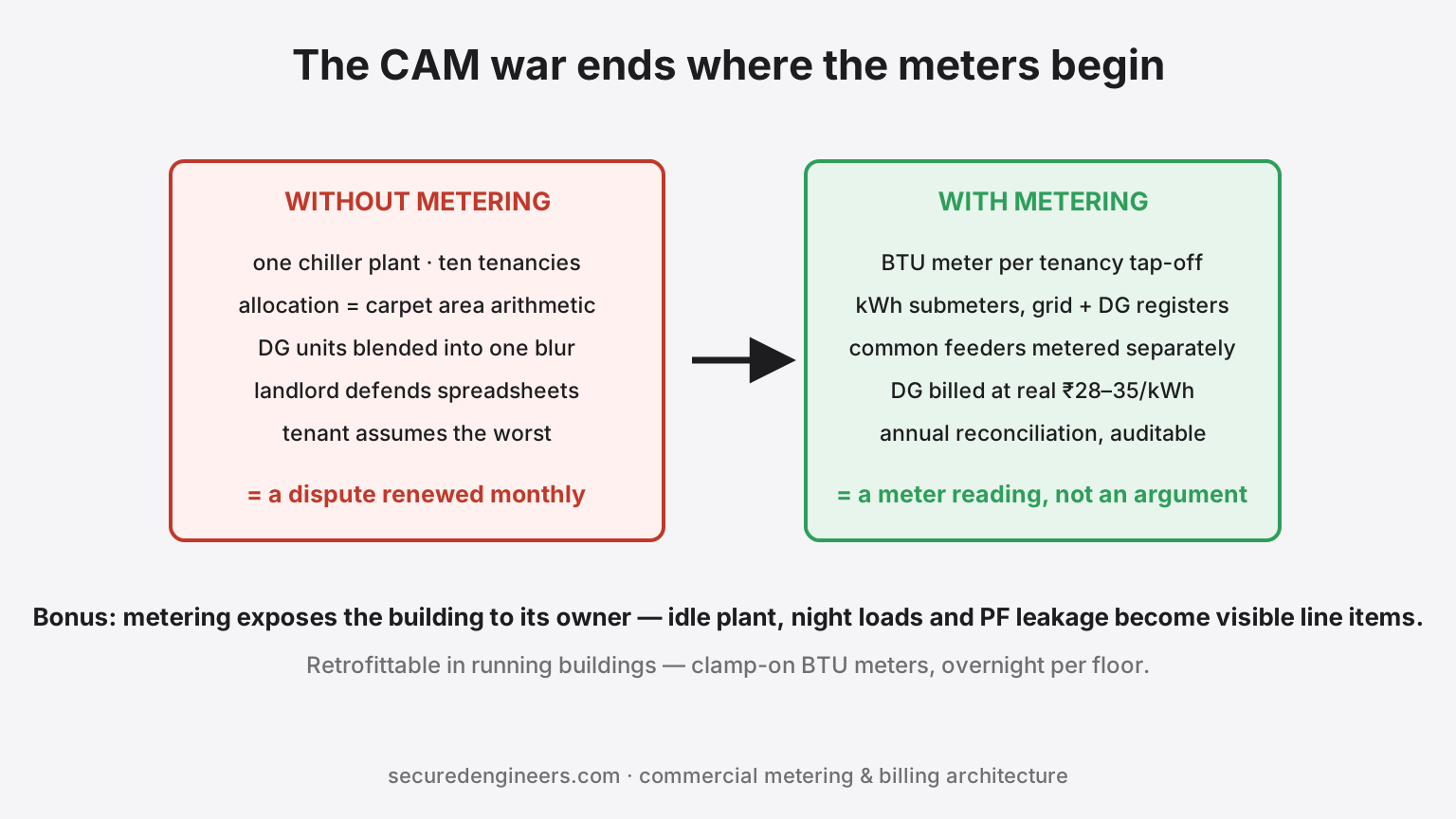
Common Area Maintenance charges are where commercial landlord-tenant relationships go to die. The tenant sees a per-sq.ft number that rises every year and buys, as far as they can tell, some lobby lighting and a security guard. The landlord sees a chiller plant, pumps, lifts, a DG set, and a fire system consuming real money that must be recovered. Both are right. Neither can prove anything — because the building cannot measure what it is arguing about.
Why CAM disputes are really metering disputes
Strip any CAM fight to its engineering core and you find the same three unmeasured quantities:
- Who consumed the cooling? One chilled-water plant serves ten tenancies and the common areas. Without energy metering per connection, the split is arithmetic fiction — area-based allocation that punishes the boutique office and subsidises the server-heavy tenant.
- Who consumed the power? Common-area kWh vs tenant kWh vs DG units during outages — three tariffs, one blur, unless the metering tree was designed to separate them.
- What does the equipment actually cost to run? Landlords who cannot show plant logs, AMC records and energy data end up defending spreadsheets instead of presenting evidence.
The metering architecture that ends the war
| Layer | Instrument | What it settles |
|---|---|---|
| Chilled water per tenancy | BTU (energy) meters on each tap-off — flow + ΔT = actual cooling energy | HVAC billing by consumption, not by carpet area |
| Electrical per tenancy | kWh submeters (ideally with DG-source registers) | Grid vs DG units billed at their real, different costs |
| Common-area feeders | Dedicated metering on lifts, lobby HVAC, exterior lighting, pumps | The CAM number becomes a meter reading, not an estimate |
| The plant itself | Plant-room energy metering + hour-run logs | Plant efficiency (and the case for upgrades) becomes visible — including power-factor leakage |
Designed into a new building, this architecture costs a fraction of one year's disputed CAM. Retrofitted, it costs more and is still worth it — clamp-on BTU meters and DIN-rail submeters go into most running buildings without shutdowns.
Allocation methods that survive scrutiny
- Measured consumption first: everything meterable, billed by meter — cooling, tenant power, tenant DG usage
- Transparent formula for the truly common: the residual (lobby, façade, fire systems, security) allocated by leased area, published with the actual bills and logs behind it
- DG units priced as DG units: outage power billed at its true ₹28–35/kWh, not blended into the grid rate — nothing disciplines diesel usage faster
- An annual reconciliation tenants can audit: the landlord who opens the meter data ends the war permanently; opacity is what keeps it alive
The landlord's hidden win
Metering does not just settle bills — it exposes the building to its owner. The moment plant energy is visible per month, the questions change: why does the chiller plant idle at 40% efficiency on mild days, why is the basement exhaust running at 2 a.m., why did common-area power rise 18% after the façade lighting "upgrade". Buildings with measurement get cheaper to run; buildings without it get quietly more expensive every year — and the CAM war is just that curve, argued about monthly.
FAQs
What is a BTU meter and what does it cost?
A flow meter plus temperature sensors on supply/return, computing actual thermal energy delivered to a tenancy. Installed cost per tenancy is typically a few tens of thousands of rupees — against HVAC being the largest single disputed component of CAM.
Can submetering be retrofitted without shutting tenants down?
Largely yes — clamp-on ultrasonic BTU meters and CT-based kWh submeters install with minimal isolation windows, usually overnight per floor.
How should DG power be billed to tenants?
By actual units at actual cost — which requires meters that register source. Blending diesel into a single rate hides the cost and subsidises exactly the consumption you want reduced.
Can you design or retrofit our metering and set up the billing logic?
Yes — metering architecture, installation, and the reconciliation format for commercial buildings, new or running. Scope it here.
More insights
The Building Has Been Running for a Year. Your Retention Money Hasn't Moved.
Retention money exists to protect the owner against defects that surface after handover — a reasonable principle that somehow turns into an indefinitely stuck 5-10% of the contract value, with no clear trigger for release and no documented defect list to close against. Why retention disputes drag on, and the contract language that actually prevents them.
Costing & ProcurementYou Are Probably Paying for kVA You Never Use — or Getting Fined for kVA You Touched Once
Two lines on your electricity bill quietly outrank the energy charge: billing demand and time-of-day adjustments. Both are tunable. Most factories have never tuned either — they set contract demand at connection time and never looked again.