
The Architect Wants Gold Certification. The MEP Scope Just Tripled.
Green building certification has moved from marketing nice-to-have to genuine commercial requirement — anchor tenants ask for it, financing terms increasingly favour it, and ESG-conscious occupiers screen for it before signing. The decision to pursue IGBC or LEED certification usually gets made at the leadership or marketing level. The consequences land squarely on the MEP design table, and they land early enough that a late decision can make the target rating unreachable.
Why MEP carries most of the certification weight
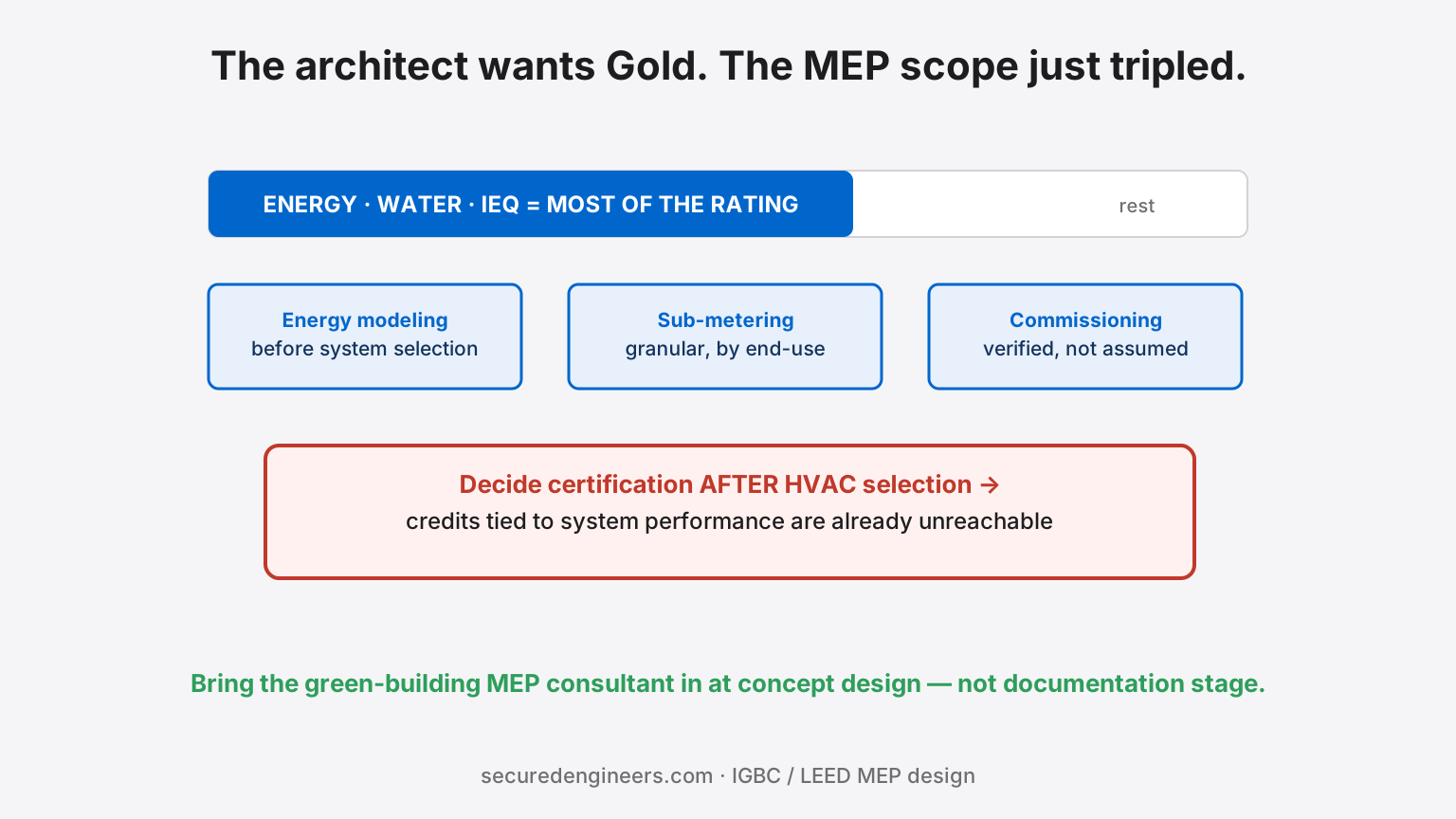
Across both IGBC and LEED frameworks, energy performance, water efficiency and indoor environmental quality — the categories most directly controlled by mechanical, electrical and plumbing design — collectively represent the largest share of achievable credits in a typical commercial project. A building can have excellent site planning and materials selection and still miss its target rating on MEP execution alone.
Where MEP scope actually changes
| Requirement | What it means for design |
|---|---|
| Energy modeling & performance baseline | HVAC, lighting and envelope must be modeled against a code baseline before design freeze — retrofitting a model onto a finished design rarely hits the target |
| Sub-metering & measurement | Granular electrical and water metering by end-use (HVAC, lighting, plug loads, tenant vs common area) — far beyond the single utility meter a conventional building needs |
| Commissioning | Formal, documented commissioning of HVAC and controls — not just installation and handover, but verified performance against design intent, often by an independent commissioning agent |
| Refrigerant selection | Low-GWP refrigerant requirements can rule out certain chiller/VRF product lines that would otherwise be the natural choice on cost or availability grounds |
| Water efficiency fixtures & reuse | Low-flow fixtures, and often treated-water reuse for flushing and irrigation — plumbing scope, not just fixture selection |
| Fresh air & IAQ monitoring | Enhanced ventilation rates and, at higher credit tiers, CO2/IAQ sensor networks tied into the BMS |
Where projects actually lose credits
- The certification decision arrives after the HVAC system is already selected. A chiller or VRF choice made on cost grounds alone, before the energy model exists, frequently can't be walked back without a redesign — the credits tied to performance are lost before the design team even knows they're being targeted.
- Commissioning gets treated as a box-ticking formality rather than the substantive verification process it needs to be — systems that "work" on handover day but were never tested against documented performance criteria fail commissioning credits even when nothing is technically broken.
- Sub-metering gets value-engineered out during a later cost-cutting pass, without anyone flagging that it's tied to specific credits — an easy target for a quantity surveyor who doesn't know its certification role.
- Tenant fit-out guidelines never get written, so tenant-installed HVAC and lighting undo the base-building performance the landlord invested in — the certification covers base-build, but occupied-building performance depends on tenants who were never told the rules.
The sequencing that actually protects the rating
- Decide on certification before HVAC system selection, not after — the energy model needs to inform the choice, not evaluate a choice already made
- Bring in an experienced green-building MEP consultant at concept design, not at documentation stage — credits requiring early decisions (system type, orientation-linked shading, refrigerant selection) cannot be recovered later
- Cost the full MEP scope — including sub-metering and commissioning — into the budget from day one, so it survives later value-engineering rounds instead of becoming an easy, uninformed cut
- Write tenant fit-out guidelines that protect base-building performance — HVAC interface rules, lighting power density limits, metering requirements for tenant improvements
- Budget for genuine third-party commissioning, not self-certified handover testing
Is it worth the added MEP scope?
For commercial developers targeting institutional buyers, anchor tenants with ESG mandates, or green-financing terms, the answer is increasingly yes on commercial grounds alone — separate from any environmental motivation. The MEP scope increase is real, but it's manageable when planned from concept design; it becomes expensive and sometimes rating-threatening only when decided mid-project. Our MEP design team works green-rated projects from the energy-modeling stage, specifically to avoid the late-decision trap.
FAQs
Does pursuing IGBC or LEED certification significantly increase MEP cost?
Some increase is typical — sub-metering, enhanced commissioning, and higher-efficiency equipment all add scope — but the increase is far smaller when planned from concept design than when retrofitted onto an already-designed building.
Can an existing building achieve green certification, or only new construction?
Both frameworks have pathways for existing/operating buildings, typically weighted more toward operational performance, metering and maintenance practices than new-construction design credits.
What is commissioning, and why does it matter for certification?
Formal verification that installed systems perform to documented design intent — not just that they were installed and switched on. Certification frameworks award credits for genuine, documented commissioning, not handover testing alone.
Can you design MEP for a green-rated commercial project?
Yes — energy modeling coordination, sub-metering design, commissioning support, and the full MEP scope aligned to your target rating. Discuss your project.
More insights
The Chiller Broke at 11 PM. The Lease Didn't Say Whose Problem It Was.
A tripped AHU, a dead riser pump, a flickering DB — and the landlord's ops team and the tenant's facility manager are both certain it's the other party's responsibility. Most disputes trace back to one missing document: a clause-by-clause MEP responsibility matrix. Here's how to build one before the next 11 PM call.
Commercial Real EstateOne Bill, Six Tenants, and No Way to Prove Who Used What.
Multi-tenant buildings recover electricity by area share because that is all the metering supports. The moment one tenant runs a heavier load than another, an area-based split stops being fair — and there is no data to settle the argument.