
The Quote Said "Plus GST". Whether You Can Reclaim It Is a Different Question.
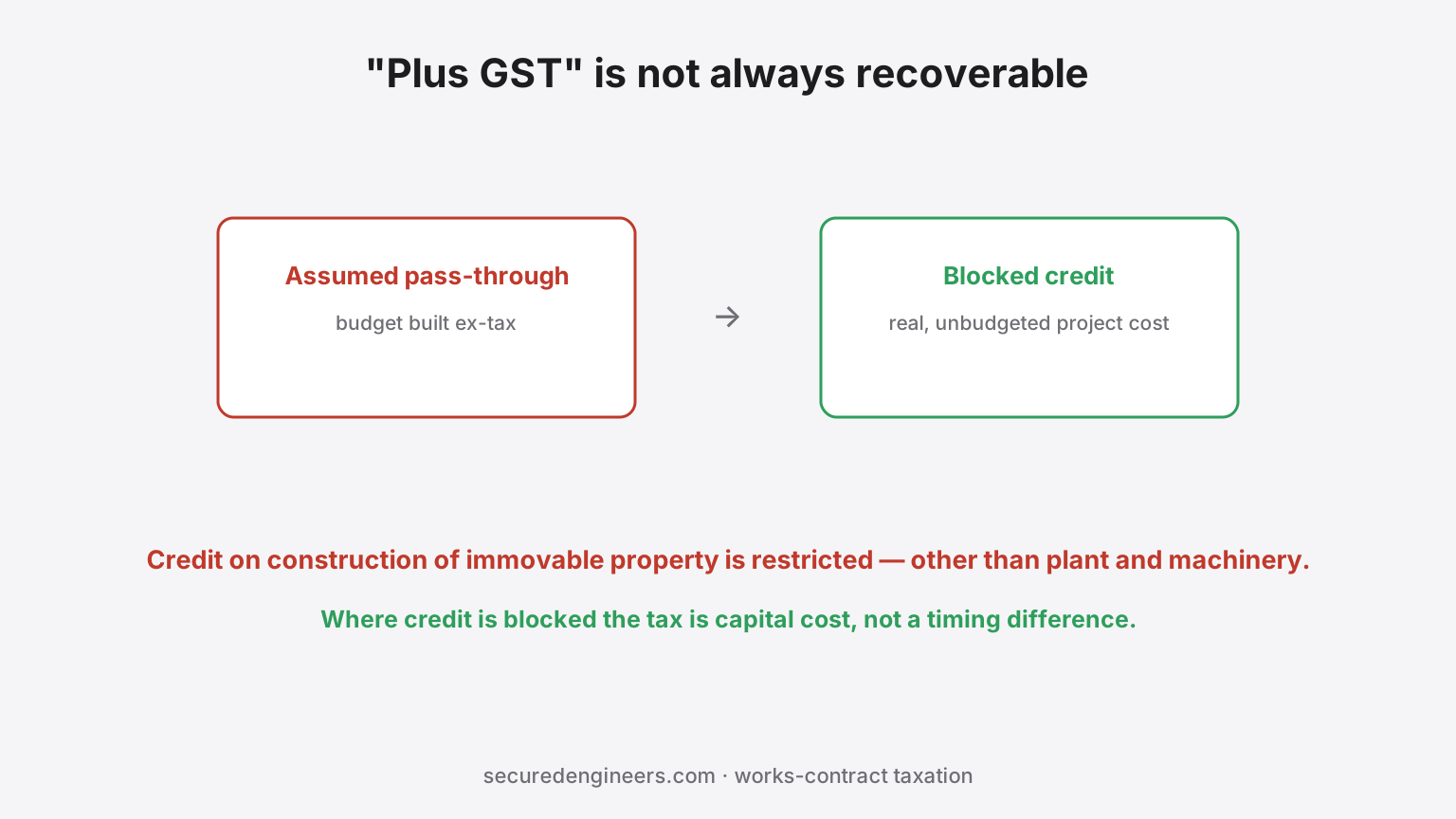
Most MEP budgets are built on an ex-tax number with "plus GST" appended, on the assumption that the tax is a pass-through the business reclaims. For a manufacturer used to reclaiming tax on inputs, that assumption is reasonable — and for building services it is not always right.
MEP installation is generally a works contract: a composite supply of goods and services resulting in something attached to immovable property. That characterisation, rather than the rate, is where the cost sits.
Where the credit restriction bites
GST law restricts input tax credit on works contract services and on goods or services used for construction of immovable property, other than plant and machinery. Two consequences follow:
- The plant-and-machinery boundary decides recoverability. Tax on something that is plant and machinery is treated differently from tax on something that becomes part of the building. On an MEP scope that boundary runs straight through the middle of the package.
- An irrecoverable amount is real project cost. Where credit is blocked, the tax is not a timing difference — it is capital cost, and a budget built ex-tax understates the project by that amount.
Why MEP is the hard case
| Scope item | Why the treatment is not obvious |
|---|---|
| Chillers, AHUs, pumps, DG sets | Equipment in character, but installed and connected into the building |
| Ducting, piping, cable tray, conduit | Distribution embedded in the building fabric |
| Fire hydrant and sprinkler network | Statutory building system, permanently installed |
| Substation and HT/LT distribution | Plant in function, building-integrated in installation |
| Solar rooftop plant | Generating equipment mounted on the building |
Each of these has been the subject of argument, and the characterisation can turn on how it is contracted, invoiced and capitalised — not only on what it physically is.
What actually helps
Three practical things, none of which are tax advice and all of which make the advice cheaper to get.
Get the contract structure decided before award, not after. Whether a scope is contracted as a single works contract or split between supply and installation affects the analysis, and it is far easier to structure at tender than to re-paper afterwards.
Ask for the quote to identify the treatment rather than appending "plus GST" to a total. A contractor who has thought about it can tell you which portions they are treating as what.
Budget the irrecoverable portion explicitly. A capital plan that assumes full recovery on a works contract can be understated by a meaningful margin — and it is discovered by finance after commitment, which is the worst time.
What we do differently
Our budgetary proposals set out the tax treatment we are applying and where the supply/installation split falls, so your finance team can take a view before award rather than reconcile after. Related: why MEP quotes vary so widely.
General information, not tax advice. GST treatment is fact-specific and contested in places — take advice on your particular contract structure.
More insights
Supplying a PSU? Your Invoice Now Has to Go on TReDS.
The 2026 amendment requires every central public sector enterprise to settle MSME invoices on the Trade Receivables Discounting System. For contractors on PSU work, that turns a receivable in a queue into a discountable instrument on a regulated exchange.
Costing & ProcurementYou Vetted the Company. Did Anyone Vet the Hands Actually Doing the Work?
A skilled-manpower shortage in electricians, HVAC technicians, welders and fire-system installers means the contractor who won your tender may be executing through layers of subcontracted labour you never evaluated. The company on the letterhead passed your due diligence. The crew actually pulling cable or commissioning the chiller may not have — and by the time quality or safety issues surface, the layering makes accountability hard to trace.