
The LD Clause Punishes Whoever Was Working Last, Not Whoever Caused the Delay.
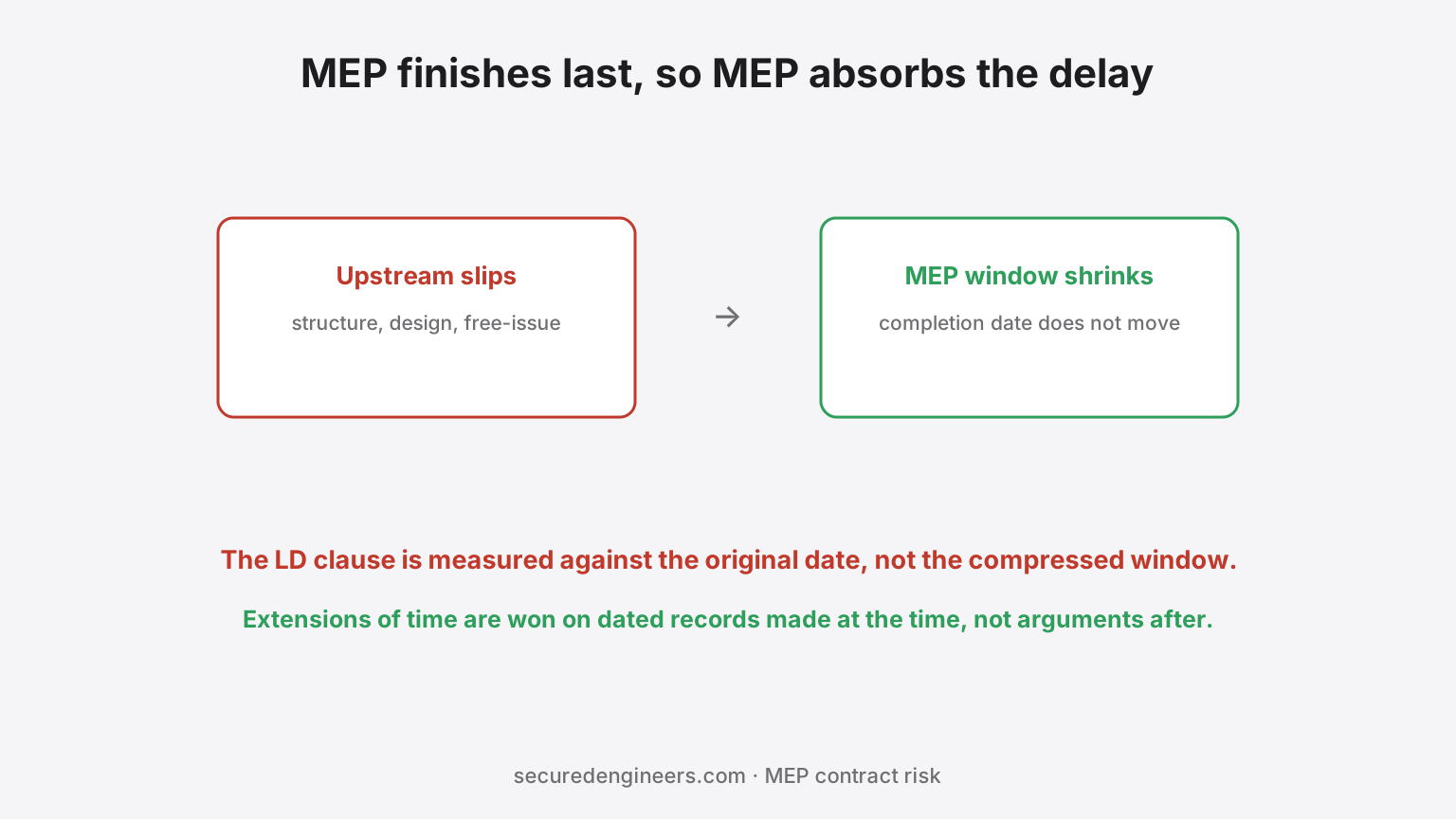
Almost every construction contract carries liquidated damages — a pre-agreed sum per day or per week of delay. It is a sensible mechanism. It becomes unfair in a specific and predictable way on MEP packages.
MEP finishes last. Services can only be installed once the structure, the blockwork and often the finishes allow it. Every delay upstream compresses the MEP window without moving the completion date — and then the LD clause is measured against that date.
How the compression happens
- Structure runs late. Shafts, cut-outs and slab penetrations are not available when planned; the services programme starts late but ends on the same day.
- Design or approval churn. A layout change during construction re-works the coordinated services drawings, and re-approval takes what it takes.
- Free-issue material arrives late. Where the client supplies equipment — chillers, DG sets, panels — the contractor waits without controlling the wait.
- Access is shared. Multiple trades in the same ceiling void at the same time, because the sequence collapsed.
- Statutory approvals gate energisation. Inspection dates are not in anybody's gift.
Why the wrong party usually pays
Not because the contract is unfair, but because of evidence. LD disputes are decided on records, and the records that decide them have to exist at the time, not be reconstructed afterwards:
| What decides an EOT claim | What is usually available |
|---|---|
| A baseline programme both parties accepted | A programme issued once and never formally agreed |
| Dated notice of each delay event when it occurred | A summary written when LDs were first threatened |
| Records of when each area was actually handed over for services | Recollection, and a few WhatsApp messages |
| Approval and free-issue correspondence with dates | Scattered across inboxes |
| Site instructions for changes, in writing | Verbal instructions "confirmed later" |
The contractor with contemporaneous records gets an extension of time. The contractor with a good argument and no dated evidence pays.
What to fix in the contract, before signing
Three provisions worth reading properly on any MEP package. Is there an extension-of-time mechanism at all, and does it cover client-caused delay, free-issue delay and statutory approval delay? A contract with LDs and no EOT route is a one-way risk transfer. Is the LD rate a genuine estimate of loss, or a penalty scaled to be frightening? Is there a cap, and does it sit at a level that leaves the job worth doing?
And on the client side the same reading is worth doing for the opposite reason: an LD clause that is clearly punitive rather than compensatory is the kind that gets argued about rather than paid.
What we do differently
We issue a baseline programme for acceptance and give dated notice of delay events as they occur, rather than assembling a case at the end — which is as much protection for the client as for us, because it surfaces the slip while there is still time to act on it. Related: why construction projects get delayed and what turnkey leaves out. See turnkey EPC.
More insights
The Most Dangerous Electrical Installation You Will Ever Own Is the Temporary One
Permanent installations get design, inspection and as-builts. The site supply that builds them gets a rented DG, a spider of cables through rebar and rainwater, and whoever was free that morning. Construction power deserves engineering — it kills more people than the permanent kind.
Project ManagementWhen should an industrial facility consider an AMC?
An AMC is a decision about who owns the renewals, the logbooks and the breakdowns. A framework for when a maintenance contract is worth it, which kind, and what it must contain to be worth anything.