
The Most Dangerous Electrical Installation You Will Ever Own Is the Temporary One
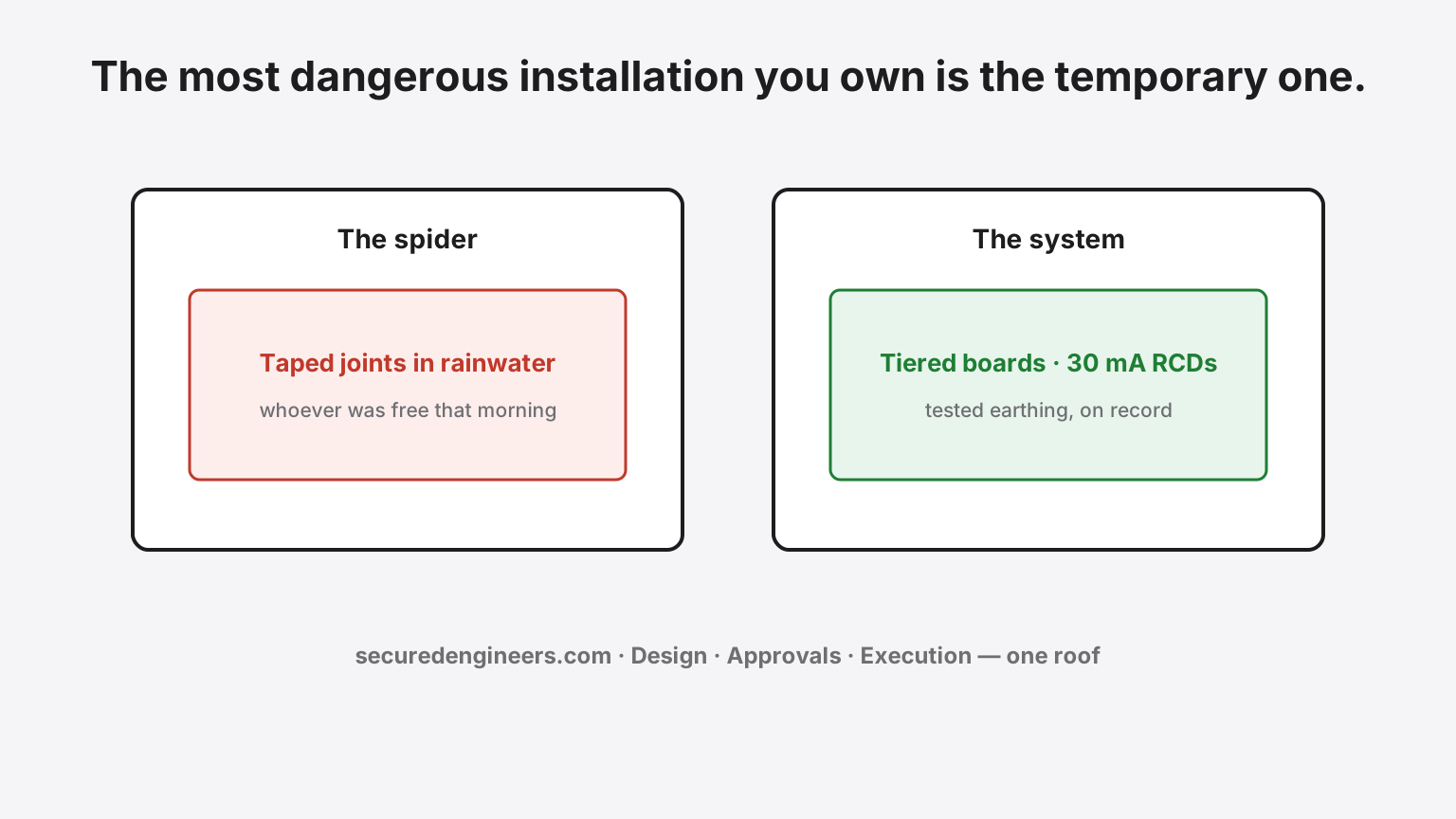
There is a bitter irony in construction: the permanent electrical installation — designed, calculated, inspected, documented — is built using a temporary installation that is usually none of those things. Cables lie in rebar and rainwater, joints are taped mid-span, earthing is a rod someone remembers hammering, and protection is whatever the rented board came with. Then the monsoon arrives, and site electrical accidents do what they do every year.
Temporary does not mean exempt. The safety obligations that govern electrical installations — and the accident-reporting duties that follow failures — apply to site supplies in full. More practically: a project stopped by an electrocution inquiry loses more time than proper site power ever cost.
Source strategy: decide it at mobilisation, not by default
| Option | Where it wins | Watch |
|---|---|---|
| DISCOM temporary connection | Cheapest energy for long builds with steady loads (tower cranes, batching, dewatering) | Apply early — temporary connections have their own paperwork and tariff class; metering location and cable route need planning like any connection |
| DG sets | Instant, mobile, load-following; the default for early works and remote sites | Costliest ₹/unit on the project; fuel logistics, noise/emission norms still apply — and chronic under-loading hurts the machine |
| Hybrid (temporary connection + DG standby, increasingly + solar for site offices) | Long projects with critical loads (dewatering must not stop) | Changeover must be engineered — a plug-swap "changeover" is a backfeed accident in waiting |
Sequencing note: an early conversation with the DISCOM sometimes converts into the permanent connection's first phase — one application, one cable route, no throwaway infrastructure. Worth one meeting at mobilisation.
The distribution architecture a site deserves
- A real site main board: weatherproof (IP-rated for outdoor life), lockable, with an incomer isolator, correctly sized protection, and — non-negotiable — RCD protection at 30 mA for every socket/tool circuit. Sensitive earth-leakage protection is the single device that most directly converts site contact incidents from fatalities into trips.
- Tiered sub-boards, not extension chains: main board → zone sub-boards → outlet assemblies, each level protected and labelled; the hundred-metre daisy-chain of taped extension leads is the architecture of most site incidents.
- Earthing done as a system: proper electrodes at source and boards, tested with an earth tester and recorded — and re-verified as the site changes, because excavators eat earth conductors monthly.
- Cable management as method statement: overhead catenaries or protected routes across circulation; armoured or protected cable where vehicles cross; joints only in proper enclosures — never taped splices lying in water. Rising mains for tower work planned, not improvised floor-by-floor.
- Task lighting and distribution per floor as the structure rises — planned outlet assemblies per level beat trailing leads down stairwells, for both safety and productivity.
Discipline that keeps it safe for eighteen months
- One accountable person: a designated, competent site electrician owns the installation — additions go through them, not through whoever holds pliers.
- Weekly visual + monthly tested: RCD test-button weekly; earth readings, insulation checks and board thermal scans monthly; a one-page register that an auditor — or an investigator — can read.
- Monsoon protocol: pre-monsoon audit (raise, re-gland, re-route), post-storm re-energisation checks, dewatering pumps on their own protected circuits. Most site electrical fatalities cluster in exactly these weeks.
- Tool and lead hygiene: damaged leads quarantined, industrial connectors (not domestic plugs) as site standard, PAT-style periodic checks on portable tools.
- Plan the handover: temporary must die on schedule — energisation of permanent systems, CEIG processes where applicable, and formal isolation/removal of site supply, so two systems never coexist ambiguously with backfeed paths.
Two calculators earn their keep at mobilisation: size the site's generator honestly against the real load list with the DG Set Sizing calculator, and price its run-hours with the DG Running Cost calculator — the number that usually funds the temporary-connection paperwork by itself.
What we do differently
As an execution contractor, our site establishment includes engineered temporary power as a deliverable: designed distribution with 30 mA protection throughout, tested earthing with records, monsoon protocol on the calendar — and the DISCOM temporary-connection paperwork handled by the same approvals team that will file the permanent one. The safest site is also, unfailingly, the one that finishes on time.
The three takeaways
- Site power is a real installation — design it, protect every tool circuit at 30 mA, and record the tests.
- Architecture over improvisation: tiered boards and managed routes, never daisy-chained leads through water.
- The monsoon is the exam — pre-monsoon audit and post-storm checks are the difference between weather and casualties.
Mobilising a project this season? Book a Free Project Blueprint & Statutory Approvals Roadmap or call +91 70099 85817.
Related services
More insights
MEP project timeline from design to handover: the dependencies, long-lead orders and hold points that set the date
The civil programme says when the shell is ready; MEP decides when the building can be used. The design dependencies, approval and procurement constraints, installation sequence and testing and energisation hold points that set the real handover date — and how to put them on the programme.
Project ManagementYour BOQ Said 1,000 M. Site Said 1,470 M. Who Pays for the Missing 470 M?
Your BOQ says 1,000 metres of cable. The coordinated site route needs 1,470. Who pays for the missing 470? Why BOQ quantity mismatches surface during execution — and how route-based validation catches them first.
More on Project Delivery & Commercial · all insights