
You Paid for 4,200 Metres of Cable. The Drawings Account for 3,600.
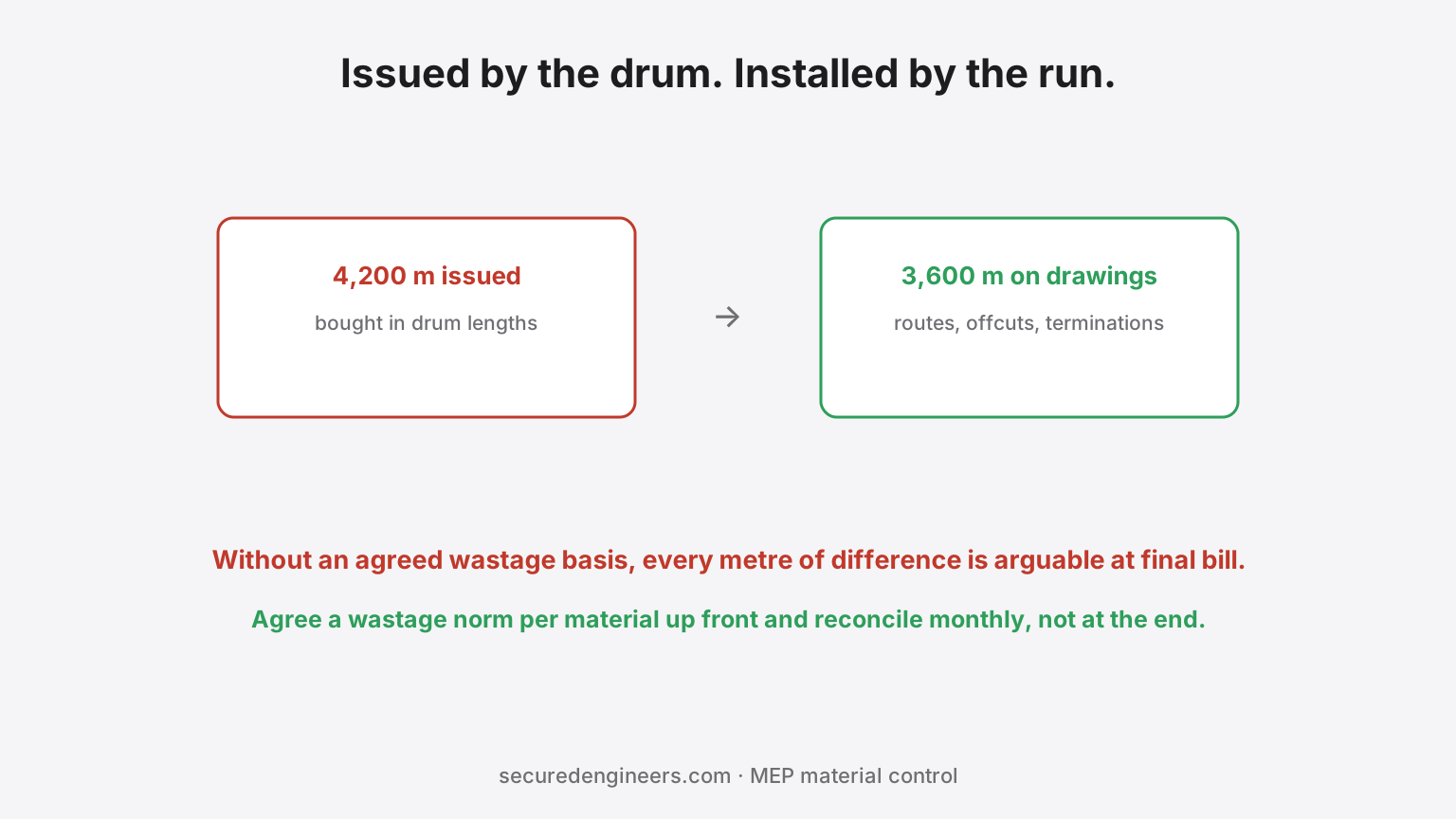
Near the end of an MEP job, someone in the client's team reconciles material issued against material installed and finds a gap. Cable is the usual culprit — bought by the drum, installed by the run — and the conversation that follows is rarely a good one.
The gap is usually real and usually innocent. The dispute happens because nobody agreed at the start what an acceptable gap looks like.
Where the difference genuinely comes from
- Cutting loss. A 500m drum feeding runs of 180m and 160m leaves 160m — usable only if another run happens to fit. Multiply across sizes and the offcut inventory grows.
- Route length versus drawing length. Drawings are measured in straight lines; cable follows tray, turns corners, drops and rises, and needs slack at terminations. Actual run length routinely exceeds drawn length.
- Terminations and looping. Every termination consumes length for dressing and glanding.
- Testing losses. Sample lengths cut for testing.
- Rework. A route changed after installation. The removed cable is consumed but installs nothing.
- Genuine loss. Damage, theft, mis-issue. It exists, and it is a smaller share than clients assume and a larger share than contractors admit.
Why it becomes a dispute rather than a calculation
| Missing agreement | Consequence |
|---|---|
| No agreed wastage percentage per material | Every metre of difference is arguable |
| No agreement on who owns offcuts | Usable surplus becomes contested property |
| Reconciliation attempted only at final bill | Records are cold and people have left site |
| Issue records not signed at the time | Quantities themselves are disputed, not just the variance |
| As-built lengths never measured | The installed figure is derived from drawings, understating real routes |
The fix is a paragraph, agreed early
Set an agreed wastage norm per material before work starts — a stated percentage for cable, pipe, tray and conduit, differing by type because their cutting characteristics differ. Variance inside the norm is settled; variance outside it is investigated. That single agreement converts a dispute into an arithmetic check.
Then two supporting habits: reconcile monthly rather than at the end, so discrepancies are examined while the run is still fresh and the storekeeper is still on site; and measure as-built lengths rather than deriving installed quantity from drawings, because the drawing figure will always be lower than the route.
Where a client supplies material free-issue, all of the above matters more, not less — the contractor is accounting for someone else's property and has every reason to want the basis agreed.
What we do differently
We propose the wastage basis in the contract documents and reconcile monthly with signed issue records, so the final bill is a summary of agreed positions rather than the first time anyone compares the numbers. Related: retention money and final-bill disputes and a BOQ that cannot be gamed.
More insights
The Headline Says 25% Costlier. Nobody Says Which 25%.
India's construction sector has absorbed a widely reported 25% cost spike, forcing a cyclical moderation across the market. That number gets quoted at the project level, but it doesn't land evenly — MEP scopes, with their heavy exposure to copper, steel, and imported components, are absorbing a disproportionate share of that inflation, and budgets set even a year ago are already stale.
Costing & ProcurementYou Vetted the Company. Did Anyone Vet the Hands Actually Doing the Work?
A skilled-manpower shortage in electricians, HVAC technicians, welders and fire-system installers means the contractor who won your tender may be executing through layers of subcontracted labour you never evaluated. The company on the letterhead passed your due diligence. The crew actually pulling cable or commissioning the chiller may not have — and by the time quality or safety issues surface, the layering makes accountability hard to trace.