
The Headline Says 25% Costlier. Nobody Says Which 25%.
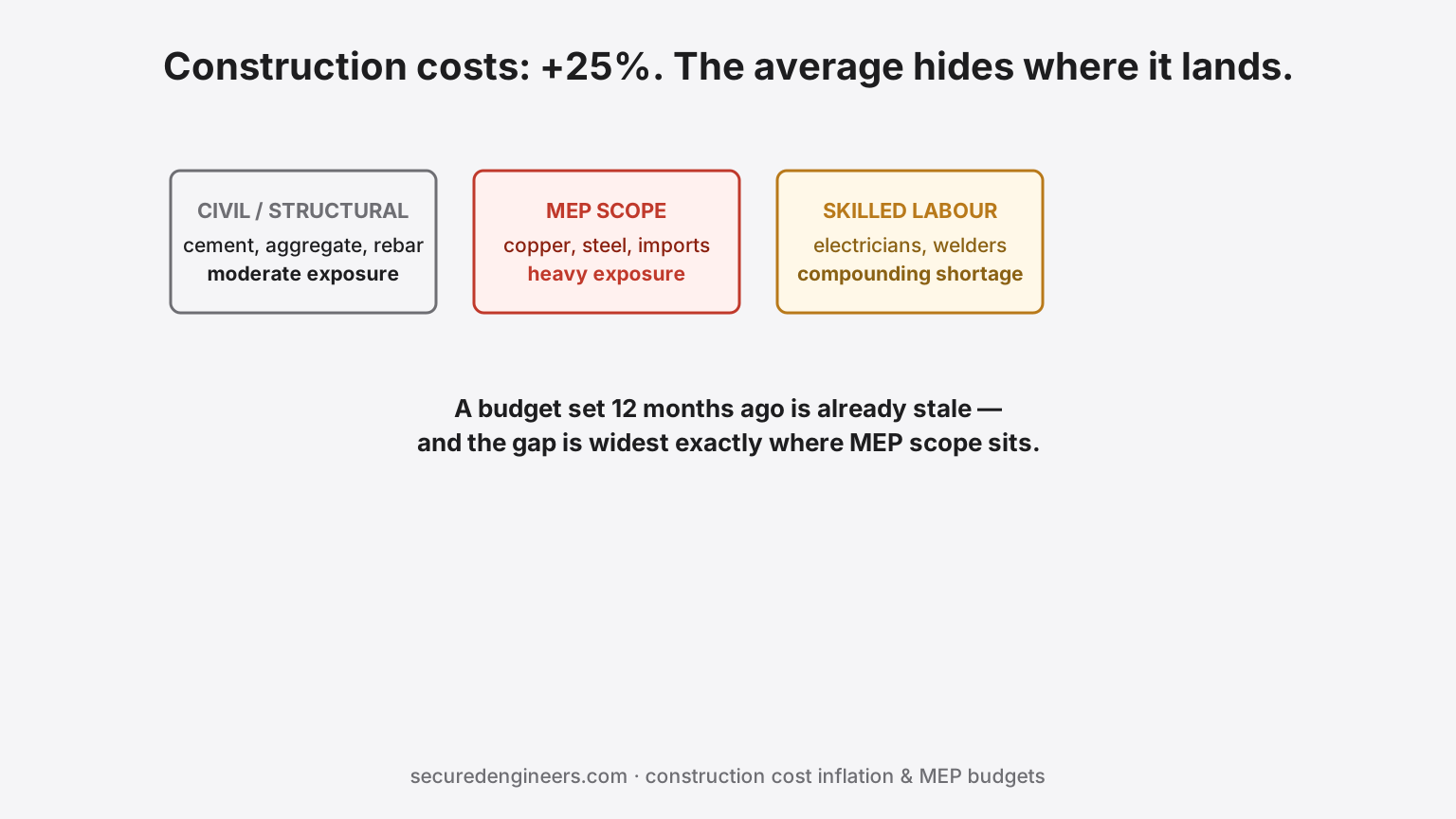
A widely reported 25% spike in construction costs has forced a cyclical moderation across India's real estate and construction sector in 2026. That headline number is real, but it's an average — and averages hide exactly where the pain concentrates. MEP scopes are structurally more exposed to this specific inflation cycle than civil or structural work, because they're disproportionately built from the materials moving fastest: copper, steel, and imported electrical and HVAC components.
Why MEP absorbs more than its "fair share" of a construction cost spike
| Material/component | Where it sits in MEP scope | Why it's especially exposed |
|---|---|---|
| Copper | Cabling, transformers, motor windings, HVAC coils | Copper is a globally traded commodity with price volatility that hits electrical and HVAC scope directly, in quantities civil work simply doesn't use |
| Steel | Ductwork, piping, cable trays, structural supports for equipment | Steel price movements affect MEP fabrication costs on top of whatever they're already doing to structural budgets |
| Imported HVAC and electrical equipment | Chillers, VRF systems, switchgear, specialised pumps | Currency movement and import duty exposure add a second inflation vector on top of raw material cost, one civil/structural scope mostly avoids |
| Skilled labour | Licensed electricians, certified welders, HVAC technicians | The skilled manpower shortage already covered means MEP labour cost inflation compounds with material inflation, not independently of it |
Why a budget set a year ago is already unreliable
The same cost-per-square-foot variance that makes MEP quotes hard to compare across contractors gets compounded by a fast-moving inflation cycle — a budgetary estimate prepared 12 months ago, even if it was rigorously done at the time, is very likely stale now, and the gap is largest exactly in the material categories MEP scope is heaviest in. Projects that locked a budget early and are only now going to tender are discovering the gap the hard way, at the worst possible moment — after design is finalised and financing is committed.
Where this creates real project risk
- Fixed-price contracts signed before the spike, now under pressure from contractors seeking variation claims or, worse, quietly reducing specification quality to protect margin — the same value-engineering risk covered in L1 procurement backfires, now amplified by genuine cost pressure rather than just competitive bidding
- Owners comparing quotes gathered months apart, not realising the earlier quote is no longer a valid baseline — leading to decisions made against stale numbers
- BOQ quantities validated correctly but priced against outdated rates, compounding the BOQ mismatch dispute risk with a pricing dimension on top of a quantity one
- Financing sized against pre-spike budgets, creating a funding gap that surfaces mid-construction rather than at planning stage, when options for addressing it are far more limited
What a realistic MEP budgeting approach looks like in an inflating market
- Re-validate any budget older than 3-6 months against current material and equipment pricing before relying on it for financing or contract decisions — especially copper, steel and imported equipment line items specifically
- Separate the inflation-exposed line items from the stable ones in your budget structure, so future re-pricing can be targeted rather than requiring a full re-estimate every time
- Build explicit price-escalation clauses into MEP contracts tied to published material indices, rather than either a rigid fixed price (which invites quiet spec-cutting under pressure) or an open-ended cost-plus structure (which removes budget certainty entirely)
- Get early, real vendor pricing on long-lead imported equipment (chillers, switchgear, specialised pumps) before finalising the overall project budget — these are both the most currency-exposed and the least flexible line items to re-price late
- Ask your MEP contractor directly how they're managing cost exposure — a contractor with no clear answer is either absorbing risk they'll eventually pass on through disputes, or planning to protect margin through the kind of undocumented specification erosion that's much harder to catch than a straightforward price increase
Our turnkey execution team prices MEP scope against current material and equipment costs, not a stale template, and can help re-validate an existing budget before it becomes the source of a mid-project funding gap.
FAQs
Why has MEP scope been hit harder by construction cost inflation than civil work?
MEP is materially heavier in copper, steel and imported equipment — commodities and components with more direct exposure to global price and currency movement than the cement, aggregate and rebar civil work depends on.
How old can an MEP budget be before it's unreliable in the current market?
As a rule of thumb, treat anything older than 3-6 months as needing re-validation against current pricing, particularly for copper, steel and imported equipment line items specifically.
Should MEP contracts include price-escalation clauses right now?
In an inflating market, an escalation clause tied to published material indices is usually a healthier structure than either a rigid fixed price or an open-ended cost-plus arrangement — it protects both sides from the two failure modes each pure structure invites.
Can you re-validate our existing MEP budget against current costs?
Yes — a re-pricing review targeted at the inflation-exposed line items. Request a review.
Frequently asked
Why does MEP absorb more than its share of a construction cost spike?
Because of where the commodity exposure sits. Copper runs through cabling, transformers, motor windings and HVAC coils, and it is a globally traded commodity — so a price movement that barely touches civil works passes almost directly into the MEP package.
Is a budget set a year ago still reliable?
Usually not. The cost-per-square-foot variance that already makes MEP quotes hard to compare between contractors gets compounded by a fast-moving inflation cycle, so a budgetary estimate prepared twelve months earlier can be materially adrift before a single order is placed.
How should a budget handle material price movement?
By pricing the exposure rather than pretending it is absent — naming which materials drive it, and agreeing how movement is shared before award. A quote that carries no escalation position has not removed the risk; it has only left it unstated.
More insights
The Quote Said "Plus GST". Whether You Can Reclaim It Is a Different Question.
MEP installation is a works contract, and works contracts have their own GST treatment. The trap is not the rate — it is that input tax credit on construction of immovable property is restricted, so tax that looks recoverable sometimes is not.
Costing & ProcurementYear 1 Was Free. Year 2 Was Cheap. Year 3 Is Eating Your Budget. Here Is the Curve.
Every new building lives the same cost story: the defect-liability year feels free, year two runs on youth, and from year three the breakdowns, energy drift and emergency repairs compound — because maintenance was treated as a cost to minimise instead of an asset to manage. The lifecycle economics, honestly.