
The Occupancy Certificate Is a Milestone. It Is Not a Finish Line.
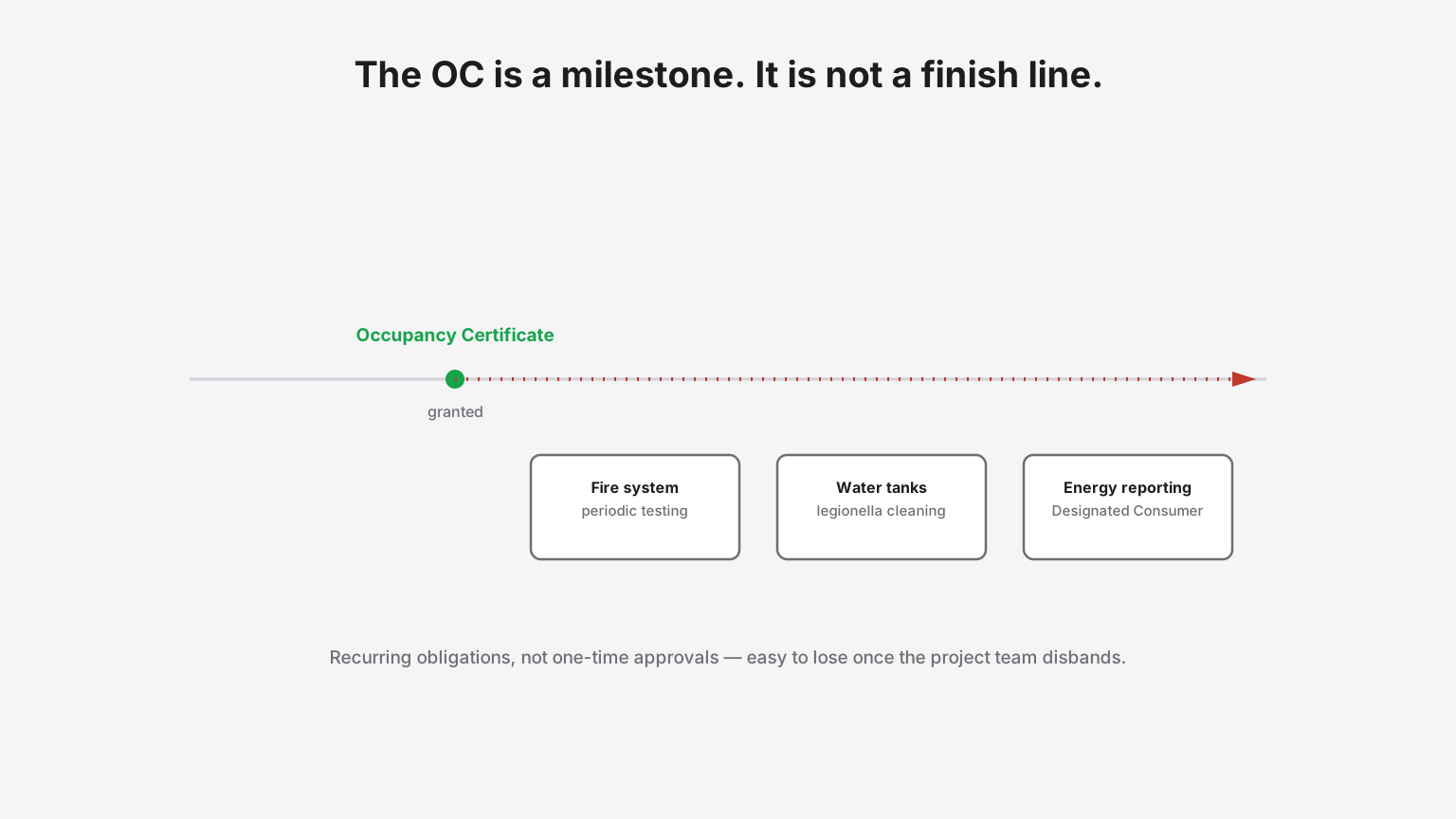
Our occupancy certificate guide covers the chain of approvals that has to close before a building can be legally possessed — fire NOC, lift licence, completion documentation. Getting the OC feels like the finish line, and for the approvals process, it is. For MEP compliance, it's closer to the starting gun on a set of ongoing obligations that most facility teams discover only when something lapses.
What continues after handover
| Obligation | What it actually requires |
|---|---|
| Periodic fire system testing | Hydrants, sprinklers, fire pumps, detection and alarm systems need scheduled testing under NBC-aligned norms — not a one-time commissioning test, but a recurring maintenance and testing record the fire authority can ask to see during a re-inspection or renewal cycle. |
| Water storage tank cleaning and legionella risk management | Overhead and underground storage tanks need documented periodic cleaning; hot-water systems held in a temperature band that allows legionella bacteria to proliferate carry a genuine, documented health risk many municipal health bylaws address directly. |
| Energy reporting for large consumers | Facilities crossing the threshold to be notified as a Designated Consumer under the Energy Conservation Act carry mandatory energy-consumption reporting and, in some cases, energy-audit obligations under the PAT (Perform, Achieve, Trade) scheme framework. |
| Lift and DG set statutory renewals | Lift operating licences and DG set consent-to-operate both typically carry renewal cycles, not one-time approvals — easy to let lapse once the original approvals team has moved on to the next project. |
Why this gets missed
The team that secures approvals and the team that operates the building after handover are often different people — sometimes a different organisation entirely, once a developer hands over to a facility management contract or an owner's in-house team. Obligations that were front-of-mind during the approvals sprint quietly become nobody's job once the project team disbands. The fire system that passed its commissioning test two years ago and hasn't been tested since is not a hypothetical — it's the default outcome when nobody owns the renewal calendar.
What actually prevents this
A documented compliance calendar — what needs testing or renewing, on what cycle, tied to a named responsible party — is the entire fix, and it costs nothing beyond the discipline of maintaining it. The alternative is discovering a lapsed fire-testing record during an insurance audit or, worse, an actual incident, which is a materially worse way to find out.
What we do differently
Our AMC scope includes the testing and documentation calendar that keeps fire systems, water storage and statutory renewals current after handover — so post-occupancy compliance has a named owner instead of falling through the gap between the approvals team and the facility team.
Who is responsible for fire system testing after handover — the contractor or the owner?
Once handed over, the building owner or occupier is responsible for maintaining and testing fire systems on the required cycle — the original installing contractor's obligation is typically limited to the commissioning and defects-liability period unless a separate AMC is in place.
More insights
Energy Code Compliance Used to Be a Badge. Your Sanction Authority Now Treats It as a Requirement.
States are progressively notifying the Energy Conservation Building Code into building bye-laws — which turns energy compliance from a voluntary green badge into an approval-time requirement for commercial buildings. Discovering that at sanction stage costs far more than designing for it from day one.
ComplianceThe Borewell You Drilled in 2009 Now Needs a Licence. And a Meter. And a Fee.
For decades, industrial water in North India was simple: drill, pump, forget. That era is over — groundwater NOCs, extraction charges, meters, recharge obligations and effluent-reuse mandates now stack on top of each other, and enforcement runs through your consent renewals. The water compliance map, decoded.