
Energy Code Compliance Used to Be a Badge. Your Sanction Authority Now Treats It as a Requirement.
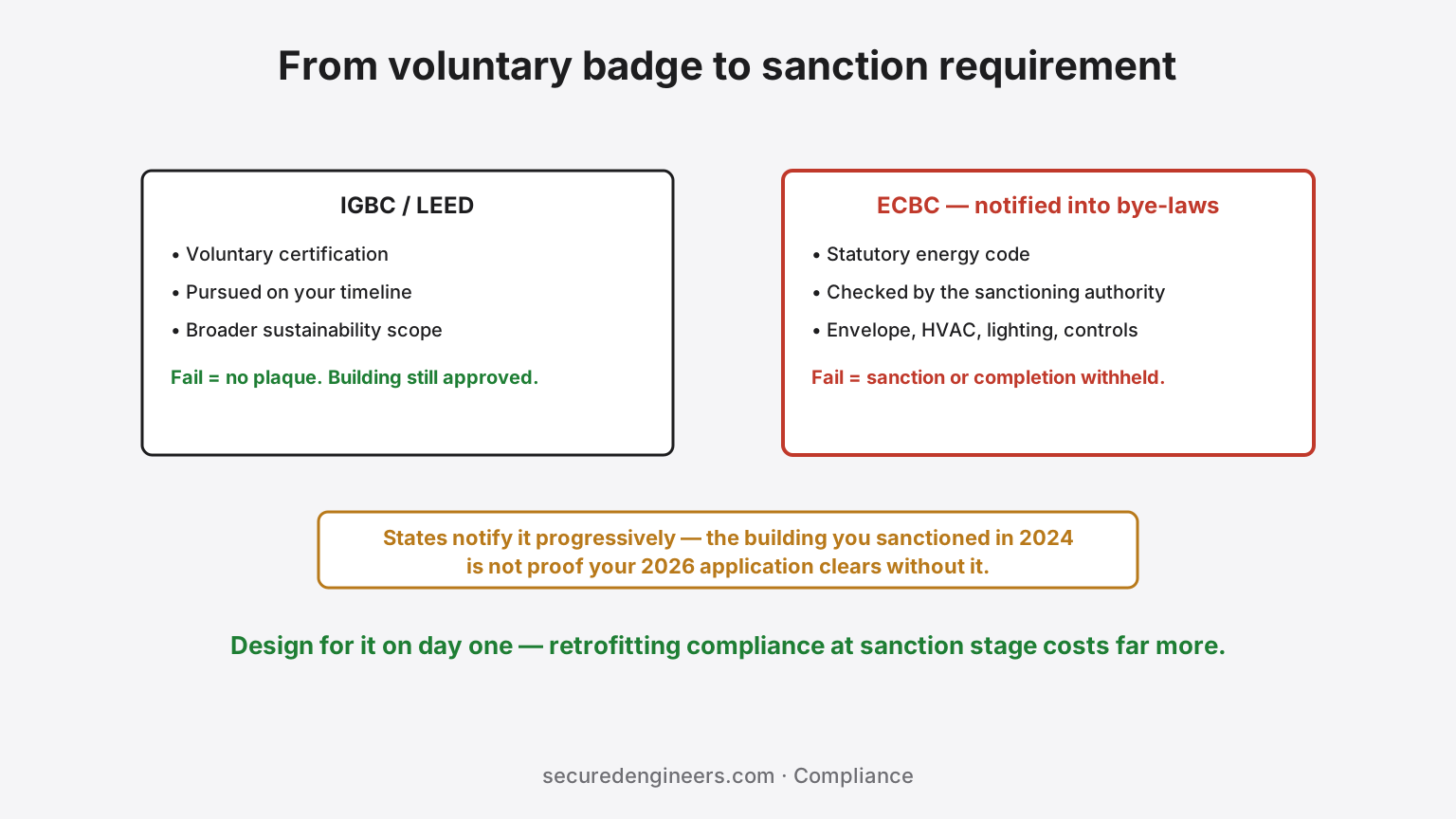
For years, energy-efficient building design in India was a voluntary affair — something you did for an IGBC or LEED plaque in the lobby, or didn't do at all. That framing is now out of date. The Energy Conservation Building Code (ECBC) — recast in its latest form as the Energy Conservation and Sustainable Building Code — is being progressively notified by states into their building bye-laws, which changes its legal character entirely: where notified, energy code compliance becomes part of the building sanction process itself for commercial buildings above the applicability threshold (typically defined by connected load or contract demand). Not a badge. A condition of approval.
The rollout is uneven — states notify at different times, with different amendments, and enforcement rigour varies by authority — which is exactly why it catches developers off guard. A team that sanctioned an identical building two years ago in the same state may find the current application bounced back with an energy-compliance query the previous one never faced.
What the code actually touches
ECBC is not a lighting-and-AC footnote — it constrains decisions across the whole MEP and envelope design:
- Envelope — wall and roof insulation values, and glazing performance. Glass area and quality stop being purely an architect's aesthetic call; a fully glazed façade must earn its way through the compliance math rather than being assumed.
- HVAC efficiency — minimum equipment efficiencies for chillers and unitary equipment, plus system-level requirements like economisers and variable-speed operation in specified cases.
- Lighting power density — watts per square metre caps by space type, plus mandated controls (occupancy sensors, daylight zoning). Whether a lighting design clears the cap is checkable early — our lighting lux calculator covers the illuminance side of that design exercise.
- Controls and metering — sub-metering of major end uses and control provisions that make the building operable at its designed efficiency, not just certifiable on paper.
- Renewable-ready provisions — rooftop solar provisions or readiness requirements, depending on the notified version.
ECBC is not IGBC or LEED
| ECBC / ECSBC | IGBC / LEED | |
|---|---|---|
| Nature | Statutory code, mandatory where notified in bye-laws | Voluntary certification, pursued by choice |
| Enforced by | Sanctioning authority at approval / completion stage | Private certification body, on the applicant's timeline |
| Scope | Energy performance specifically | Broader sustainability — water, materials, indoor quality, site |
| Failure consequence | Sanction or completion certificate withheld | No plaque — the building still gets approved |
The two overlap heavily on content — a building designed to ECBC is well on its way to IGBC/LEED credits, and our green building MEP guide covers that voluntary track — but they are different instruments. Holding a green certificate does not automatically discharge a notified ECBC obligation, and vice versa. Treat them as one design exercise with two paperwork outputs, not as substitutes.
The cost of discovering it at sanction stage
Every requirement above is cheap when it shapes the design and expensive when it corrects one. Insulation and glazing specification cost little extra when chosen on day one; re-specifying a curtain wall after the façade package is tendered is a different order of pain. Efficient chillers selected at design stage carry a modest premium; swapping an ordered chiller for a compliant one means restocking charges and programme delay. And a compliance query raised at sanction — or worse, at completion-certificate stage — stalls the approval clock in exactly the way our occupancy certificate delays article maps: the building is finished, the fit-out is waiting, and the file sits on a query that a day-one design decision would have pre-empted.
The practical position for 2026
Assume applicability until verified otherwise. For any new commercial building — office, retail, hotel, hospital, institutional — check the current notification status and applicability threshold in your specific state and authority at concept stage, and run the compliance path (prescriptive or whole-building) as part of the MEP design, not as a post-design audit. Our Design & Approvals team tracks state-wise notification status and builds the compliance documentation alongside the sanction file, so the energy code is something your project satisfies quietly — instead of the query that arrives when the building is already out of the ground.
More insights
You Have a Valid Fire NOC. It Does Not Cover What the Building Is Now.
A Fire NOC is issued against a specific building, occupancy and fire scheme. Add a mezzanine, raise the racking, change what you store or convert a shed — and the NOC you hold may no longer describe the building you have.
ComplianceThe IE Rules Are Gone. Here Is What You Are Personally on the Hook for Now.
Generations of Indian electrical practice ran on the Indian Electricity Rules, 1956. They have been replaced — the CEA's safety regulations now define an owner's duties: designated supervision, periodic testing, records, and accident reporting. Most facility owners have not read a line of them.