
That Cheap Module Quote May Not Be an Eligible Module Anymore. ALMM List-II Changed the Rules.
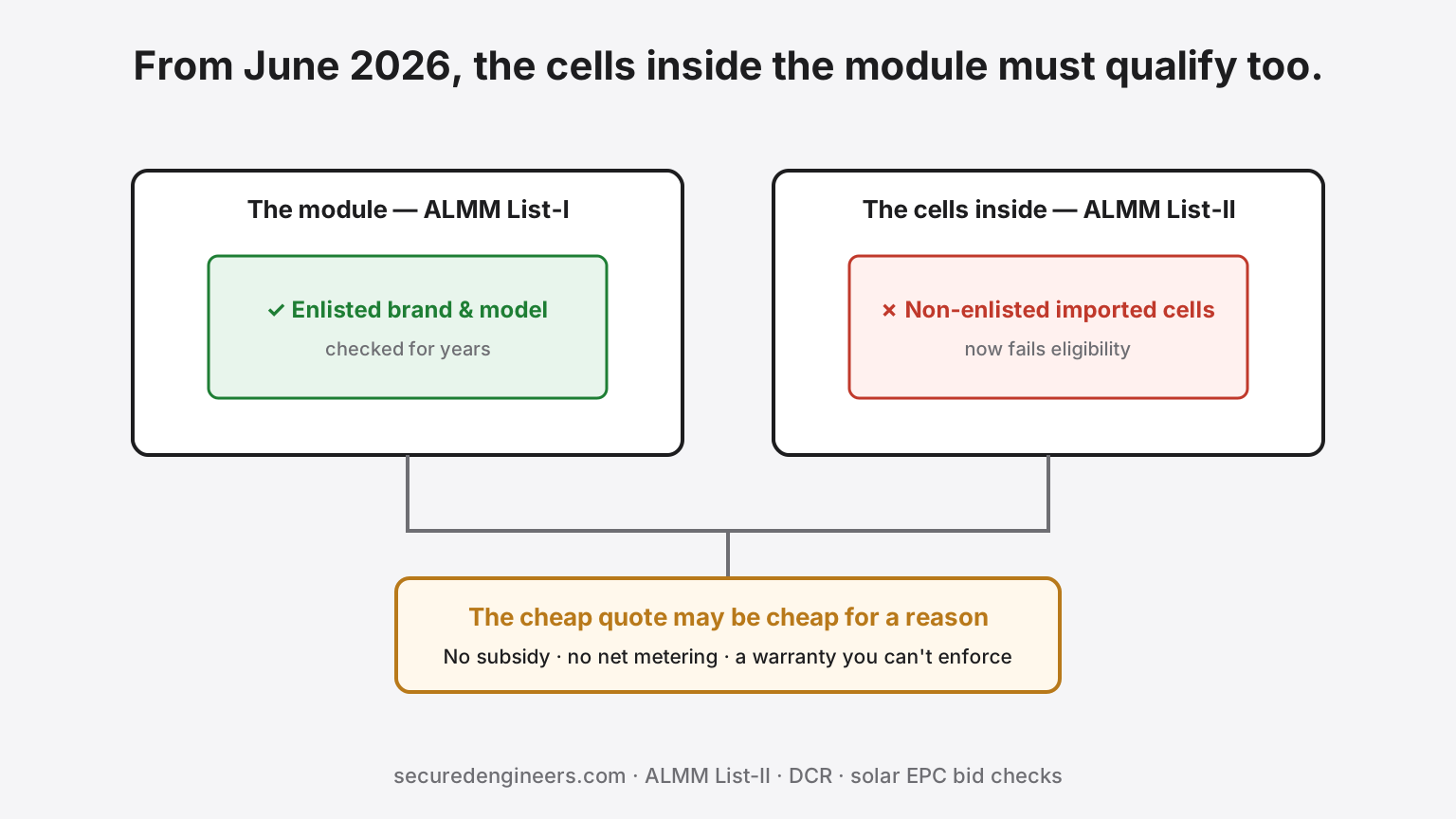
The Approved List of Models and Manufacturers (ALMM) has governed which solar modules qualify for government-connected projects in India for years: if the module isn't on List-I, it isn't eligible for central schemes, most state programmes, and — in a growing number of states — net metering itself. In 2026 the framework grew a second layer. ALMM List-II, effective June 2026, extends the same enlistment requirement to the solar cells inside the module. A module assembled in India from imported, non-enlisted cells can now fail eligibility even though the module brand itself sits comfortably on List-I.
What actually changed
Before List-II, "ALMM-compliant" meant the module manufacturer and model were enlisted — where the cells came from was commercially interesting but not an eligibility question. Now, for projects where ALMM applies, compliance is two-layered: the module must be on List-I and the cells inside it must come from a List-II enlisted cell manufacturer. Domestic Content Requirement (DCR) categories — certain central schemes and subsidised segments — sit on top of that again, requiring both cell and module to be domestically manufactured.
The practical effect on pricing is immediate. Enlisted domestic cell capacity is newer and more expensive than the imported cells that filled Indian module lines for years, so genuinely compliant modules cost more in 2026 than the same wattage cost in 2025. Which means the quote that looks refreshingly cheap on your table has a decent chance of being cheap for a reason.
The failure mode: an installed plant that can't get approved
The risk isn't abstract. A factory that signs the low bid, installs the array, and then applies for net metering or a scheme benefit can discover — months later, plant on the roof — that the modules don't clear the applicable ALMM requirement. The plant still generates, but the commercial case it was sold on (net-metering export credits, subsidy, scheme participation) is gone or stuck in dispute. And North Indian DISCOMs do not process contested applications quickly — the queue realities in our net-metering delays guide get materially worse when the paperwork itself is challengeable.
What to verify in every 2026 solar EPC bid
| Check | Why it matters |
|---|---|
| Module model on ALMM List-I, current edition | Lists are revised periodically; a model enlisted last year can lapse. Verify against the current published list, not a certificate PDF from the bid. |
| Cell manufacturer on List-II (for applicable projects) | The new layer. Ask the bidder to state, in writing, whose cells are in the offered module and their List-II status. |
| DCR status where the scheme demands it | DCR is stricter than ALMM alone. If your project touches a DCR-bound scheme, both cell and module must qualify — confirm before ordering, not at inspection. |
| Eligibility named in the contract | Make ALMM/DCR compliance a contractual condition with remedy, so a non-compliant supply is the EPC's problem, not yours. |
Timing traps around the cutover
Transition periods around any list-based mandate create their own hazards. Projects tendered or contracted before the effective date, modules manufactured before it but delivered after, stock bought cheap in the run-up precisely because it was about to become ineligible — each sits in a grey zone whose treatment depends on the exact wording of the applicable scheme guidelines and any clarifications issued around them. Two practical rules cut through most of it. First, anchor eligibility to the date and rule set that will apply when your application is processed, not when the module left the factory — approval authorities check compliance when they check, not when you bought. Second, be suspicious of any 2026 offer priced conspicuously below the compliant market: distressed pre-cutover stock is exactly what gets dressed up as a bargain, and the discount is rarely as large as the benefits an ineligible plant forfeits. If a deal only works because the modules were cheap, re-run it assuming no subsidy and no net metering, and see if it still works.
Bankability is the quieter half of this
Even where no scheme applies — a pure captive plant, no subsidy, no export — cell provenance still matters, because module quality and warranty enforceability track the cell supply chain. An unenlisted cell line with no Indian presence is a warranty you may never successfully claim against, and degraded or delaminating modules are one of the recurring root causes in our analysis of why industrial solar underperforms. ALMM is a compliance list, but it doubles as a crude bankability filter.
How to buy solar in the List-II era
Compare bids on delivered, compliant value — not headline ₹/kW. Run your savings case on realistic numbers with our solar savings calculator, then make every shortlisted EPC state the exact module model, cell manufacturer, and applicable list status in the bid itself. Our Solar EPC practice quotes ALMM and DCR status explicitly on every offer, because a plant that can't get its approvals isn't a cheap plant at any price.
More insights
Your Biggest Daytime Load and Your Solar Peak Happen at the Same Hour.
Cooling demand and solar generation both peak with the sun. That coincidence is the strongest argument for rooftop solar on an air-conditioned building — and it only pays out if the array is sized against the cooling profile rather than the roof area.
Solar EnergyYour Factory Has a Reservoir, an ETP Pond, or a Cooling Tank. That's Roof Area You Haven't Counted.
Floating solar puts panels on water instead of roof or ground — a genuine option for factories, textile mills and campuses that already have a reservoir, effluent pond or cooling water body. It isn't free capacity, though: anchoring, water quality and access all add real engineering that a roof-mount quote doesn't have to price.