
PM Surya Ghar Is a Residential Scheme. Your Factory's Solar Incentives Work Differently.
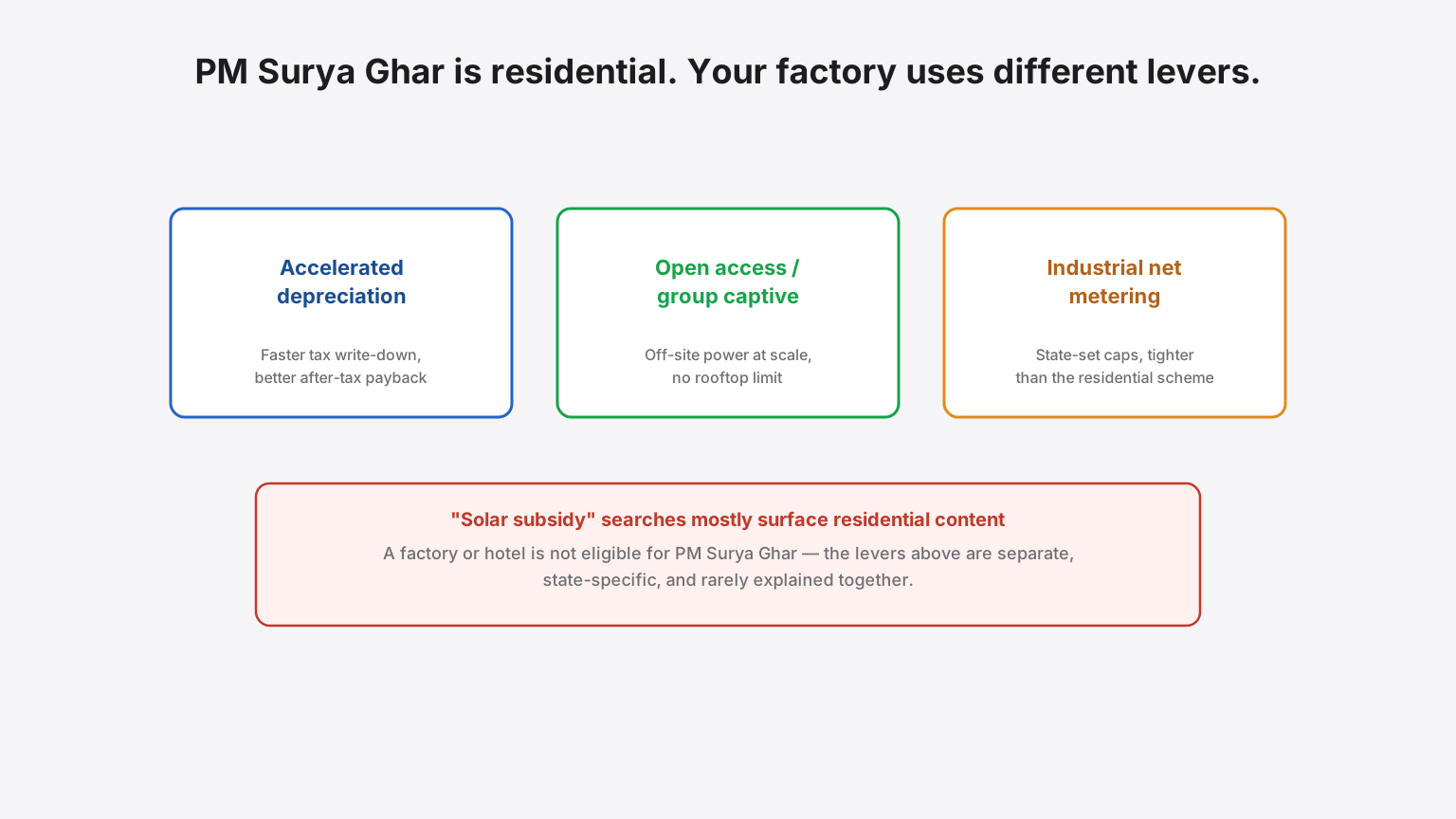
Most solar-incentive coverage in Indian media is about PM Surya Ghar: Muft Bijli Yojana — the residential rooftop subsidy scheme we've covered separately in our PM Surya Ghar module-exemption guide. It is residential-only. A factory, hotel, hospital or warehouse evaluating solar is not eligible for it, and searching for "solar subsidy" tends to surface residential content that doesn't apply to a commercial connection at all. The incentive stack that actually applies to a commercial or industrial buyer is different, less publicised, and worth understanding on its own terms.
The levers that actually apply
| Mechanism | How it works for a commercial/industrial buyer |
|---|---|
| Accelerated depreciation | Solar generating equipment has historically qualified for a materially higher depreciation rate than standard plant and machinery under the Income Tax Act, letting a business write down the asset faster and improve after-tax payback. Rates have changed over the years — confirm the current year's applicable rate with your tax advisor before it factors into a project's financial case. |
| Open access / group captive | Sourcing power from an off-site solar plant at industrial scale, bypassing rooftop area limits entirely. Charges and banking rules are state-set and change — see our open access vs rooftop captive guide for the real economics. |
| Commercial/industrial net metering | Available in most states, but typically capped against sanctioned load and, in several states, subject to tighter export limits than the residential scheme carries — confirm your DISCOM's current commercial net-metering cap before sizing a plant to it. |
| State industrial solar policies | Several states run their own industrial-specific solar incentives — capital subsidy, banking terms, or expedited approval — separate from any central scheme. These are state- and often policy-window-specific; check current eligibility rather than assuming last year's terms still apply. |
| ALMM / domestic manufacturing (PLI) | Not a direct subsidy to the buyer, but the push toward domestic cell and module manufacturing under India's PLI scheme is steadily changing module supply and pricing — worth being aware of as a market dynamic even though it isn't money in your pocket directly. |
What this means for project economics
Unlike the residential scheme's upfront capital subsidy, most of the commercial/industrial stack shows up as a lower effective cost of capital and a better after-tax payback, rather than a discount on the invoice. That changes how the numbers should be presented and compared: a commercial solar proposal's "payback period" should already reflect depreciation benefit and applicable state incentives, not just the headline installed cost per kWp against the tariff saved — two proposals quoting the same per-kWp cost can have meaningfully different true paybacks depending on what's assumed on the incentive side.
Choosing who executes it
Because the incentive landscape is genuinely state- and scheme-specific, the EPC contractor's familiarity with your state's current net-metering caps, open-access charges and any live state industrial policy matters as much as their installation pricing — a contractor quoting only the equipment and installation cost, with no view on the incentive side, is leaving money on the table for you to find yourself later. Ask any commercial solar EPC contractor you're evaluating to show the incentive assumptions behind their payback number explicitly, not just the final figure.
What we do differently
Our Solar EPC proposals separate the installed cost, the applicable incentive stack, and the resulting payback into distinct line items, so a commercial or industrial buyer can see exactly what's driving the number rather than taking a bottom-line payback figure on faith.
Can my factory apply for PM Surya Ghar?
No — it's a residential rooftop scheme. Commercial and industrial connections use a different set of mechanisms: accelerated depreciation, open access, and commercial net metering, covered above.
Does accelerated depreciation apply to a leased or rented facility's solar plant?
It depends on who owns the solar asset for tax purposes — the facility occupant or a third-party developer under a PPA structure — which changes who can claim the depreciation benefit. Confirm the specific ownership structure with your tax advisor before assuming it applies.
More insights
Rooftop Solar Payback in India: What Businesses Should Expect
For commercial and industrial rooftops, solar typically pays back in 3–5 years and then delivers free power for two decades. Here's how the maths works.
Solar EnergyBifacial Panels Generate From Both Sides. On the Wrong Roof, the Second Side Generates Almost Nothing.
Bifacial modules capture light reflected off the ground as well as direct sunlight — real, but the gain depends entirely on mounting height, tilt and what's actually underneath the array. Marketing puts the number at up to 20-30%. Most Indian commercial rooftops see a fraction of that, and it's worth knowing why before paying the premium.