
Bifacial Panels Generate From Both Sides. On the Wrong Roof, the Second Side Generates Almost Nothing.
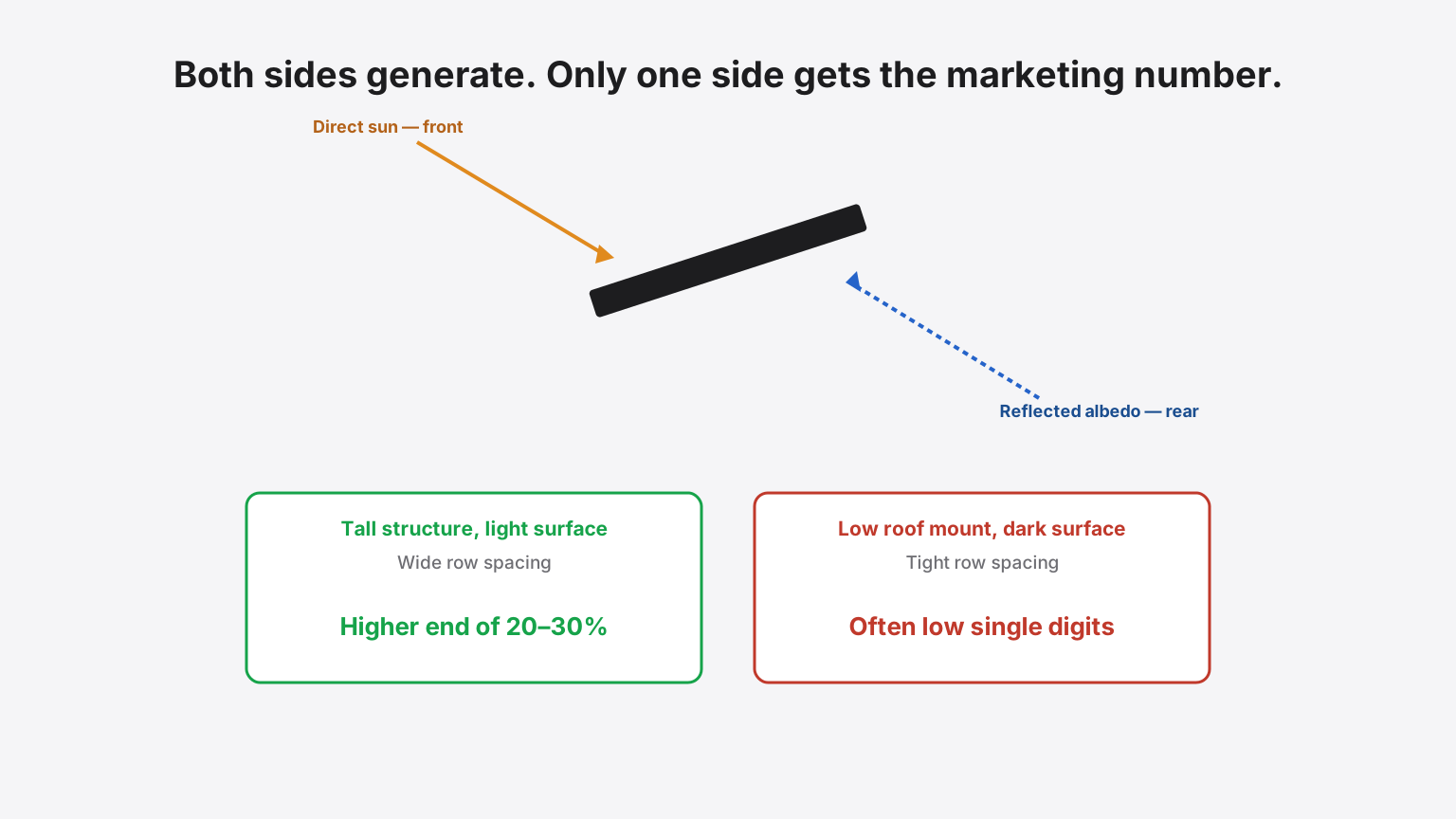
A bifacial module has active cells on both the front and rear glass, generating from direct sunlight on the front and from reflected light — albedo — on the rear. Manufacturers advertise a bifacial gain of 20-30% over an equivalent monofacial module. That number is measured under close-to-ideal conditions: high mounting height, a light-coloured or reflective ground surface, and open row spacing. It is not the number most Indian commercial and industrial installations will actually see.
What actually drives the gain
| Factor | Effect on rear-side gain |
|---|---|
| Mounting height above the surface | Higher = more reflected light reaches the rear cells. A low-clearance rooftop mount sees little of the reflected light a tall ground-mount structure captures. |
| Ground/roof surface albedo | White gravel or reflective roofing can double the gain a dark rooftop membrane or bare soil produces. |
| Row spacing and self-shading | Tightly packed rows shade each other's rear side, cutting the theoretical gain significantly. |
| Racking and mounting structure | A structure that blocks the module's rear face defeats much of the point — bifacial needs open-frame or elevated mounting to work as advertised. |
On a typical Indian commercial rooftop — low mounting height, a standard dark membrane or waterproofing surface, rows spaced for maximum density — the realistic gain is often in the low single digits, not the 20-30% headline. On an elevated ground-mount structure with a light ground surface and proper row spacing, the higher end of that range becomes genuinely achievable.
Why it's still often worth specifying
Most tier-1 manufacturers now ship TOPCon cells bifacial by default — see our TOPCon explainer — so the effective premium over monofacial has narrowed substantially and, on many current bids, is close to zero. In that situation, taking the bifacial variant costs little and captures whatever rear-side gain the installation does achieve, even if it's modest. The decision that actually matters is whether it's worth paying extra for a taller structure or a reflective ground treatment specifically to capture more of the bifacial gain — that's a real cost-benefit question, not a "just tick the box" one.
What to ask your EPC contractor
- What rear-side gain is realistic for this specific mounting height and surface — not the manufacturer's datasheet maximum.
- Whether the racking structure was selected to actually expose the module's rear face, or is a standard monofacial structure with bifacial modules bolted on regardless.
- Whether the yield estimate in the proposal already reflects a realistic bifacial gain for your site, or has simply added the marketing percentage on top of a monofacial estimate — see our shading and yield-estimate guide for how estimates can diverge from reality more broadly.
What we do differently
Our Solar EPC yield estimates model the actual mounting height and ground surface for bifacial gain rather than applying a flat marketing percentage, so the payback number in your proposal is one the installed system can actually hit.
More insights
Green Hydrogen Needs a Lot More Solar Than the Slide Deck Shows.
Green hydrogen — solar power run through an electrolyzer to split water — is the path being discussed for decarbonising steel, fertiliser and other hard-to-electrify heavy industry. For most Indian industrial buyers today it's a genuine future direction, not a retrofit decision, and the honest reason why is the scale of solar capacity it actually requires.
Solar EnergyYour Factory Has a Reservoir, an ETP Pond, or a Cooling Tank. That's Roof Area You Haven't Counted.
Floating solar puts panels on water instead of roof or ground — a genuine option for factories, textile mills and campuses that already have a reservoir, effluent pond or cooling water body. It isn't free capacity, though: anchoring, water quality and access all add real engineering that a roof-mount quote doesn't have to price.