Skip the Subsidy, Skip the Rules? PM Surya Ghar's Module Exemption, Explained.
India's rooftop solar capacity crossed 30 GW in May 2026, and PM Surya Ghar: Muft Bijli Yojana is the single biggest reason why. A recent MNRE clarification adds a new wrinkle to the scheme: applicants who voluntarily give up the subsidy can now use non-DCR (non-Domestic Content Requirement) solar modules, and select residential consumers have received exemptions from ALMM List-II requirements under specified conditions. On paper, that's more flexibility. In practice, it's a decision that needs to be made with clear eyes about what the subsidy — and the module requirements attached to it — were actually protecting.
What DCR, ALMM and the subsidy link actually mean
| Term | What it means | Why it was tied to the subsidy |
|---|---|---|
| DCR (Domestic Content Requirement) | Modules manufactured in India using domestically produced solar cells, not just assembled here from imported cells | Supports domestic solar manufacturing — a policy goal separate from, but bundled into, the subsidy eligibility |
| ALMM (Approved List of Models and Manufacturers) | A government-maintained list of module/manufacturer combinations approved for use in subsidised and government-linked solar installations | Quality and traceability control — ALMM listing implies a manufacturer has met specified testing and production standards |
| ALMM List-II | The list specifically covering solar cells (as distinct from List-I, covering modules) | Extends the same quality-assurance logic to the cell level, not just the finished module |
| Non-DCR module | A module that may use imported cells, assembled domestically or otherwise — not eligible for DCR-linked incentives | Often lower cost, wider sourcing options, but outside the domestic-content policy framework |
Why someone would voluntarily give up the subsidy
- Non-DCR and non-ALMM-listed modules can be meaningfully cheaper and offer a wider choice of suppliers, which matters for buyers prioritising lowest upfront cost or specific technical specifications not available in ALMM-listed options
- Larger commercial or industrial buyers sometimes have supplier relationships, financing structures or timeline needs that don't align well with subsidy application processes and their associated conditions
- Faster procurement — sourcing outside the ALMM list can open up supply that isn't constrained by the approved list's capacity or lead times
What you're actually giving up
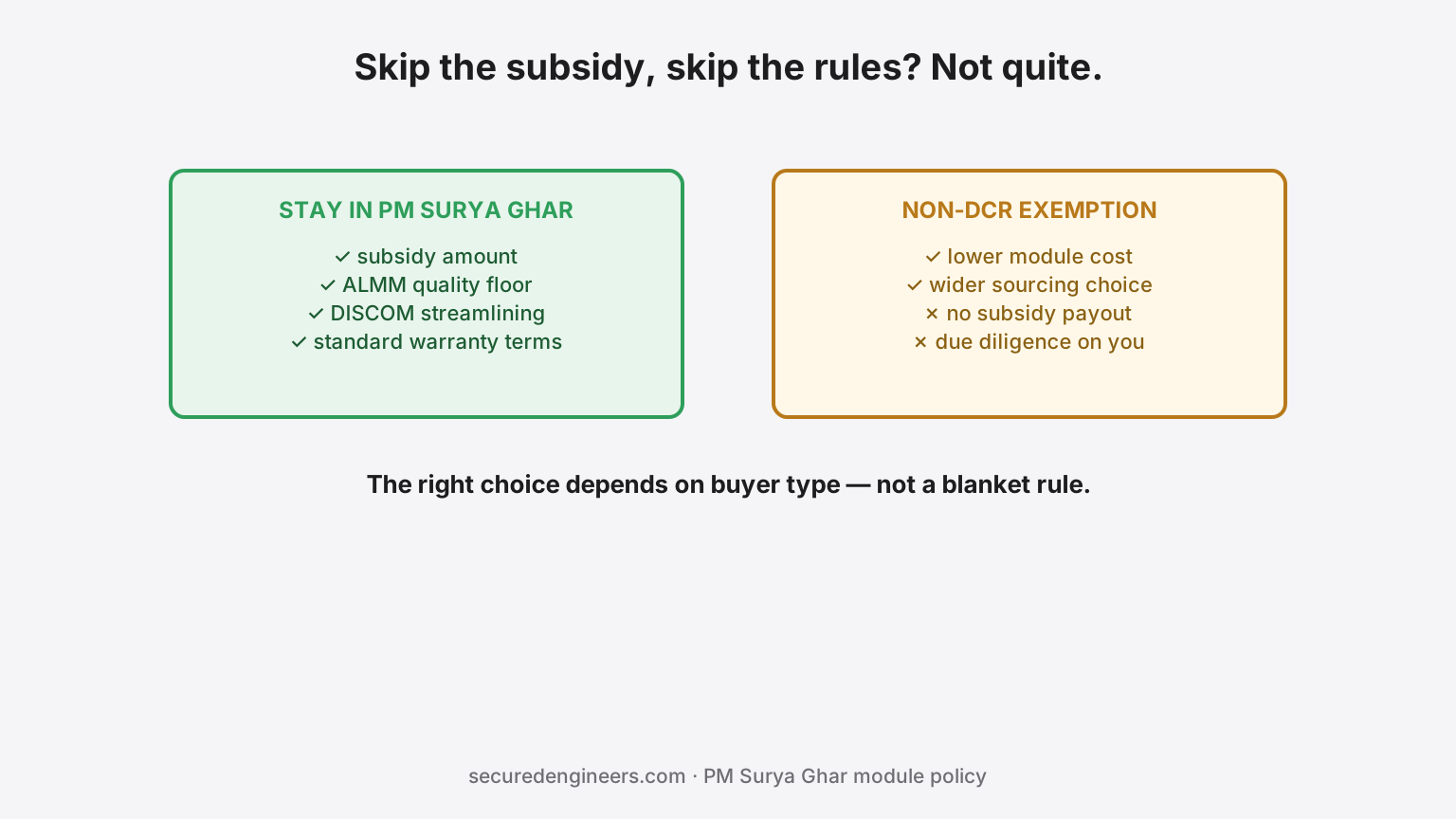
- The direct subsidy amount itself — for residential PM Surya Ghar applicants, this is often the single largest reason to stay within the scheme; forgoing it needs a clear-eyed cost comparison against non-DCR module savings, not an assumption that "no subsidy paperwork" automatically nets out cheaper
- The quality-assurance floor ALMM listing represents — an ALMM-listed manufacturer has cleared a specific testing and verification bar; a non-listed module may be entirely fine, but the burden of technical due diligence shifts fully onto the buyer
- Net-metering and scheme-linked processes some DISCOMs streamline specifically for PM Surya Ghar-registered installations — check locally, since net metering delays are already a documented pain point even within the scheme, and stepping outside it can remove whatever streamlining exists
- Standardised warranty and after-sales expectations that come bundled with scheme-linked, ALMM-listed procurement — outside the scheme, warranty terms are whatever you individually negotiate with your specific supplier
How to actually decide
| Your situation | Likely better fit |
|---|---|
| Residential rooftop, subsidy-eligible, no strong supplier preference | Stay within PM Surya Ghar — the subsidy value and quality floor typically outweigh non-DCR savings for most households |
| Large commercial/industrial installation, own procurement relationships | Non-DCR exemption route may genuinely make sense — evaluate module cost, warranty terms and technical specification independently |
| Tier-II/III city buyer where PM Surya Ghar adoption is accelerating fastest | Usually stay within the scheme — this is exactly the buyer segment the subsidy and its streamlined DISCOM processes were designed to reach |
| Buyer prioritising a specific module spec not on the ALMM list | Exemption route, but budget real time and diligence for independently verifying manufacturer quality and warranty enforceability |
Whichever route fits, the underlying engineering — correctly sizing the system against actual load, verifying structural loading, and getting the electrical integration right — doesn't change based on subsidy status. Our solar EPC team designs and executes rooftop solar under both the subsidised PM Surya Ghar pathway and independent procurement, and can walk through the real cost-benefit for your specific project before you commit either way.
FAQs
Does giving up the PM Surya Ghar subsidy mean I can use any solar module?
It removes the DCR requirement specifically, and in some cases the ALMM List-II requirement for eligible residential consumers — but confirm the exact current conditions with your installer or DISCOM, as eligibility details vary and continue to be clarified by MNRE. MNRE's clarification of 4 August 2026 (O.M. No. 283/54/2026-GRID SOLAR) states that residential net-metering consumers who give up the PM Surya Ghar subsidy are exempt from ALMM List-II (cells) until the end of the scheme period, 31 March 2027, provided the application is made through the PMSG National Portal; ALMM List-I (modules) still applies. The commercial and industrial position is different — see the 2026 commissioning guide.
Is a non-DCR module lower quality than a DCR module?
Not necessarily — DCR is about where the cells are manufactured, not a direct quality certification. However, ALMM listing does imply a specific quality and testing bar that a non-listed module hasn't necessarily cleared, so independent verification matters more outside the list.
Will forgoing the subsidy affect my net metering application?
It can remove scheme-linked processing streamlining some DISCOMs offer for PM Surya Ghar-registered installations — check with your specific DISCOM before assuming the process is identical either way.
Can you help me compare the subsidised vs. non-subsidised route for my project?
Yes — a cost and technical comparison specific to your project size and location. Request a comparison.
Related services
Guides that reference this page
- PM Surya Ghar Is a Residential Scheme. Your Factory's Solar Incentives Work Differently.
- Three Vendors, One Roof, Three Different Generation Figures.
- Perovskite Cells Promise 30%+ Efficiency. Your Roof Doesn't Have Ten Years to Wait and See.
- A Plant Down 8% Looks Exactly Like a Plant Working Fine.
- Solar for Bottling Plants and Breweries: Sizing, Roof, Approvals and Payback (50 kW+)
- Solar for School and College Campuses: Sizing, Roof, Approvals and Payback (50 kW+)
Related on this site
- termModule Mounting Structure
- termPPA (Power Purchase Agreement)
- termOpen Access (Solar)
- serviceSolar PV Modules (Solar EPC)
- serviceInverters (String / Central) (Solar EPC)
- calculatorSolar Roof Load Calculator
- calculatorSolar Shadow Free Area Calculator
- buyer's guideHow to Select a Solar EPC Contractor
- guideFactory approvals roadmap, India
- guideCLU for industrial land
More on Solar & Renewables · all insights