
Rooftop Solar Payback in India: What Businesses Should Expect
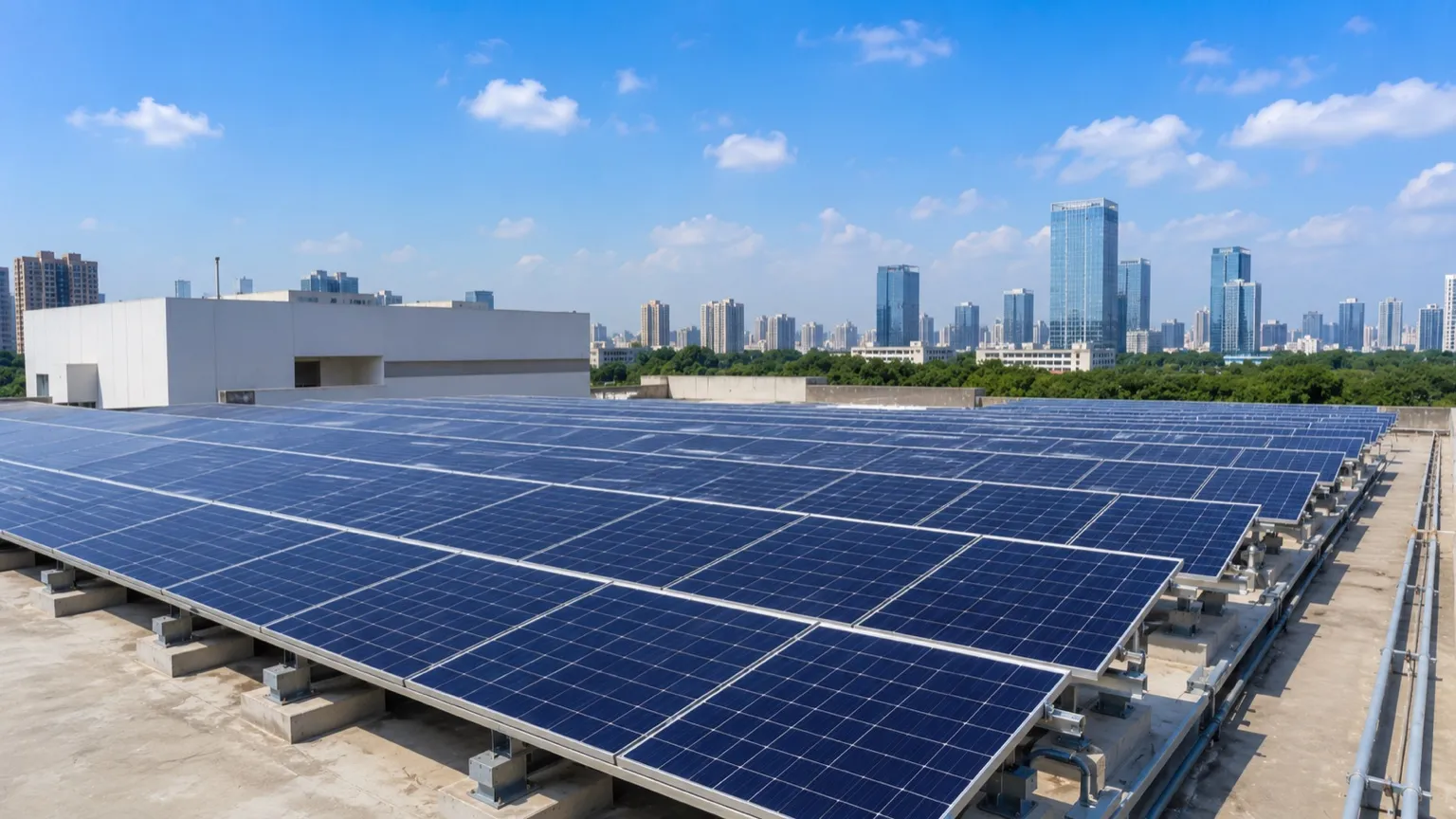
For commercial and industrial (C&I) businesses paying ₹8–₹12 per unit, rooftop solar is one of the highest-return investments available — typically paying back in 3 to 5 years and then delivering near-free electricity for 20+ years.
The basic economics
A rule of thumb: every 1 kW of rooftop solar needs roughly 100 sq.ft of shadow-free area and generates about 1,400–1,600 units per year in most of India. At a C&I tariff of ₹9/unit, that's ₹12,000–₹14,000 of avoided electricity cost per kW, every year.
What drives your payback period
- Tariff: The higher your current per-unit cost, the faster solar pays back.
- Self-consumption: Power used directly on-site saves the most; net-metering credits the surplus.
- System cost: C&I systems are typically ₹40,000–₹50,000 per kW installed, depending on scale and structure.
- Net-metering policy: Your state DISCOM's policy affects how surplus units are credited.
A simple example
A factory with a ₹1,00,000/month bill might install ~90 kW of solar for around ₹40 lakh, save ₹80,000–₹95,000 per month, and recover the investment in roughly 3.5–4 years — followed by two decades of savings worth several crore.
Beyond the savings
Solar also hedges you against tariff hikes, supports ESG/sustainability goals, and adds a visible CSR signal for clients and auditors.
Want your own numbers? Try our solar savings calculator, then ask us for an engineered quote with exact, site-specific figures.
More insights
Your Quote Says TOPCon Now, Not PERC. Here's What Actually Changed.
Most commercial and industrial solar quotes in 2026 default to TOPCon modules rather than the PERC panels standard a few years ago. The efficiency number moved, but the number that matters more for a 25-year asset is the degradation curve — and that's where N-type genuinely earns the switch.
Solar EnergyThat Cheap Module Quote May Not Be an Eligible Module Anymore. ALMM List-II Changed the Rules.
From June 2026, ALMM compliance extends to solar cells (List-II), not just modules. A module that was fine to buy last year may now be ineligible for government schemes and net metering — and the cheapest quote on your table is the most likely to be built on non-compliant cells.