
Nothing Has Tripped in Years. That Is Not the Same as Safe.
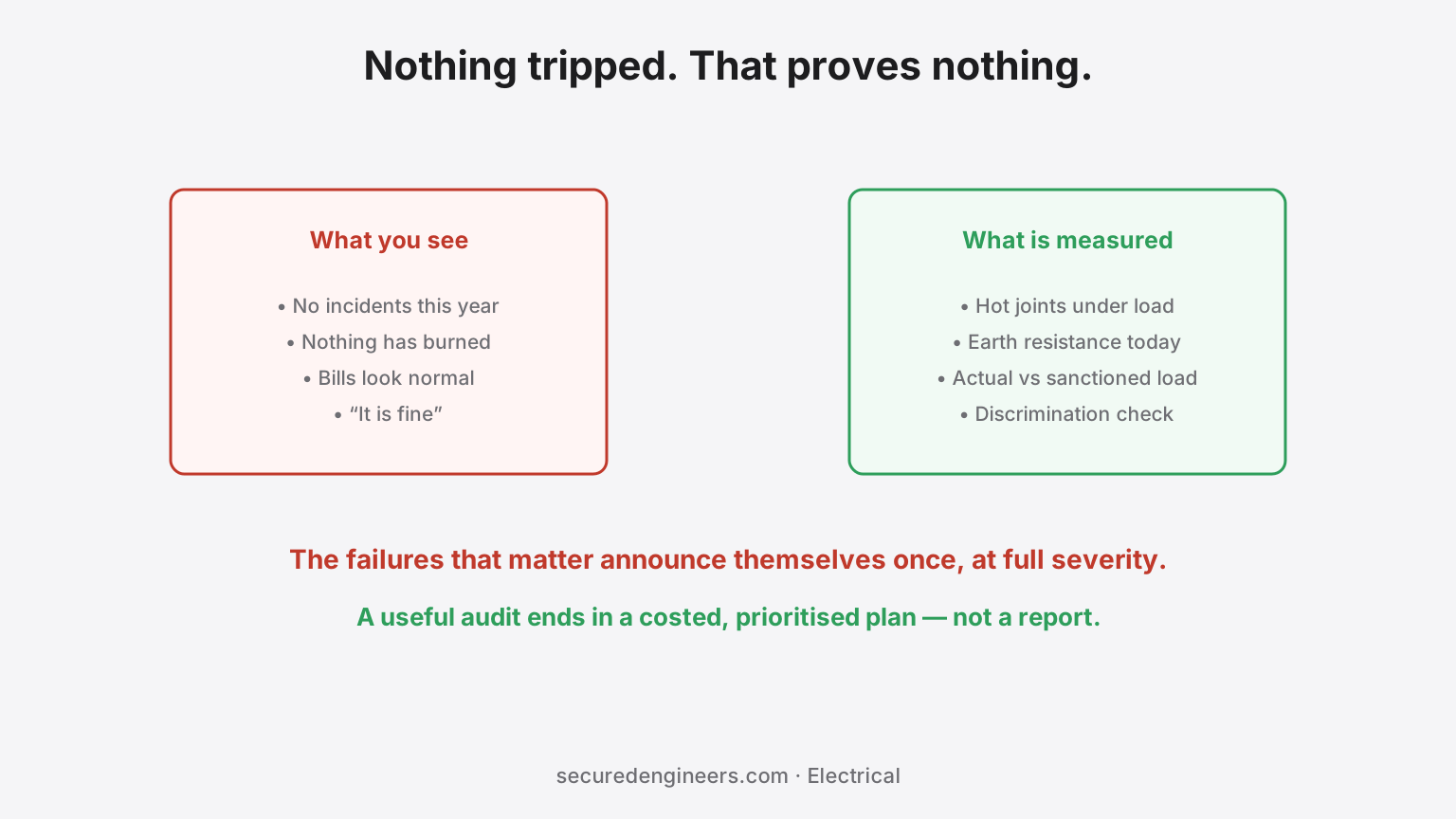
Ask a plant manager how the electrical system is and the answer is usually about incidents: nothing has tripped, nothing has burned, so it is fine. It is an understandable proxy and a poor one, because the failures that matter announce themselves once, at full severity.
An audit exists to measure the things a quiet year cannot tell you.
What recurs, almost everywhere
- Hot joints. Loose or corroded terminations run hot long before they fail. Thermography finds them in an afternoon while they are still a tightening job rather than a burnt busbar and a shutdown.
- Protection that has never been coordinated. Breakers selected on rating, with settings left as supplied. A downstream fault then trips an upstream device and takes out far more of the plant than it should — read as "a power cut" rather than as a discrimination failure.
- Earthing that has degraded. Electrodes corrode and soil resistivity changes. An earth that measured correctly at commissioning ten years ago is not evidence of anything today unless it has been retested.
- Load grown past the design. Machines added over years onto distribution designed for the original plant. Individually reasonable, cumulatively over capacity.
- Power factor and harmonics. Visible as a penalty on the bill, and as heating in cables and transformers that shortens their life quietly.
- Panels that cannot be worked on safely. No incident-energy assessment, no PPE category, no labels — while staff open live panels routinely.
What an audit measures, versus what an inspection sees
| Audit activity | What it reveals that a walk-through cannot |
|---|---|
| Thermographic scan under load | Hot joints and imbalance while everything looks normal |
| Earth resistance measurement | Whether the earthing still performs, not whether it exists |
| Load and demand study | Actual versus sanctioned load, and where headroom has gone |
| Power quality logging | Harmonics and power factor over time, not at one instant |
| Protection coordination review | Whether a fault would trip the right device |
| Incident-energy assessment | What a panel could actually do to someone working on it |
The economics are usually the argument
Safety is the reason to audit, but it is rarely the reason a plant approves one. The commercial case tends to carry it: power-factor penalties are a recurring, avoidable line on the bill, and correcting them frequently pays back quickly. Load headroom recovered through an audit sometimes removes the need for an expensive supply upgrade altogether — which is why an audit is often the cheaper first step before an expansion, not an addition to it.
The safety findings then come free, in the sense that the exercise has already justified itself.
What a useful audit produces
Not a list of observations. A costed, prioritised action plan — what is dangerous and must be fixed now, what is wasting money and pays back, and what can wait — with the measurements behind each finding so the plan can be acted on rather than debated. An audit that ends in a bound report nobody can price is not an audit, it is paperwork.
Related detail: arc-flash and incident energy, cable sizing and voltage drop, and power-factor penalties. Our power factor correction calculator gives an indicative sizing for the penalty side.
What we do differently
Because we are an electrical contractor, a defect found during design or testing is something we can rectify ourselves rather than hand on. Where an installation needs inspectorate clearance afterwards, that runs through CEIG approval consultancy.
More insights
The Cable Tray Was Full on Day One. Every Change After That Cost Money.
Cable containment is treated as a commodity — trays, raceways and conduit bought on rate. But the containment decision fixes how much the electrical system can change for the rest of the building life, and a tray filled to capacity at handover makes every future addition a new installation.
ElectricalYour DG Is a ₹30/kWh Habit. Here Is What Every Unit Actually Costs.
Factories treat the DG as free backup and the bill as fate. Line up diesel, grid and rooftop solar on one table and the picture is brutal: every DG hour is the most expensive electricity you will ever buy. The honest per-unit economics, and the load strategy that follows.