
Electrical & Power: guides & engineering insights
Electrical infrastructure is the discipline with the heaviest statutory skeleton: the CEA (Safety) Regulations 2023 (successor to the old IE Rules) define an owner's duties, the Electrical Inspectorate (CEIG) gates every HT installation, transformer and DG set, and the DISCOM's tariff order quietly prices your habits — demand, power factor, time-of-day — every month. The guides here treat that skeleton as the design input it is, not as paperwork that follows engineering.
The technical thread runs from the incomer down: HT versus LT supply and what conversion really involves; transformer and DG sizing done from measured demand instead of nameplate sums; panels specified by form of separation, fault withstand and type-test evidence rather than "as per IS"; cables sized with derating honesty; earthing that is measured, not assumed; and the modern power-quality layer — drives, harmonics, unbalance, single phasing — where most "mystery" failures live.
Reliability topics complete the set: changeover and AMF behaviour that never backfeeds, UPS architecture for the 200 milliseconds the DG cannot cover, and audits that read twelve months of bills before touching a screwdriver. Each guide links its calculator — transformer, cable, DG, power factor — so the argument can start from your numbers, and its glossary terms, so the vocabulary never hides the decision.
The references this discipline runs on
| Area | Reference | What it governs |
|---|---|---|
| Safety & statutory duties | CEA (Safety) Regulations 2023 | Owner duties, CEIG interface, testing and records |
| Wiring practice | IS 732 | Installation practice for wiring and distribution |
| Earthing | IS 3043 | Earthing design, materials and measurement |
| Assemblies/panels | IEC 61439 | Forms of separation, type-testing, ratings |
| Lightning protection | IS/IEC 62305 | Risk assessment and LPS design |
| Emissions (gensets) | CPCB notifications (IV+) | New genset emission compliance |
| Commercials | State tariff orders / DISCOM supply codes | Demand billing, PF bands, ToD mechanics |
Where to go deeper
All electrical & power guides (33)
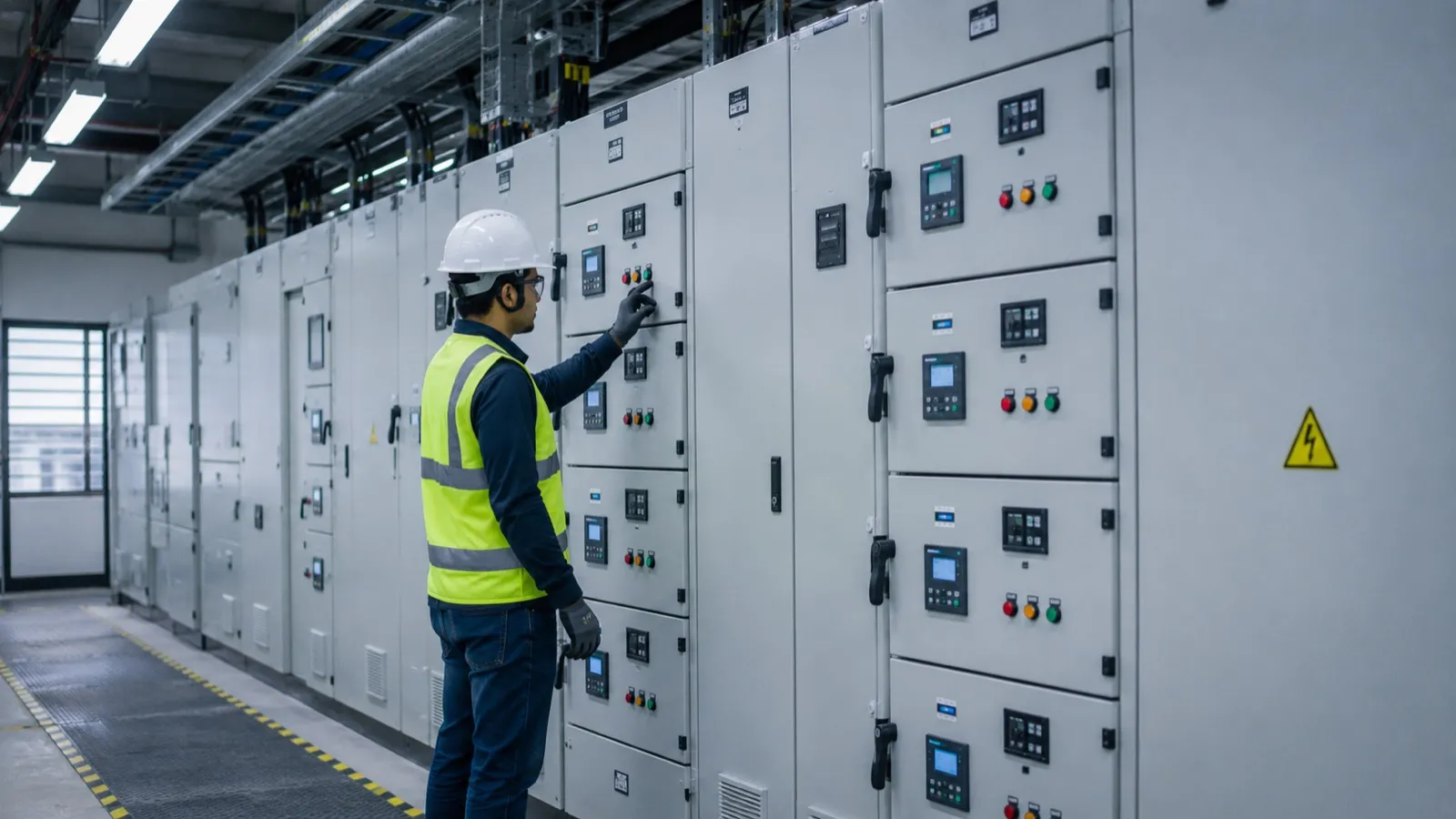
Can Your Existing Panels and Cables Carry the New Machines?
Whether existing panels and cables can take new machinery is decided by measured demand, the ratings and condition of what is installed, and what the extra load does to protection and fault levels — not by the spare ways on a distribution board.
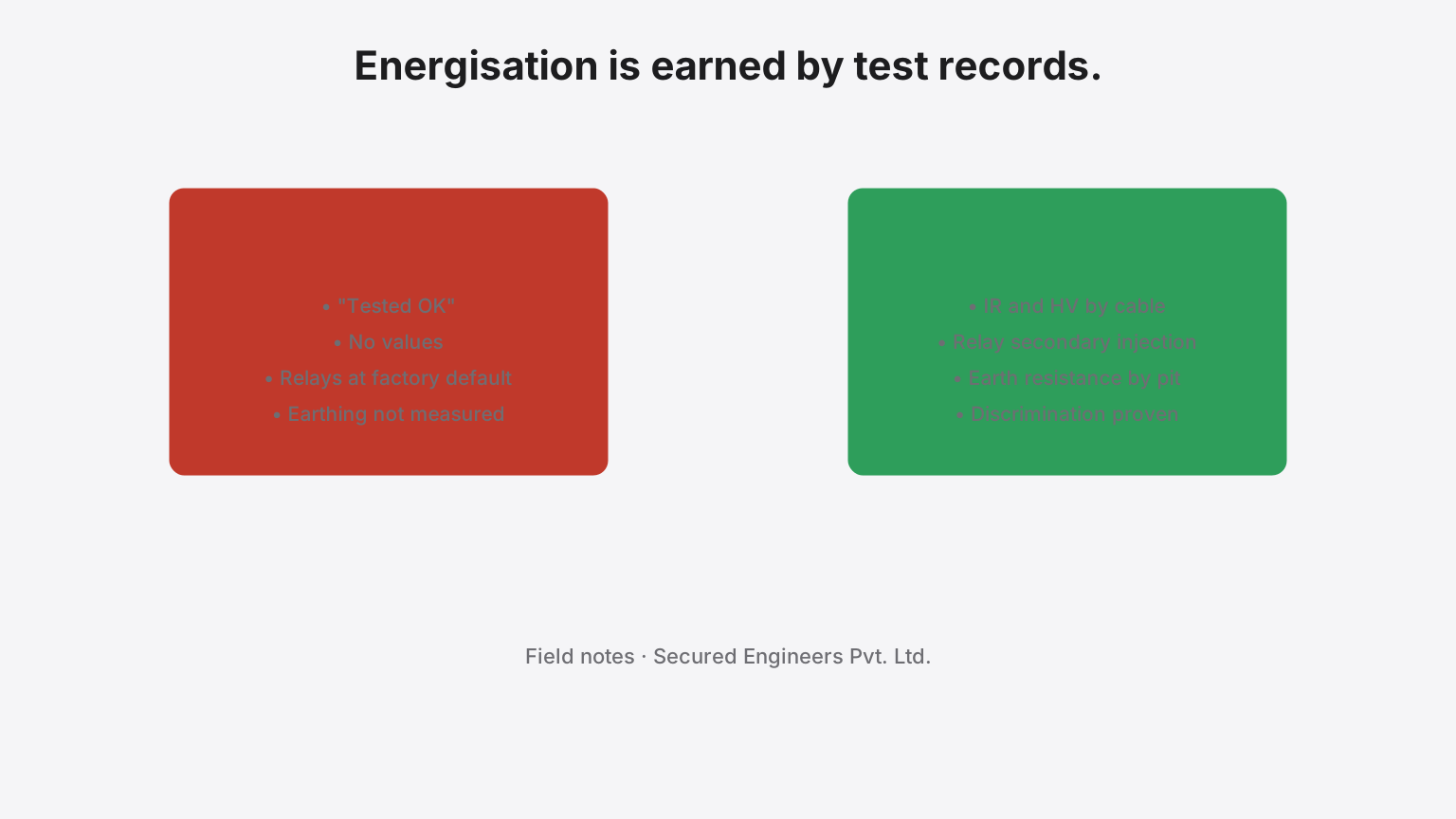
What to check during electrical testing and commissioning
Energisation is earned by test records. The tests our electrical engineers run — and the values they record — before a factory's installation is offered to the Electrical Inspector and the DISCOM.
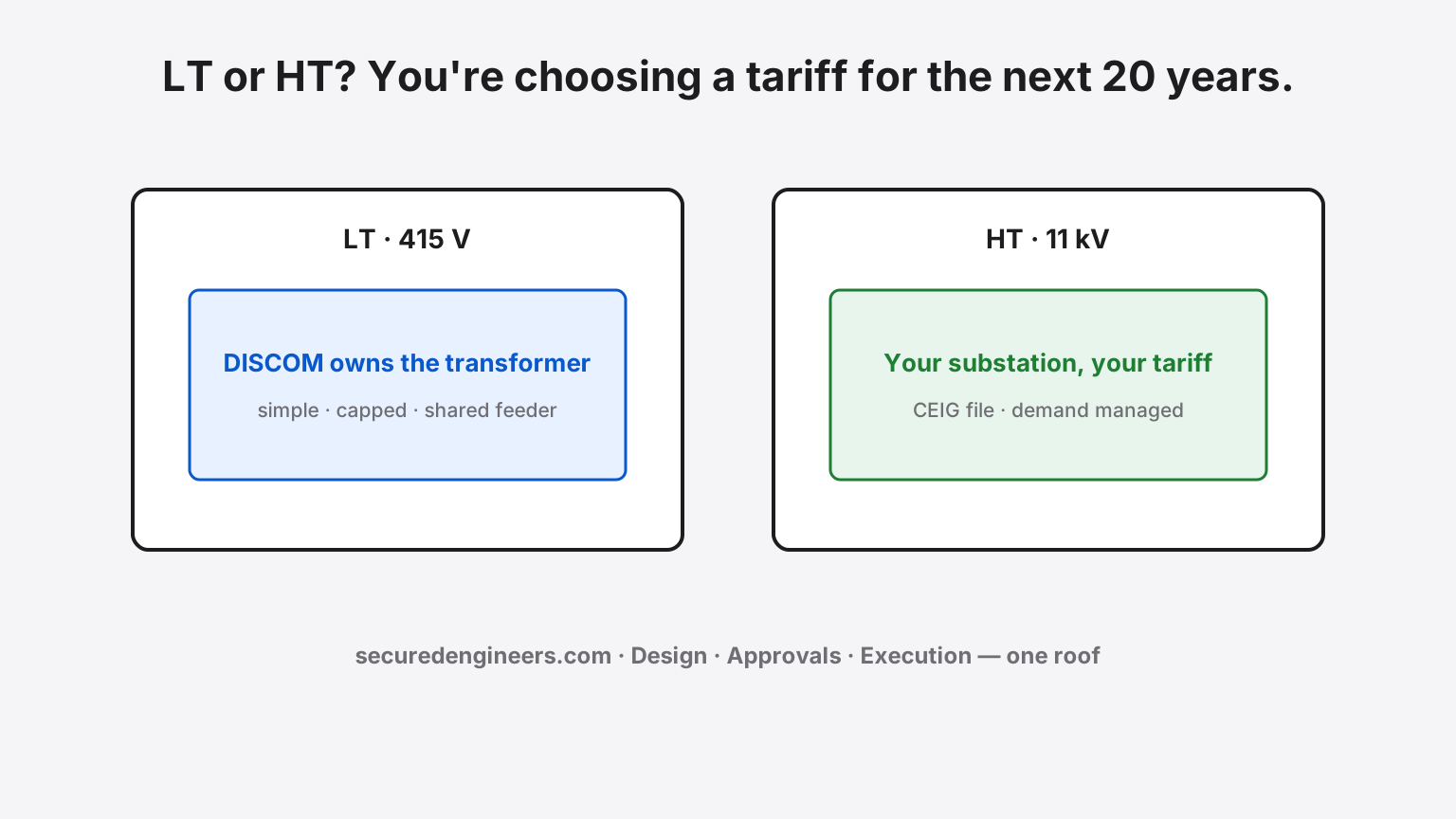
LT vs HT Connection for a Factory: Choosing the Supply for an Expansion
Whether a factory is supplied at LT or HT is set mostly by its contract demand and the state supply code. What changes when you cross the line — equipment, space, inspection, charges — and where to check.
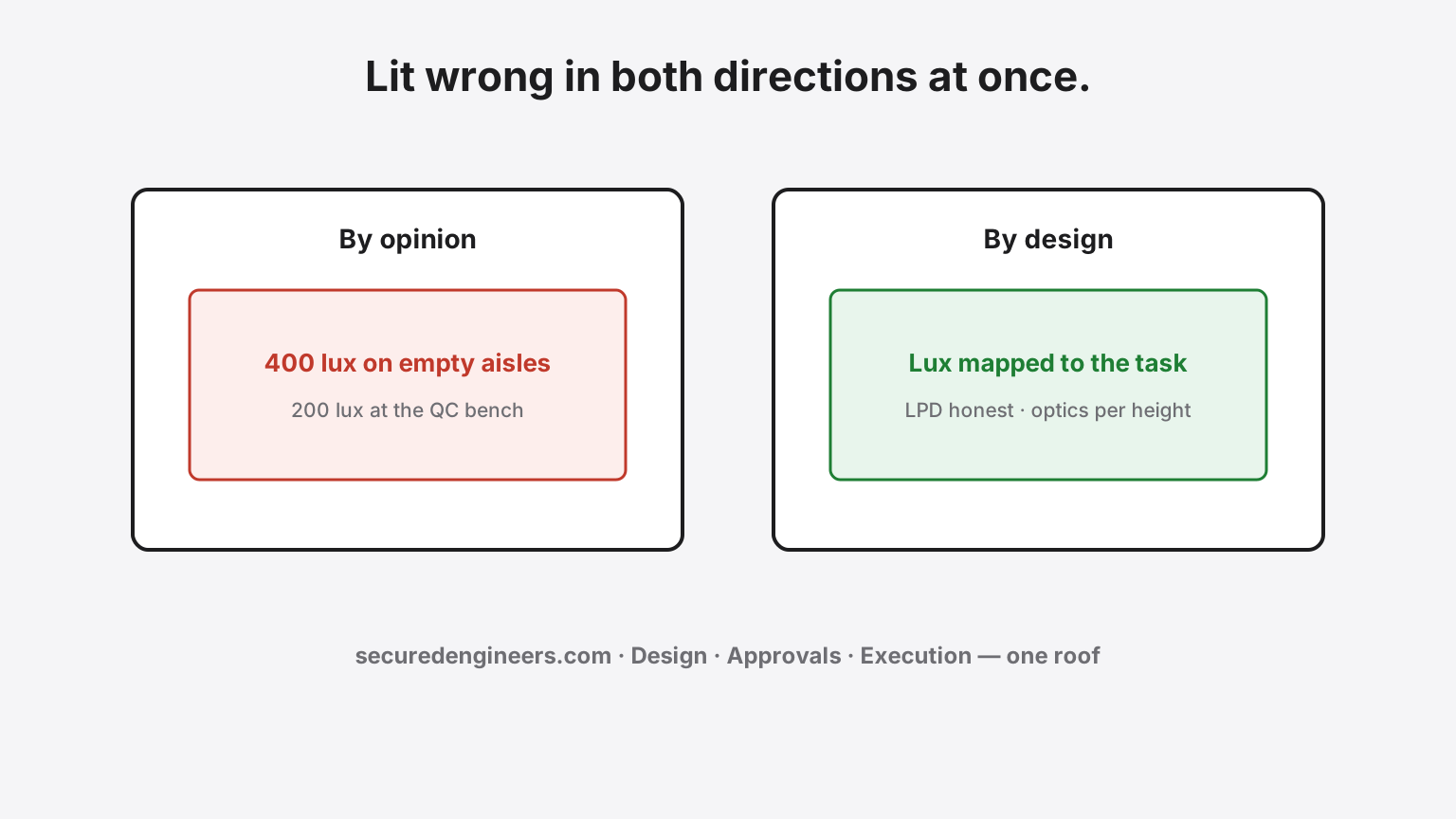
Your Shopfloor Is Probably Lit Wrong in Both Directions at Once
Walk most factories with a lux meter and you find both failures together: inspection benches squinting under 200 lux while empty aisles blaze at 400. Lighting design is matching lux to task, watts to code, and fixtures to mounting height — then not undoing it with dirt.
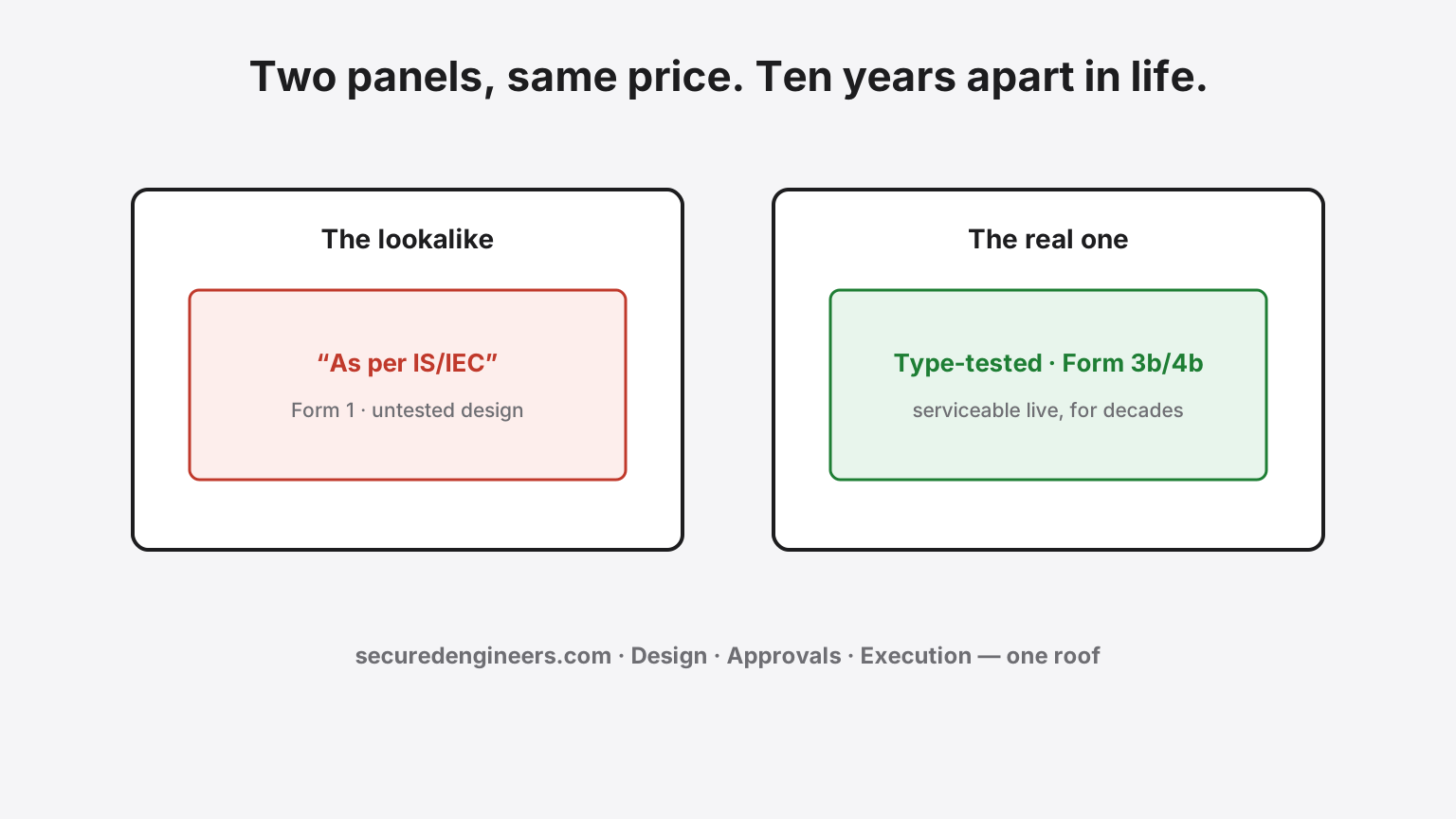
Two Panels, Same Price, Ten Years Apart in Life: Reading an LT Panel Spec
Every LT panel quote says 'as per IS/IEC'. The difference between a panel that serves twenty years and one that becomes a maintenance hazard hides in four unglamorous specifications: form of separation, IP rating, fault withstand, and type-testing.
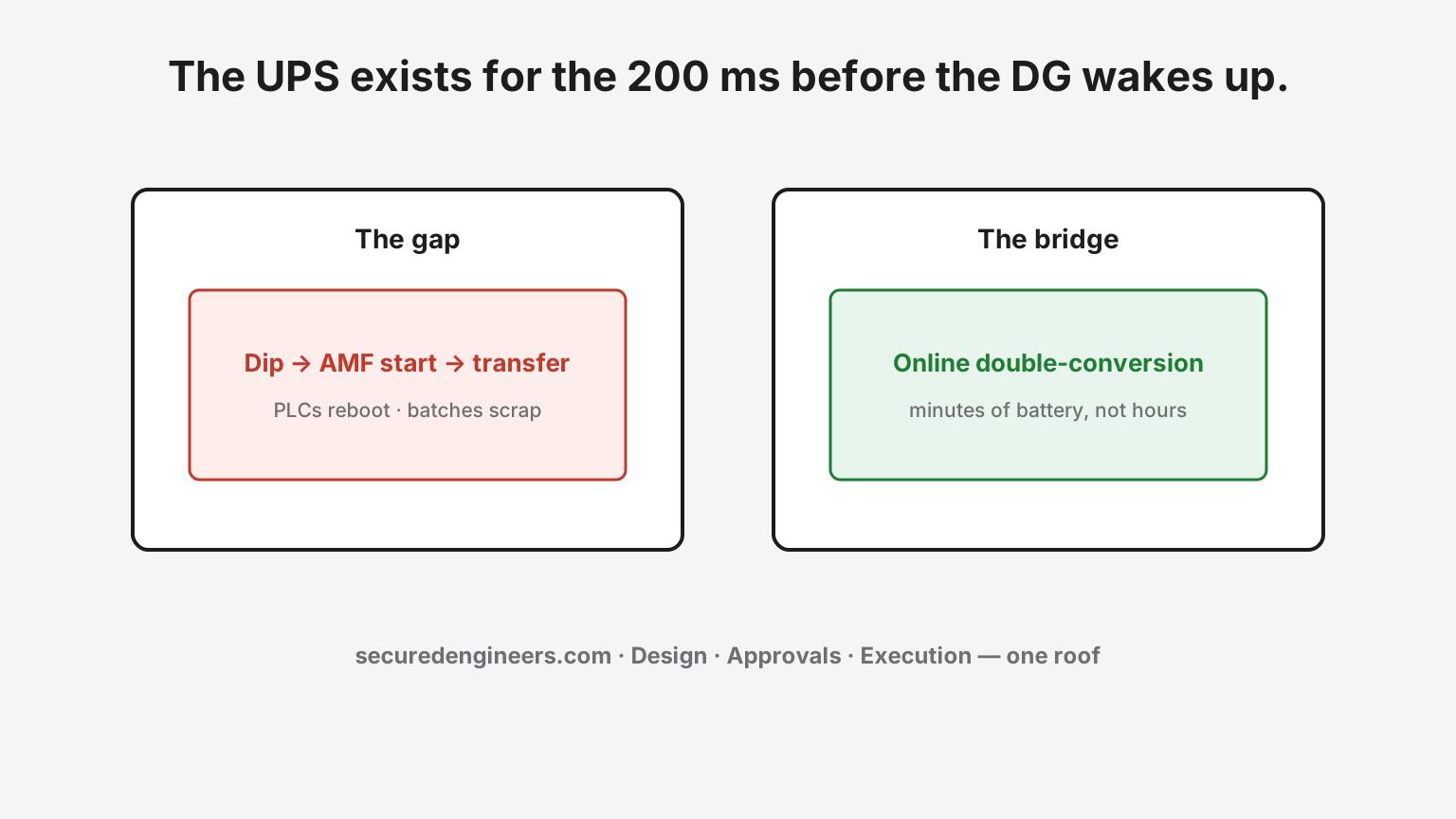
UPS Planning for Critical Factory and Office Loads: Size the Gap, Not the Outage
A UPS earns its cost in the seconds and minutes between a disturbance and the DG or grid taking over. Plan it from a load and autonomy schedule, keep the load within both its kW and kVA limits, choose topology and bypass for the duty, and size the battery for its end of life.
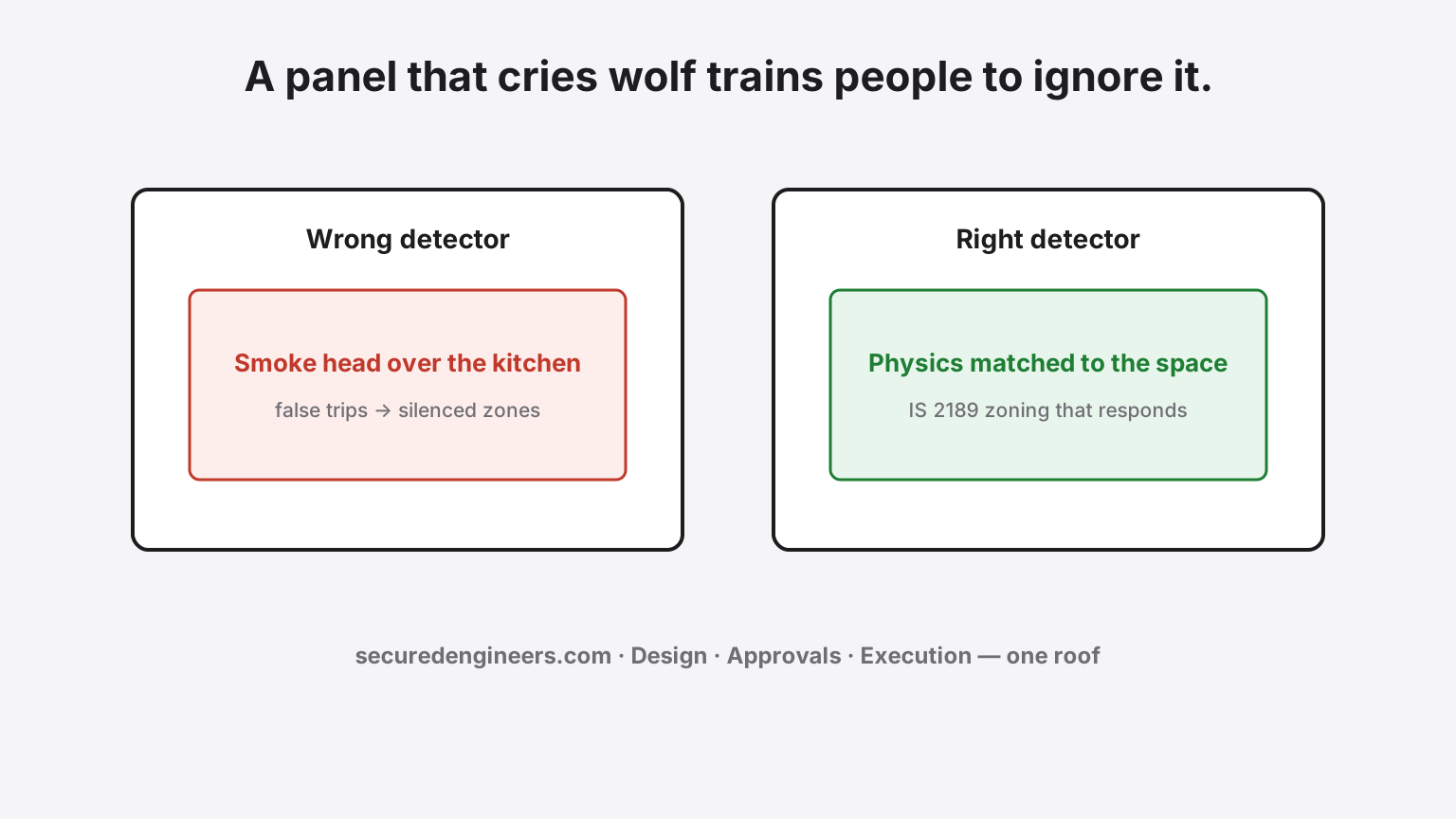
A Fire Alarm That Cries Wolf Is Worse Than No Alarm at All
After the third false evacuation, your team stops believing the panel — and someone puts the sounders on silent. False alarms are not bad luck; they are almost always a detector-selection or placement error that was baked in at design.
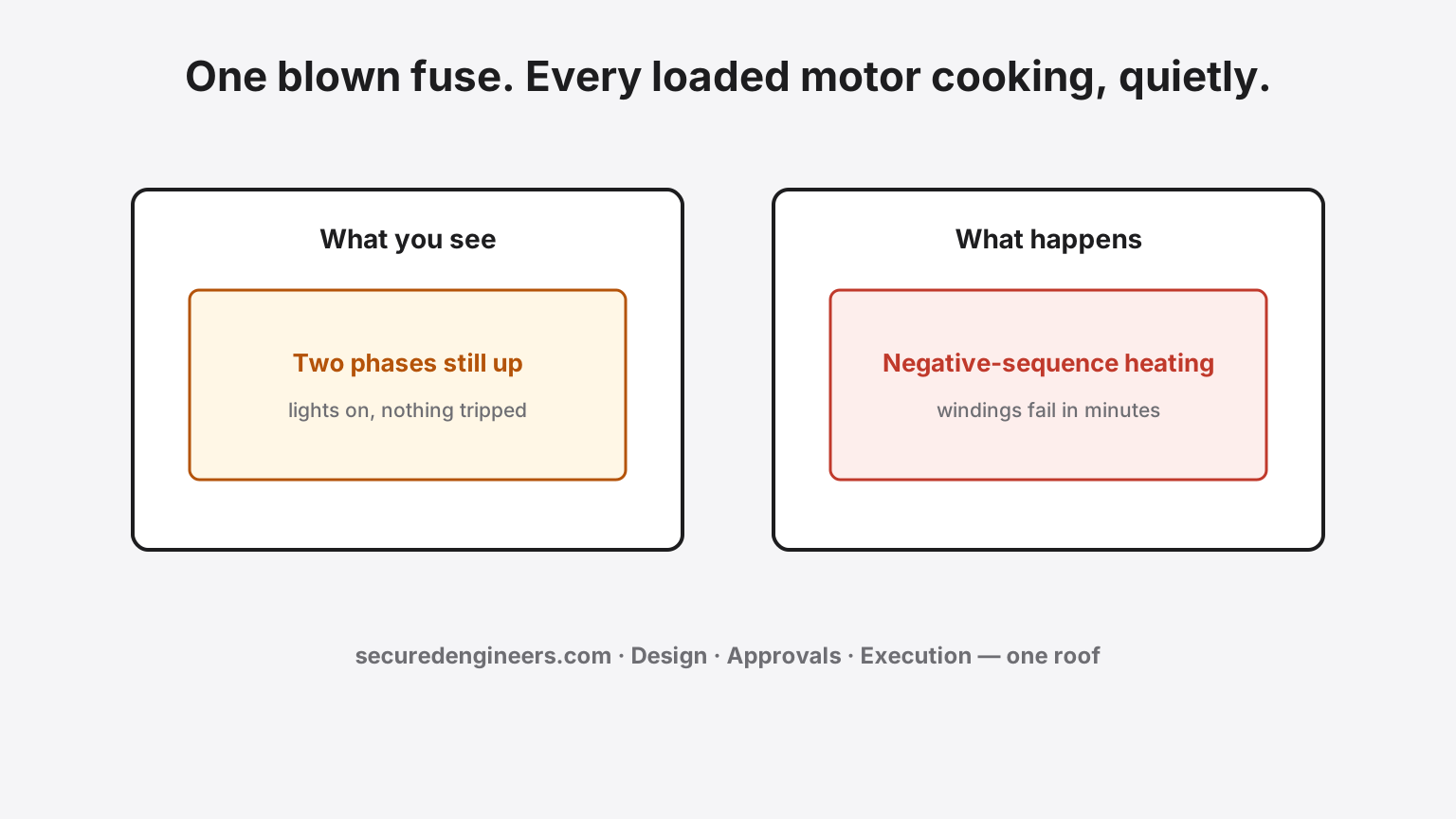
One Blown Fuse, Forty Burnt Motors: The Anatomy of Single Phasing
A three-phase motor does not stop when it loses a phase — it keeps running, overheating on negative-sequence currents until the windings cook. One upstream fuse can take out every unprotected motor on the line, in minutes.
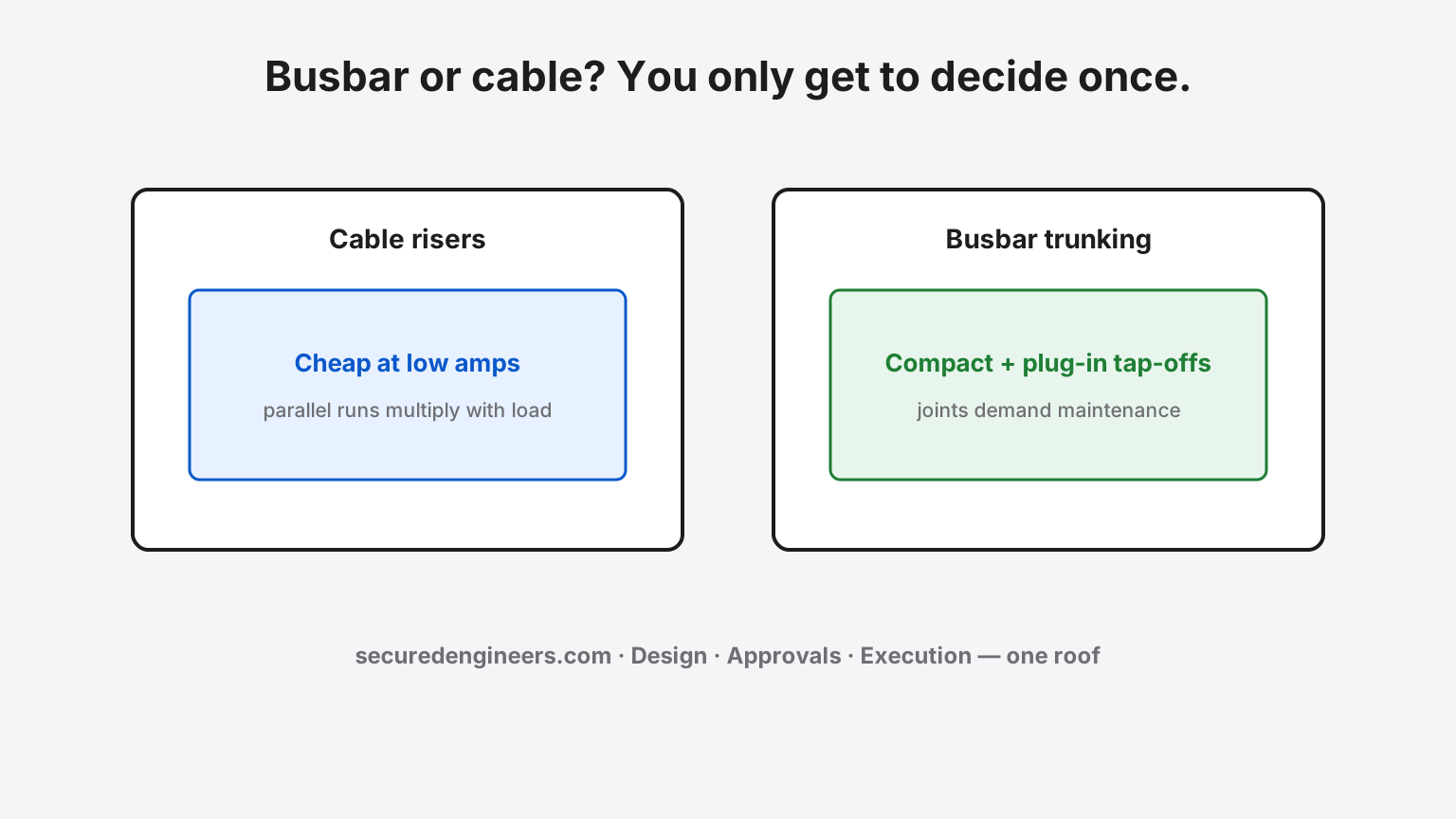
Busbar or Cable? The Rising-Mains Decision You Only Get to Make Once
Once the shafts are cast and the cables pulled, changing your mind costs a shutdown. Here is the honest engineering comparison between busbar trunking and cable risers for Indian industrial and commercial buildings — including where each one genuinely wins.
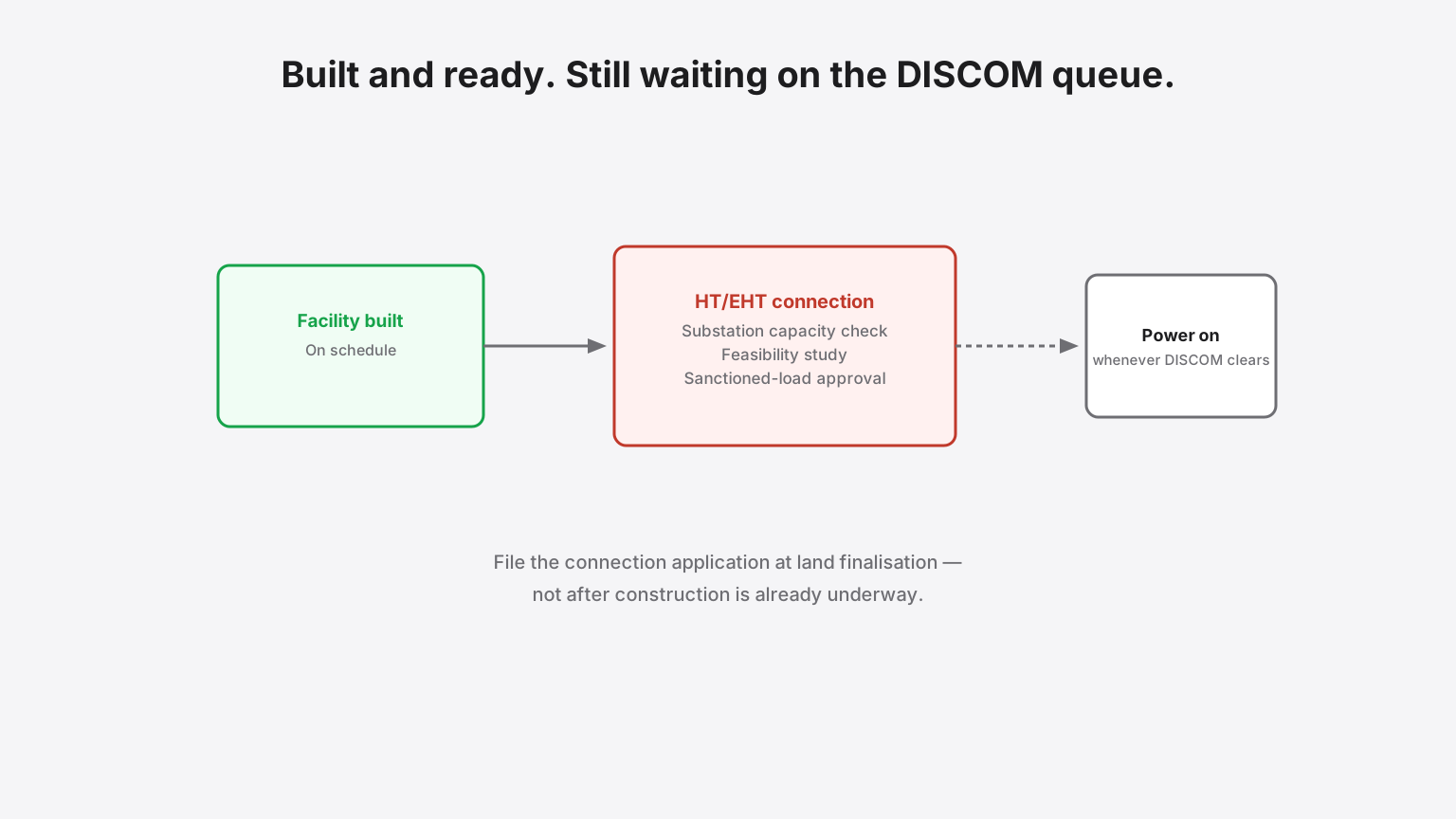
Factory Electrical Load Enhancement: From Measured Demand to an Approved Connection
A load enhancement is sized from measured maximum demand, not the sum of nameplates — and it can change your supply voltage, your transformer and your protection. What to measure, what to file, what to check.
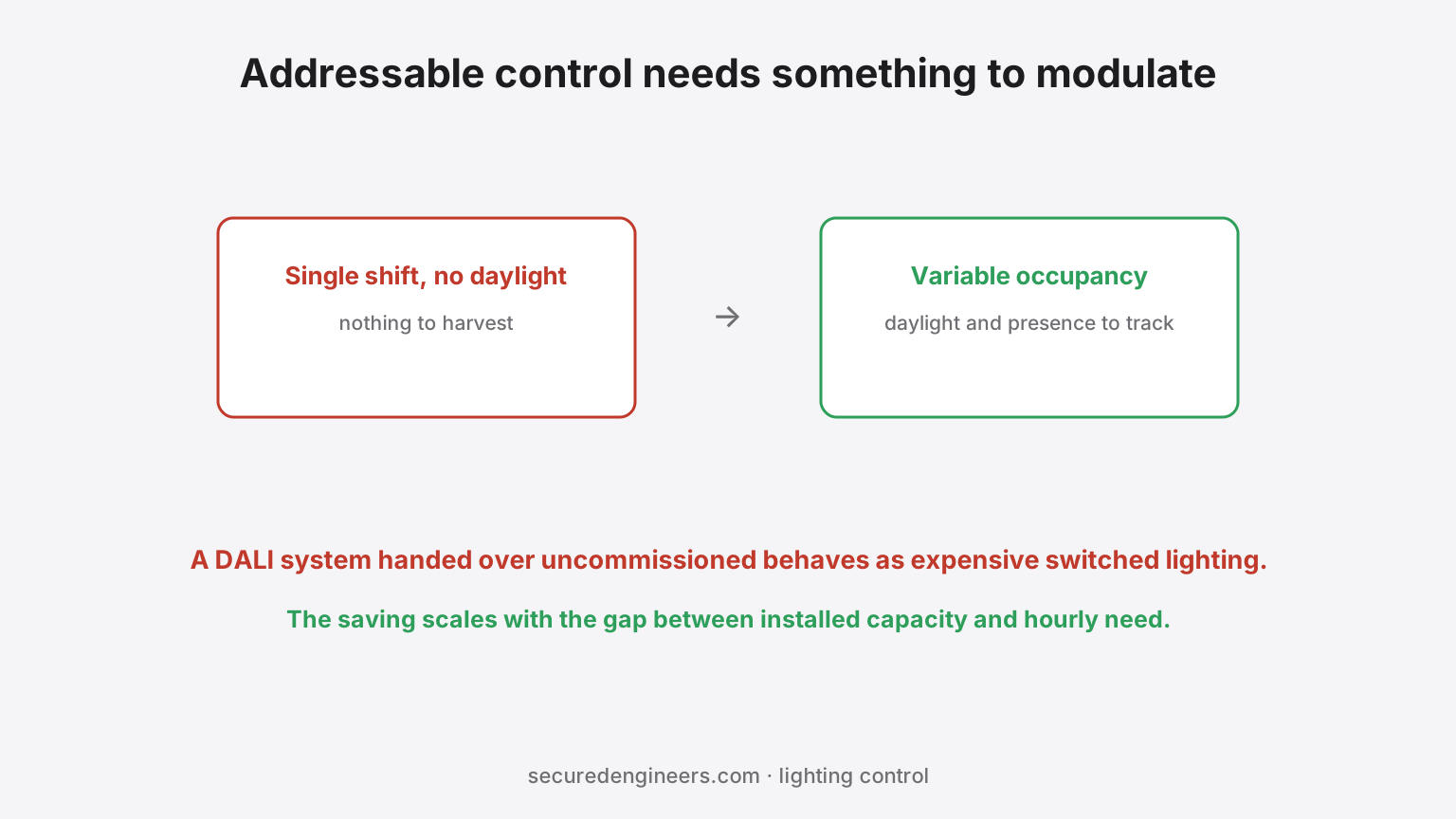
Addressable Lighting Control Pays in Some Buildings and Not in Others.
DALI and KNX let every fitting be addressed, dimmed and scheduled individually. That is genuinely valuable where occupancy and daylight vary — and close to worthless in a space that runs one shift at full output.
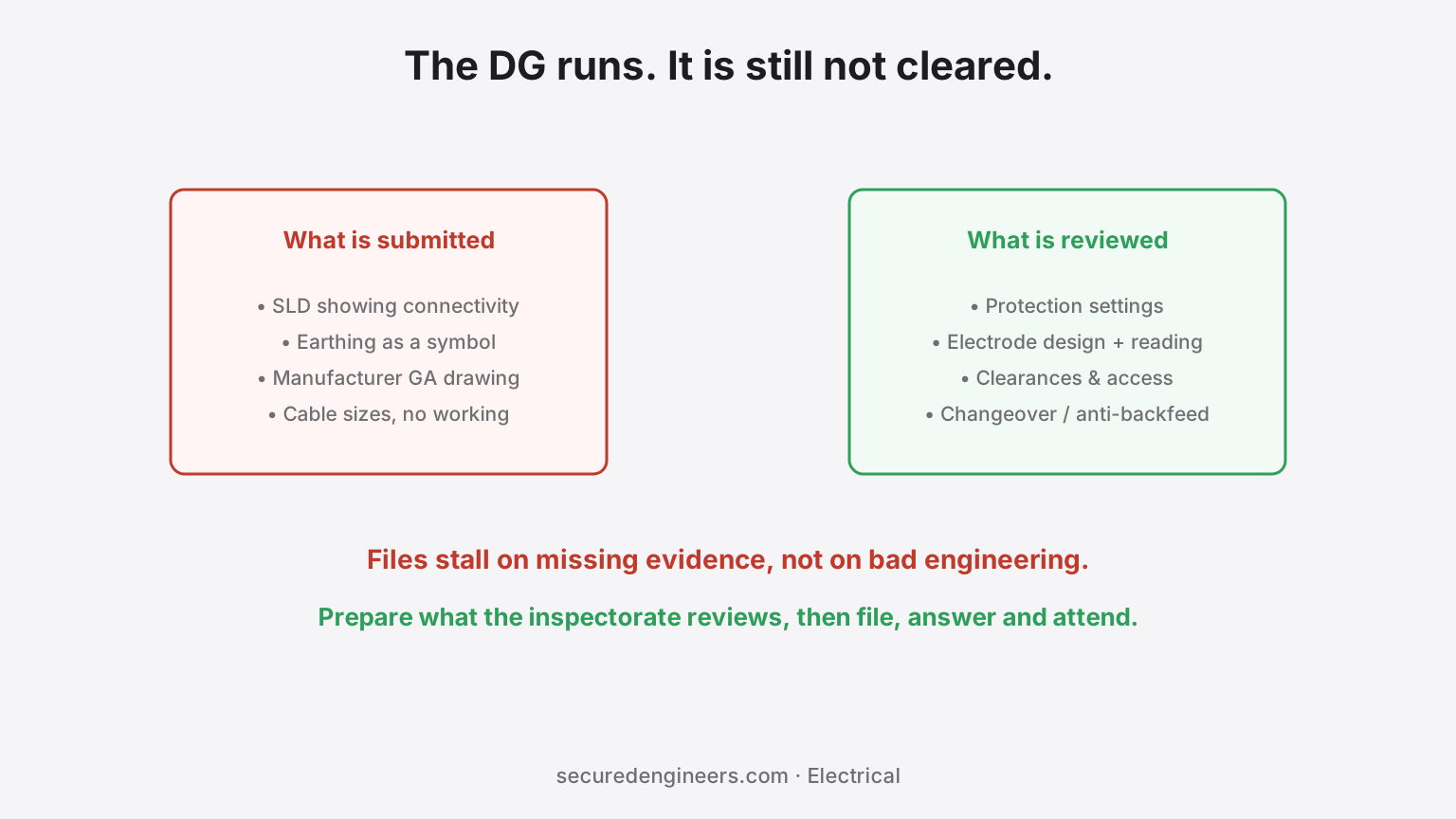
The DG Set Is Installed and Tested. The Inspectorate Still Has Not Cleared It.
A DG set is commonly treated as equipment you buy and commission. Where it falls within the electrical inspectorate scope, it is an installation requiring approval before energisation — and the drawings, not the machine, are what get scrutinised.
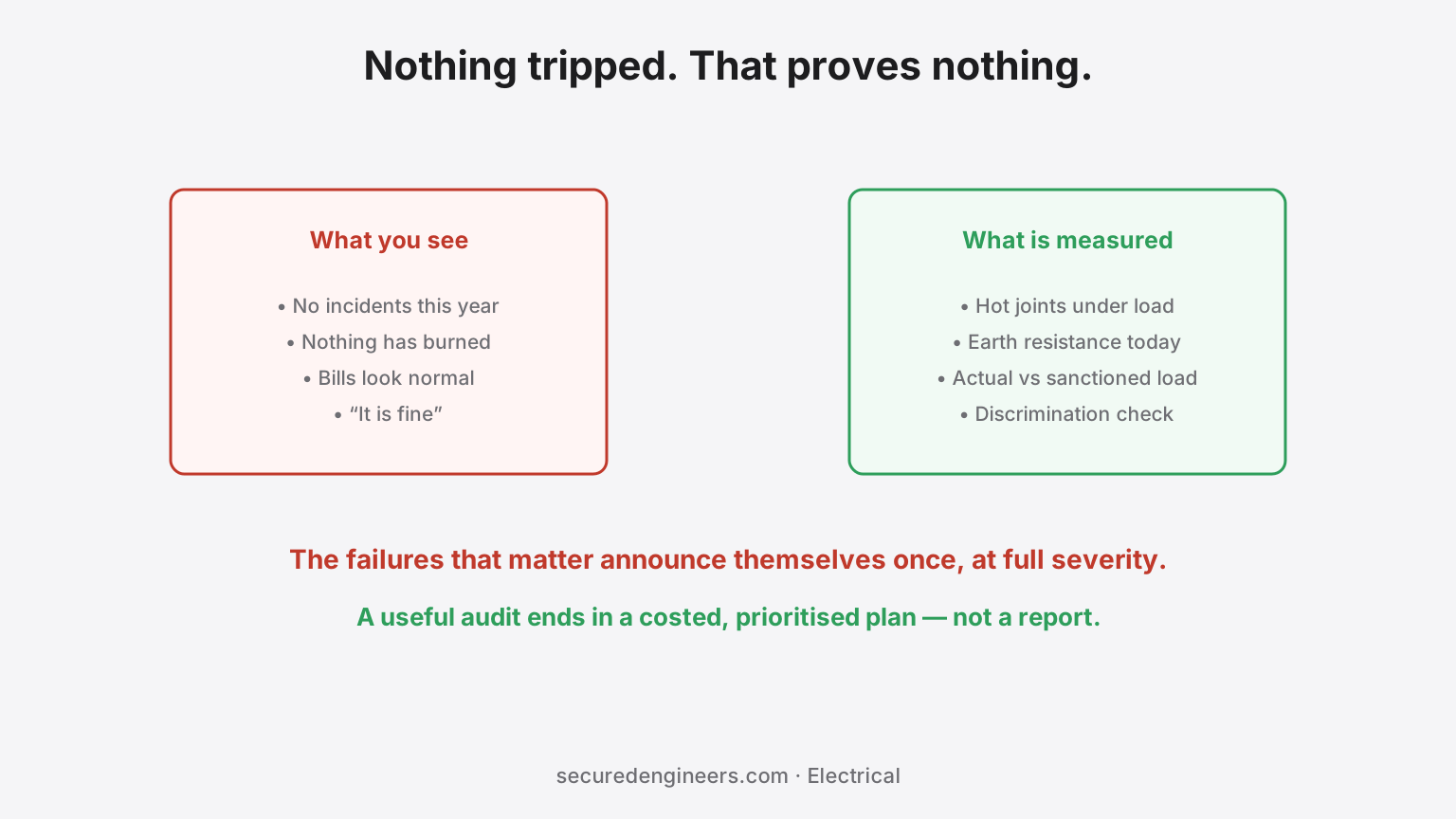
Electrical Safety Audit Before a Renovation or Expansion
An uneventful electrical system is not a verified one. Before a renovation or expansion adds load, document the installation, have competent people test it, and turn the findings into an evidence-ranked rectification scope — the additions themselves need inspector approval or self-certification before they are connected.
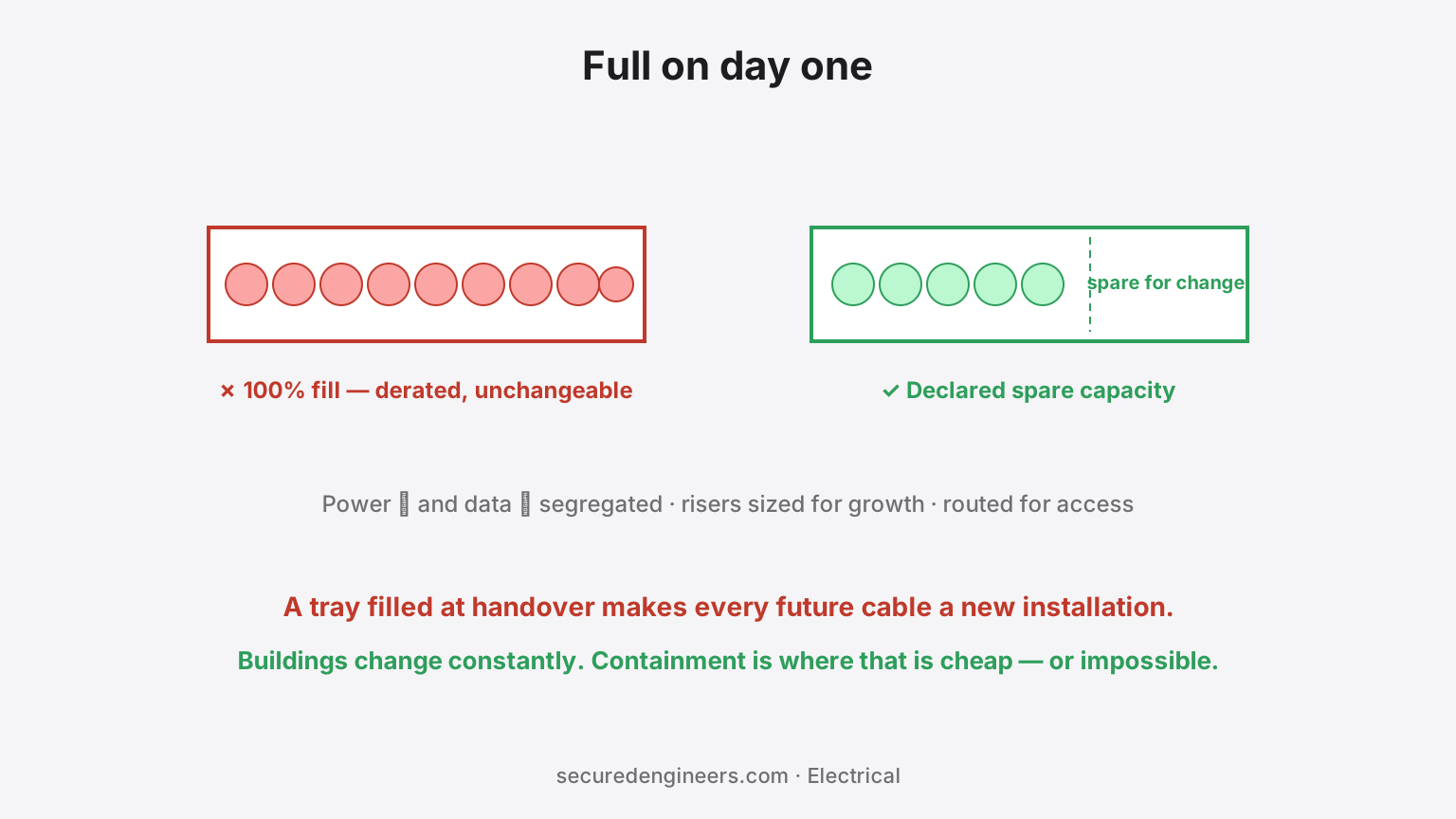
The Cable Tray Was Full on Day One. Every Change After That Cost Money.
Cable containment is treated as a commodity — trays, raceways and conduit bought on rate. But the containment decision fixes how much the electrical system can change for the rest of the building life, and a tray filled to capacity at handover makes every future addition a new installation.
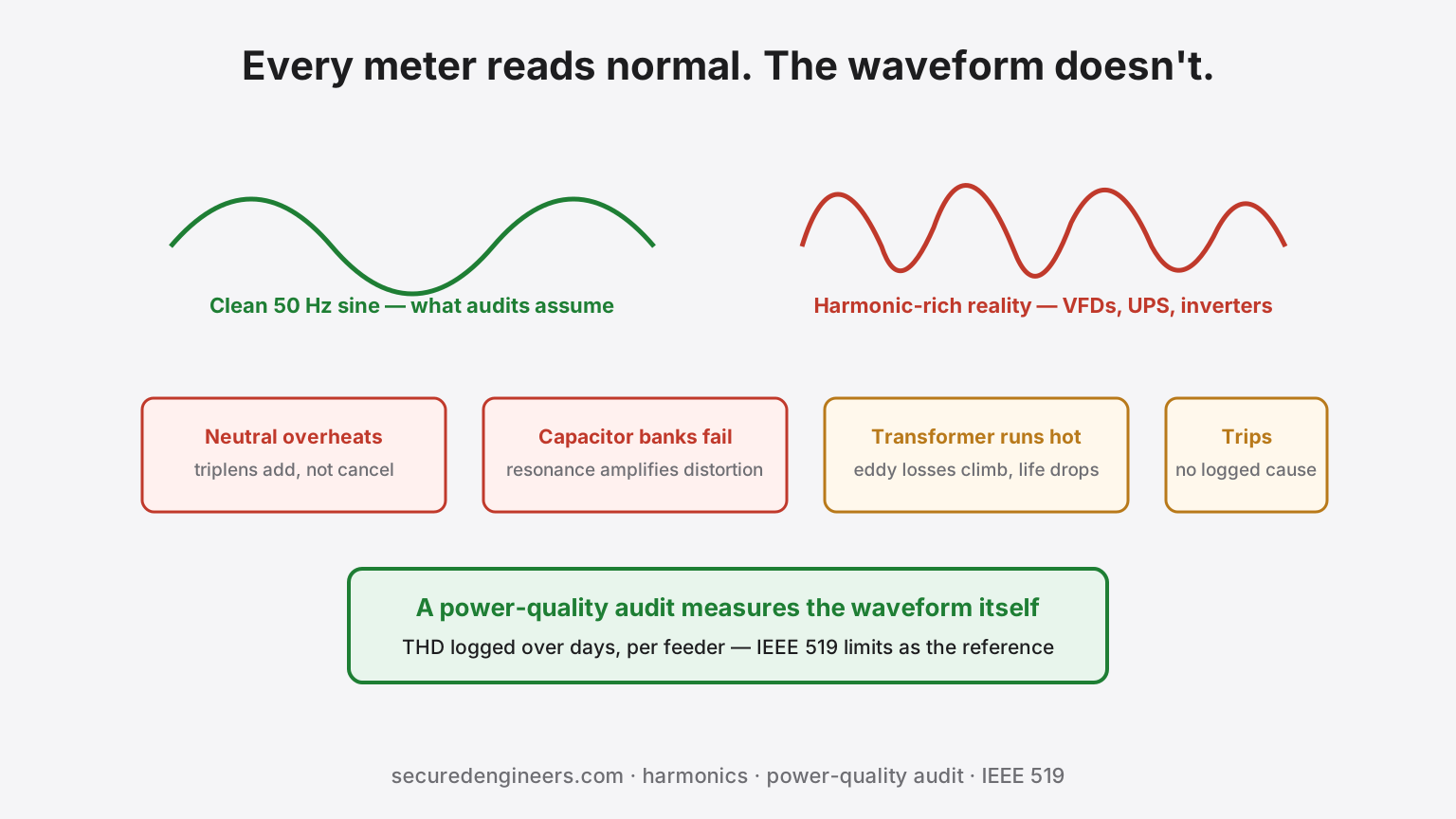
Every Meter Reads Normal. Your Neutral Is Still Overheating. That's What Harmonics Do.
VFDs, LED drivers, UPS units and solar inverters have quietly filled modern plants with non-linear loads — and the harmonic distortion they inject overheats neutrals and transformers, trips sensitive equipment and kills capacitor banks. A standard electrical audit won't see any of it; a power-quality audit is built to.
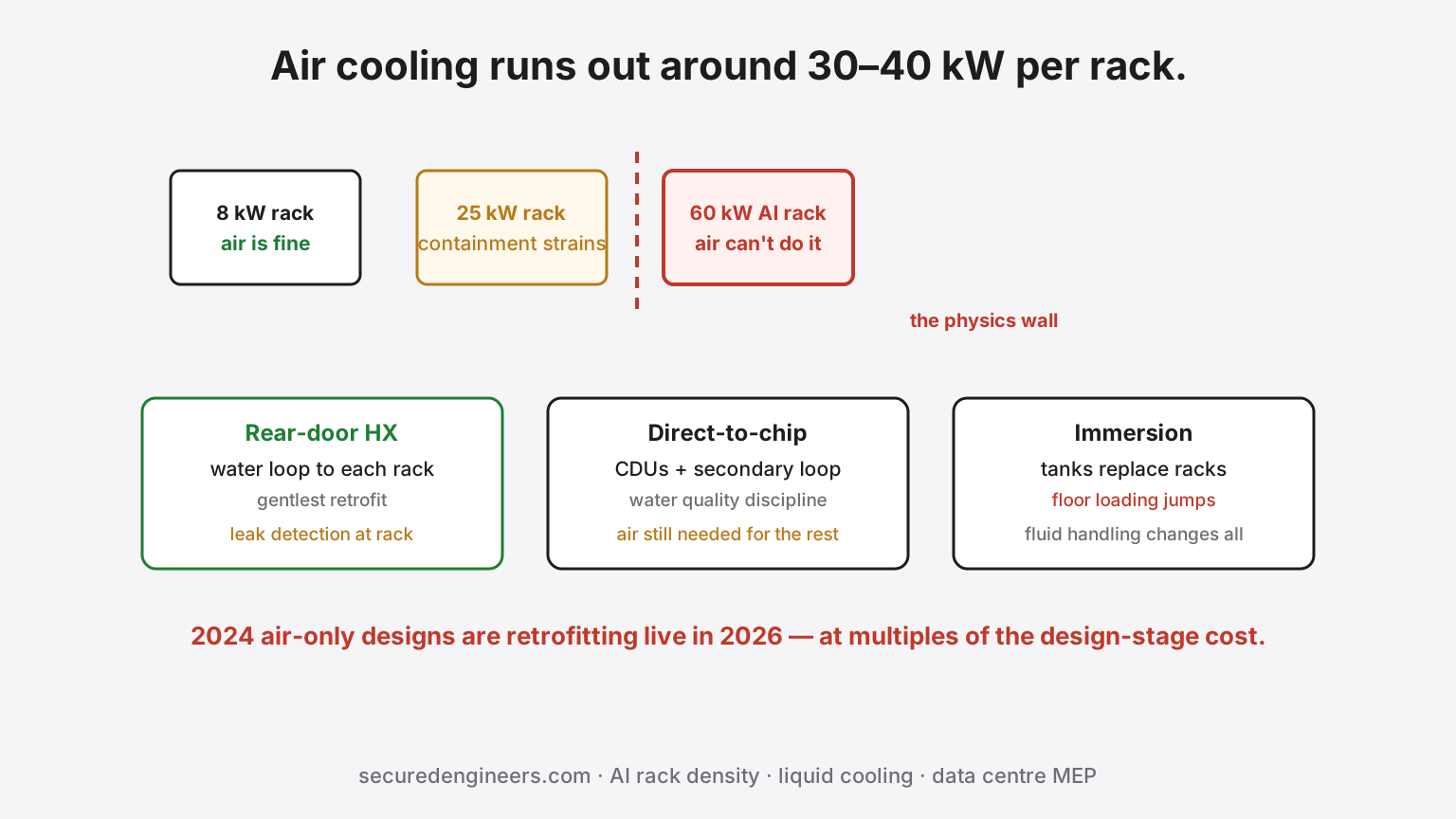
The Data Hall Was Designed for 8 kW Racks. The AI Cluster Wants 60. Air Can't Bridge That Gap.
AI-era rack densities have pushed past what air cooling can physically remove — beyond roughly 30–40 kW per rack, liquid stops being optional. What rear-door heat exchangers, direct-to-chip and immersion each demand from the building, and why Indian edge and colo sites built air-only in 2024 are retrofitting in 2026.
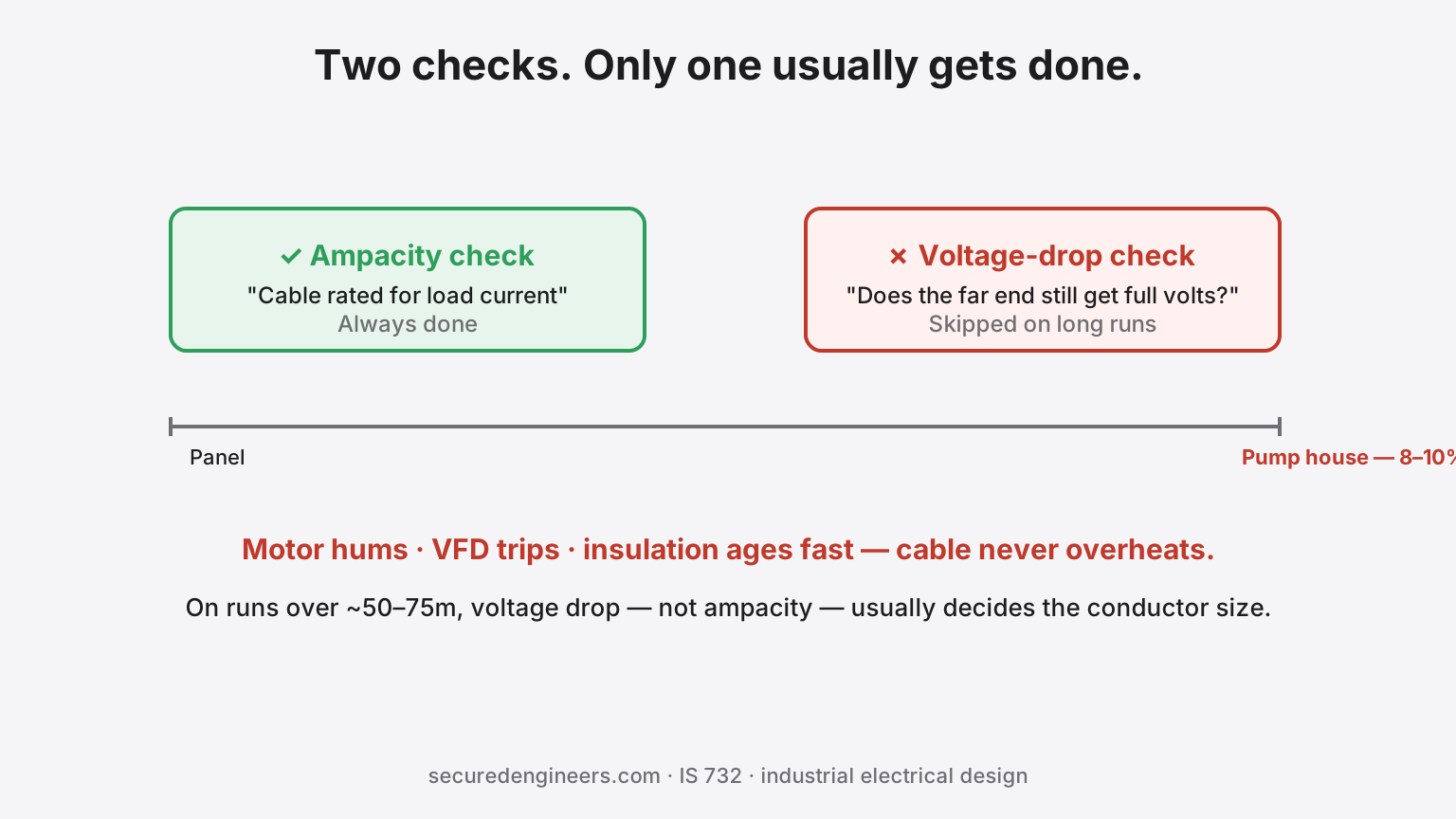
Cable Upgrade for Extra Load: The Four Checks That Decide the Size
Adding load to an existing feeder is decided by four checks, not one: installation conditions and derating, current capacity and voltage drop, short-circuit withstand, and the terminations and protection at each end of the cable.
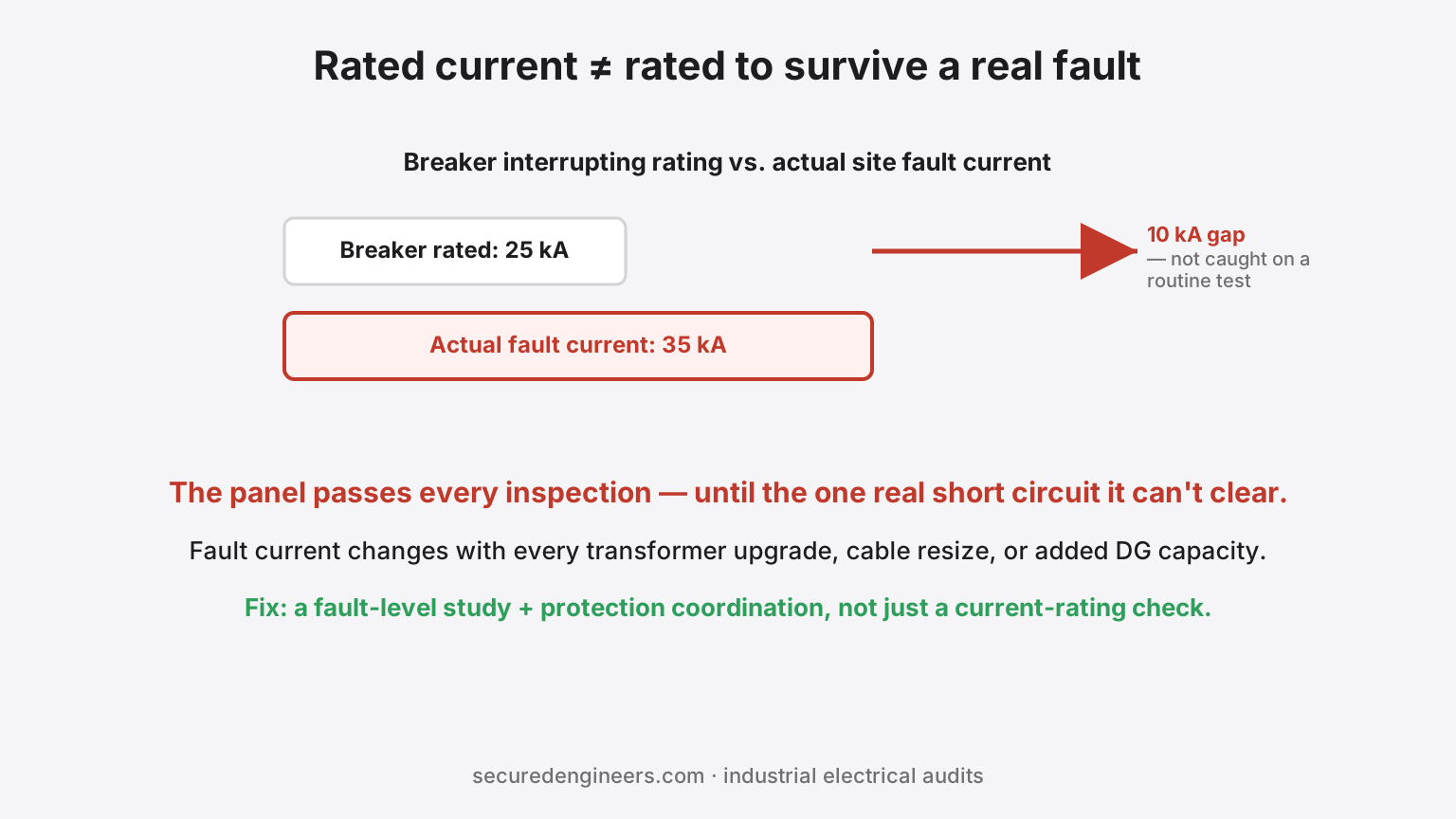
Your Panel Passed Inspection. Its Breakers Are Rated Below Your Actual Fault Current.
A breaker that trips fine on overload can still fail catastrophically on a real short circuit if its interrupting rating is below the site's actual fault level. Fault-level coordination is the study most factory panels never get — until an incident makes it mandatory retroactively.
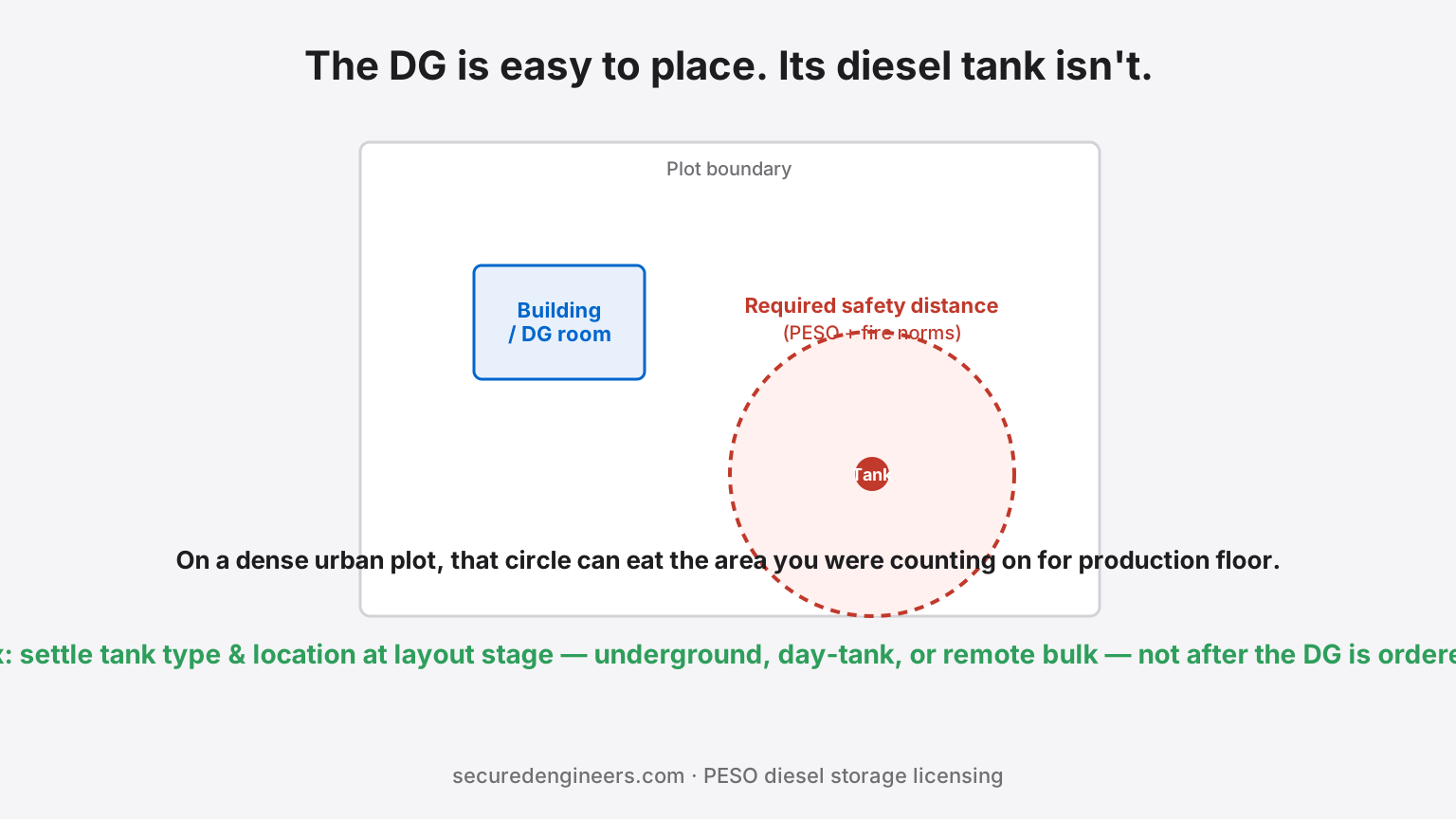
You Sized the DG. Nobody Sized the Safety Distance Its Diesel Tank Needs.
A DG set is easy to place; its diesel storage tank isn't. Safety-distance rules from the fire and PESO frameworks can push a tank — and everything around it — further from your building than the plot allows for. Decide tank type and location at layout stage, not after the DG is ordered.
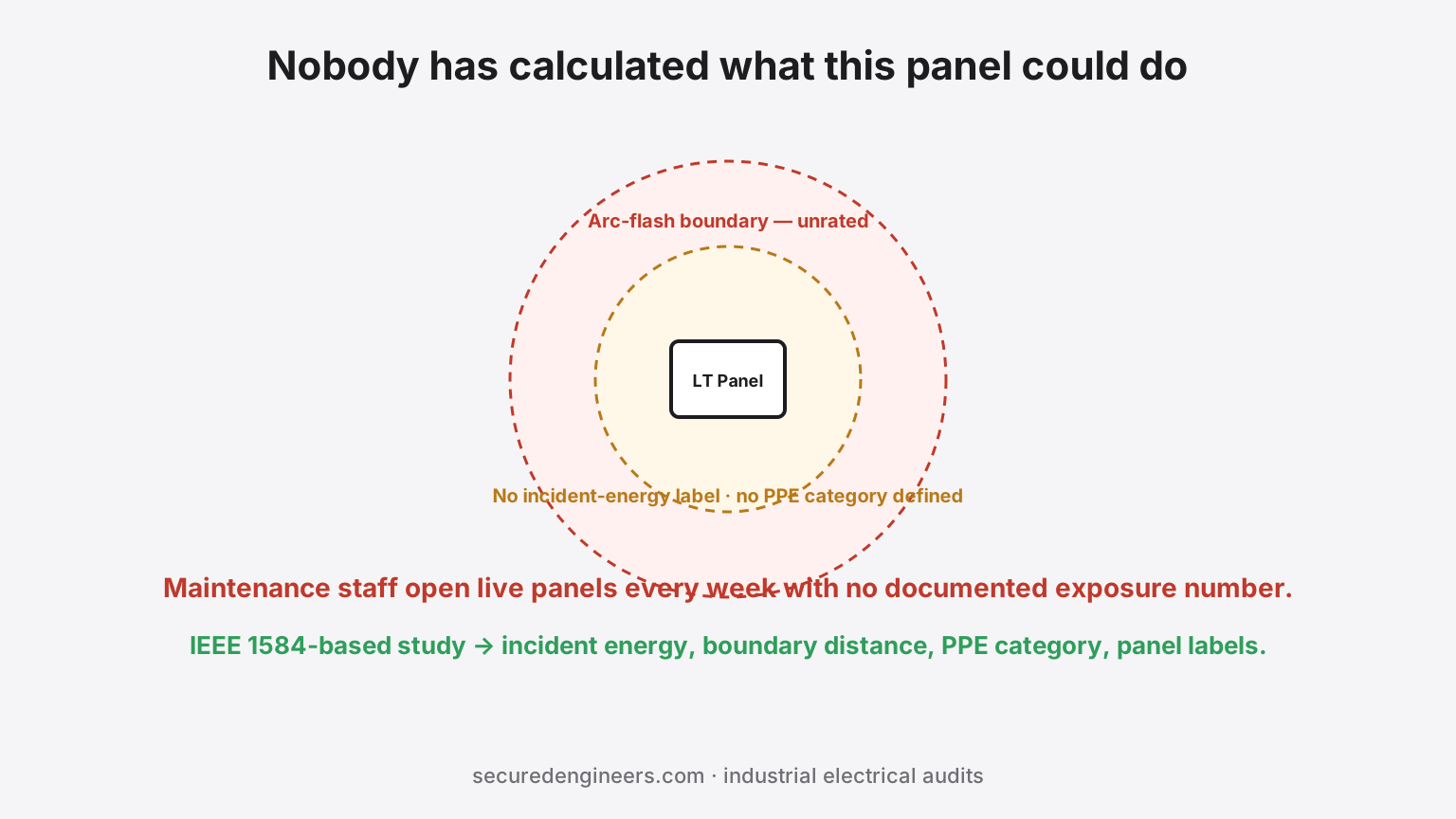
Your Electrician Opens That Panel Live Every Week. Nobody Has Calculated What It Could Do to Him.
Arc-flash — an explosive release of energy from a fault inside a live panel — is a well-documented, quantifiable risk in electrical safety practice worldwide. Indian factories routinely skip the study that quantifies it, leaving maintenance staff working on panels with no idea what the actual incident-energy exposure is.
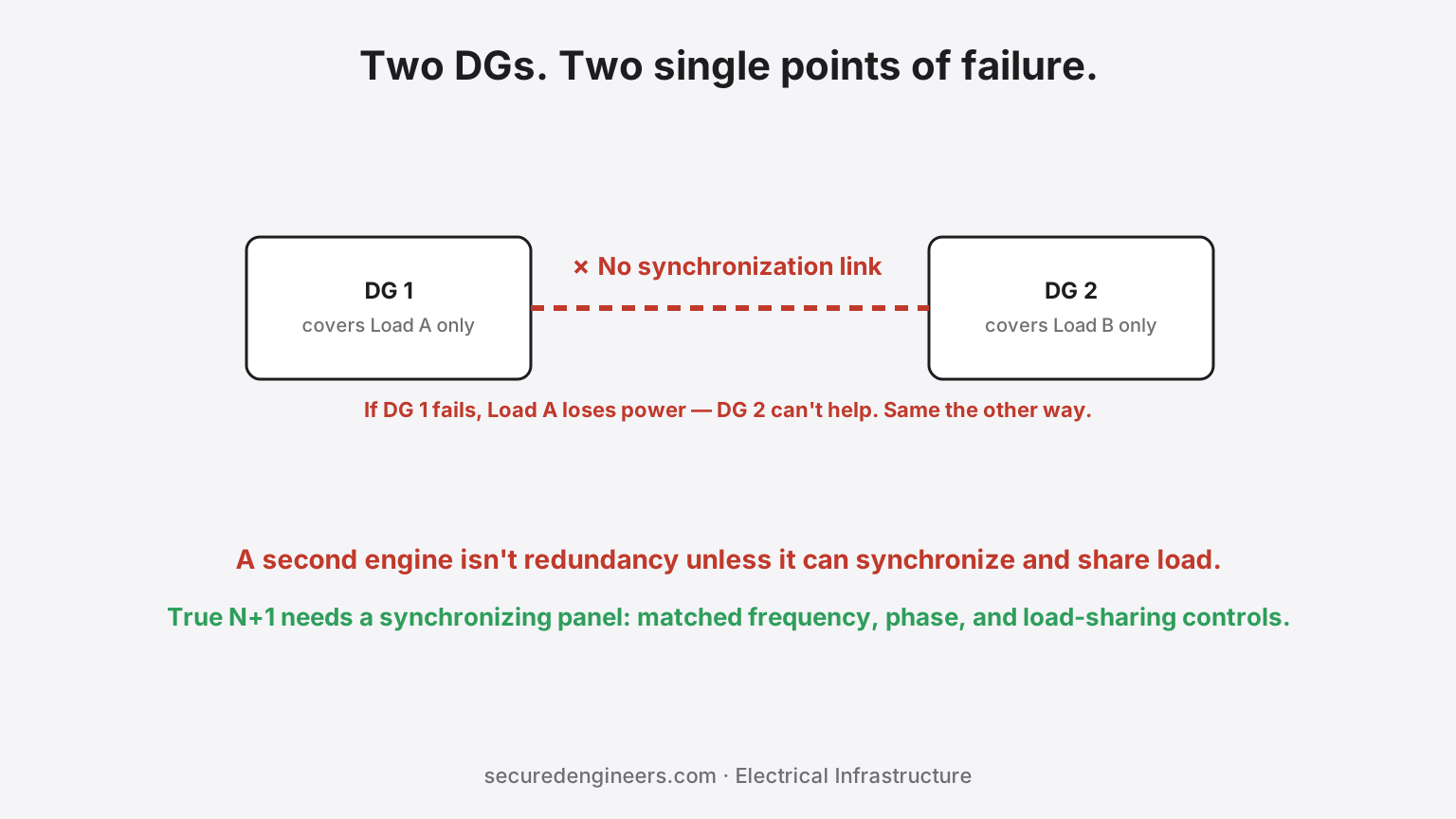
DG Expansion and Synchronisation: Set the Backup Boundary First
Adding a DG set for an expansion buys resilience only if the backup boundary is clear: which loads must stay on, what the sets can accept in one step, how they synchronise and share load, what is shed when one trips — and witnessed tests that prove it.
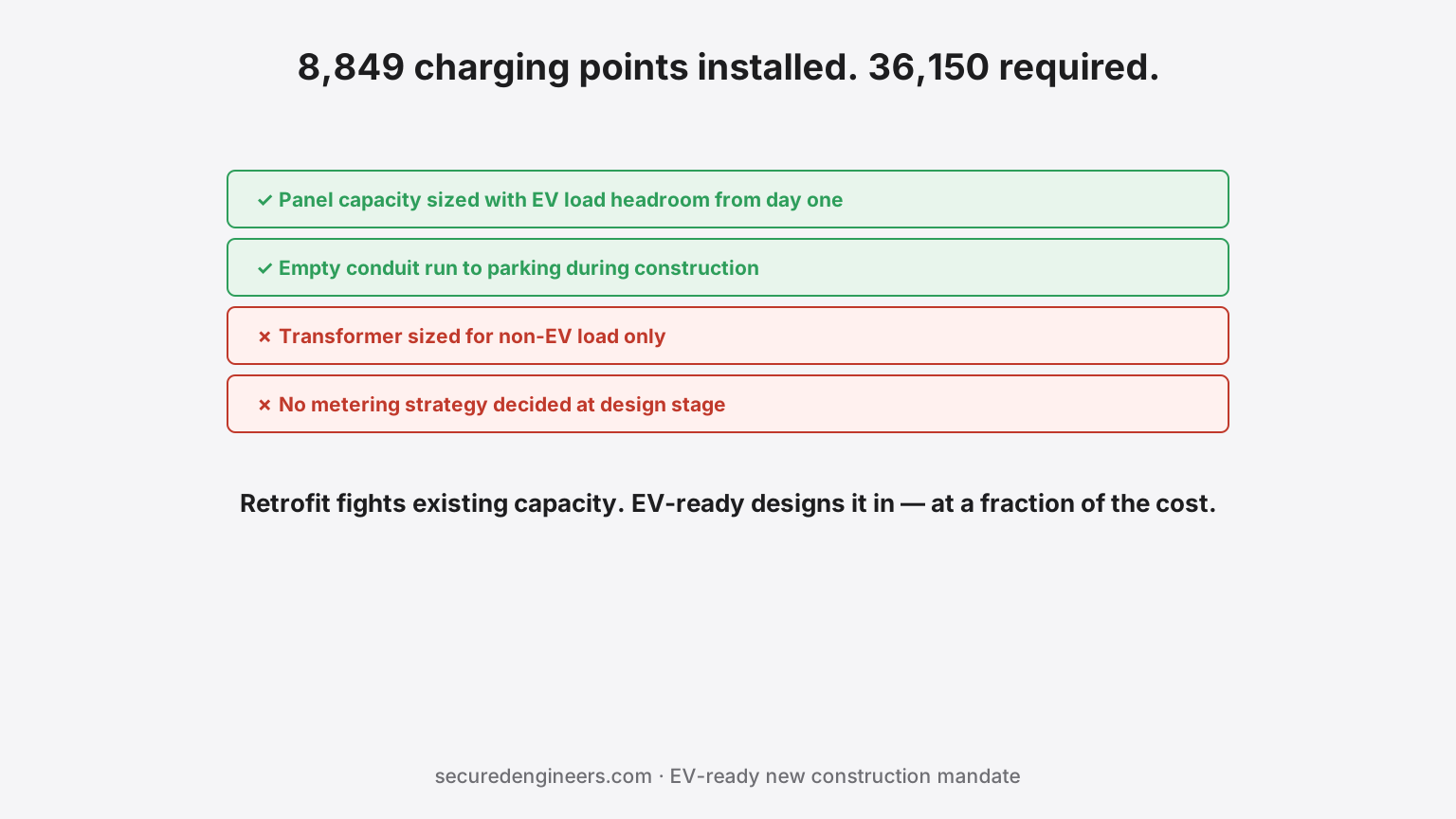
The Building Isn't Open Yet. The EV Mandate Already Applies.
Delhi's draft EV Policy 2026 requires all new infrastructure projects to be EV-charging ready from day one — not retrofitted later, designed in from the start. Delhi has roughly 8,850 charging points against a stated need of over 36,000, and the policy is closing that gap by pushing the requirement upstream, onto every new building's electrical design. If you're breaking ground on a new project, this isn't an optional add-on anymore.
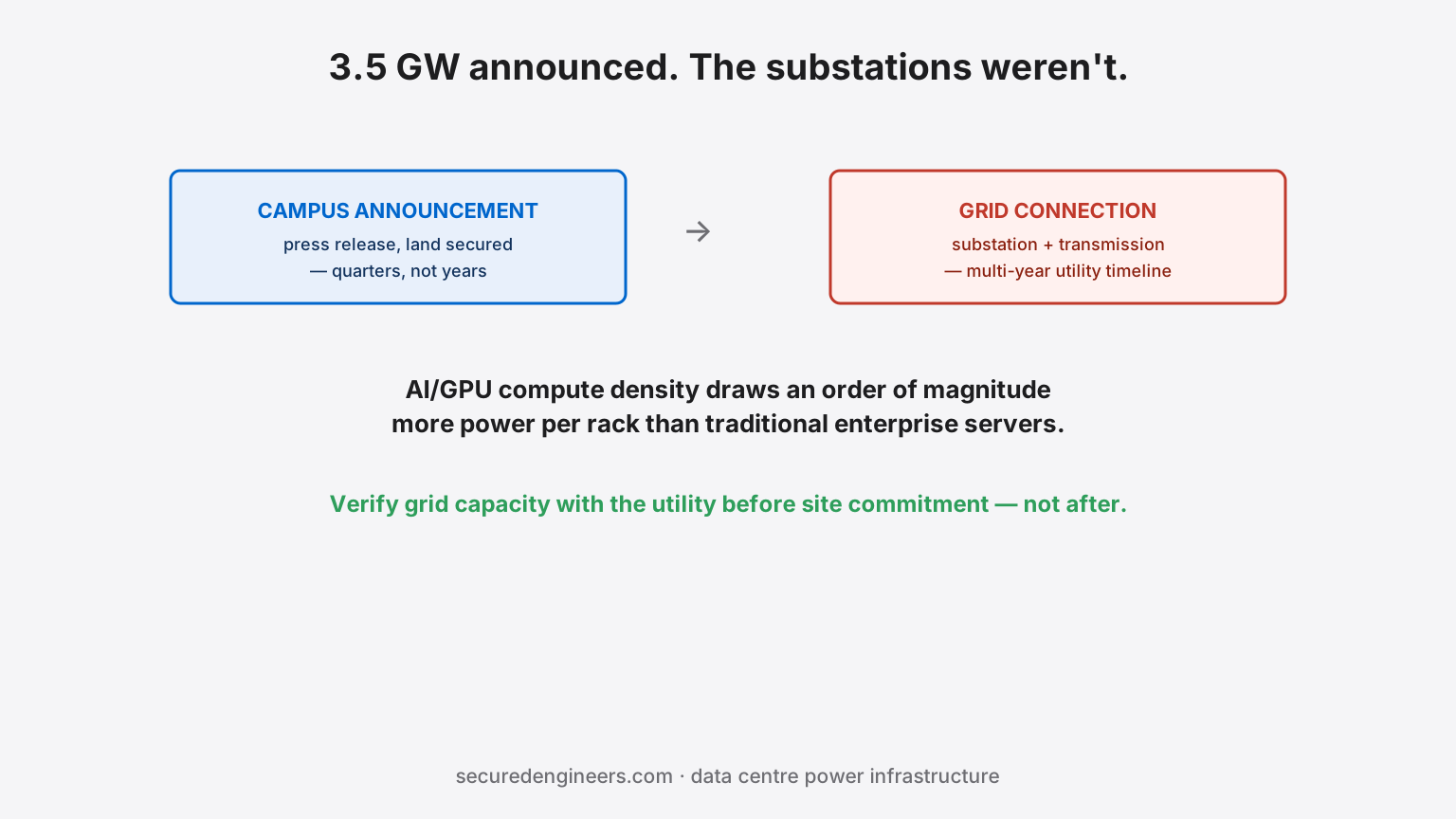
3.5 GW of Data Centres Got Announced. The Substations Did Not.
India's data centre capacity is projected to grow 30% in 2026 alone, with roughly 30 large projects announced between March 2025 and April 2026 adding 3.5 GW of planned capacity — much of it concentrated in Andhra Pradesh and Telangana's AI-centric mega campuses. Announcements move fast. Grid and substation infrastructure doesn't. The gap between the two is where data centre projects actually stall.
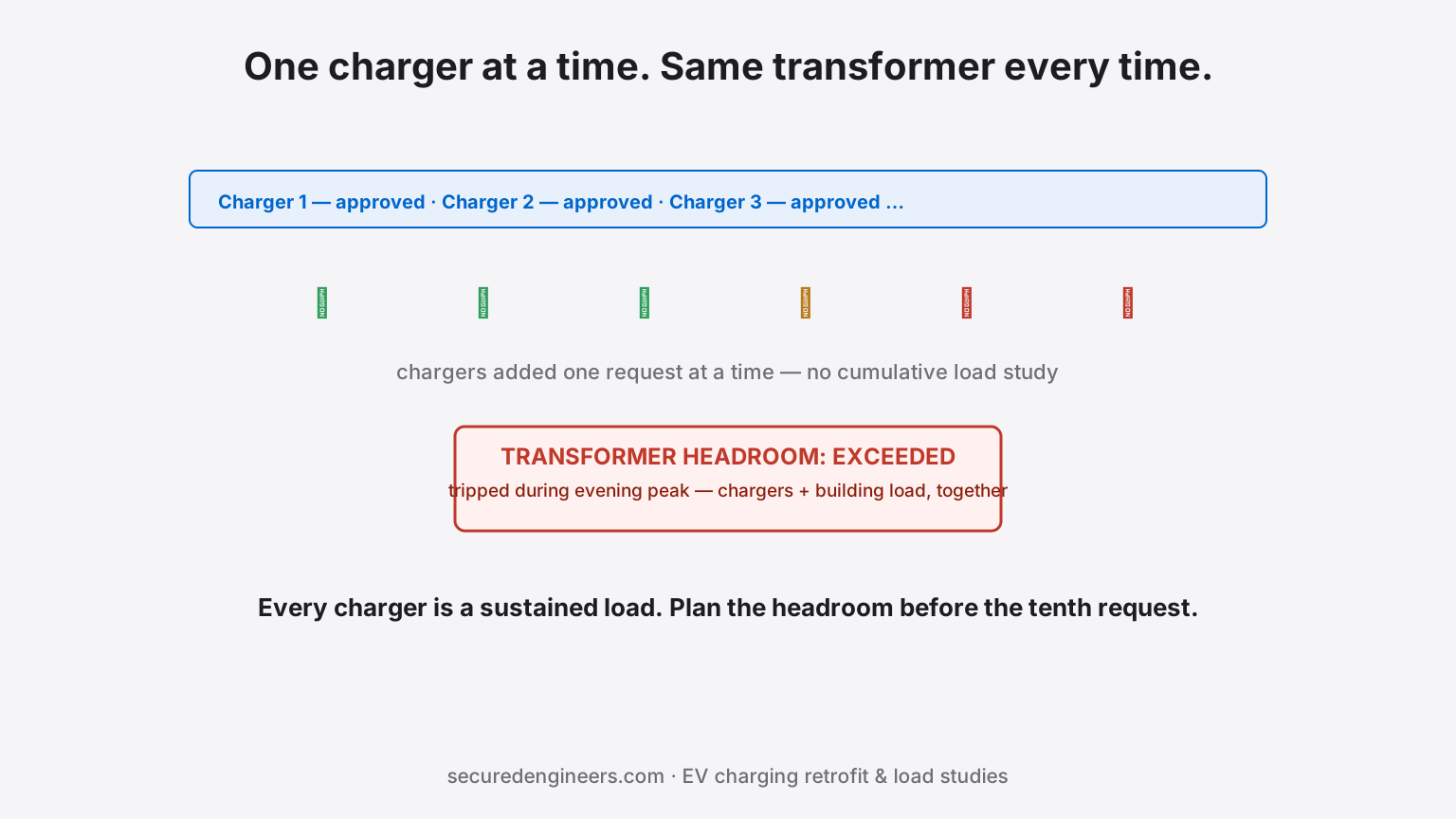
Retrofitting EV Charging Isn't an Electrician's Job. It's a Load Study.
One EV charger in the basement parking looks like a minor electrical addition. Ten chargers, added one tenant request at a time with no cumulative load study, is a transformer and panel capacity problem waiting to trip during peak demand. EV charging retrofits fail quietly — until the building's existing load and the new charging load collide on the same feeder.
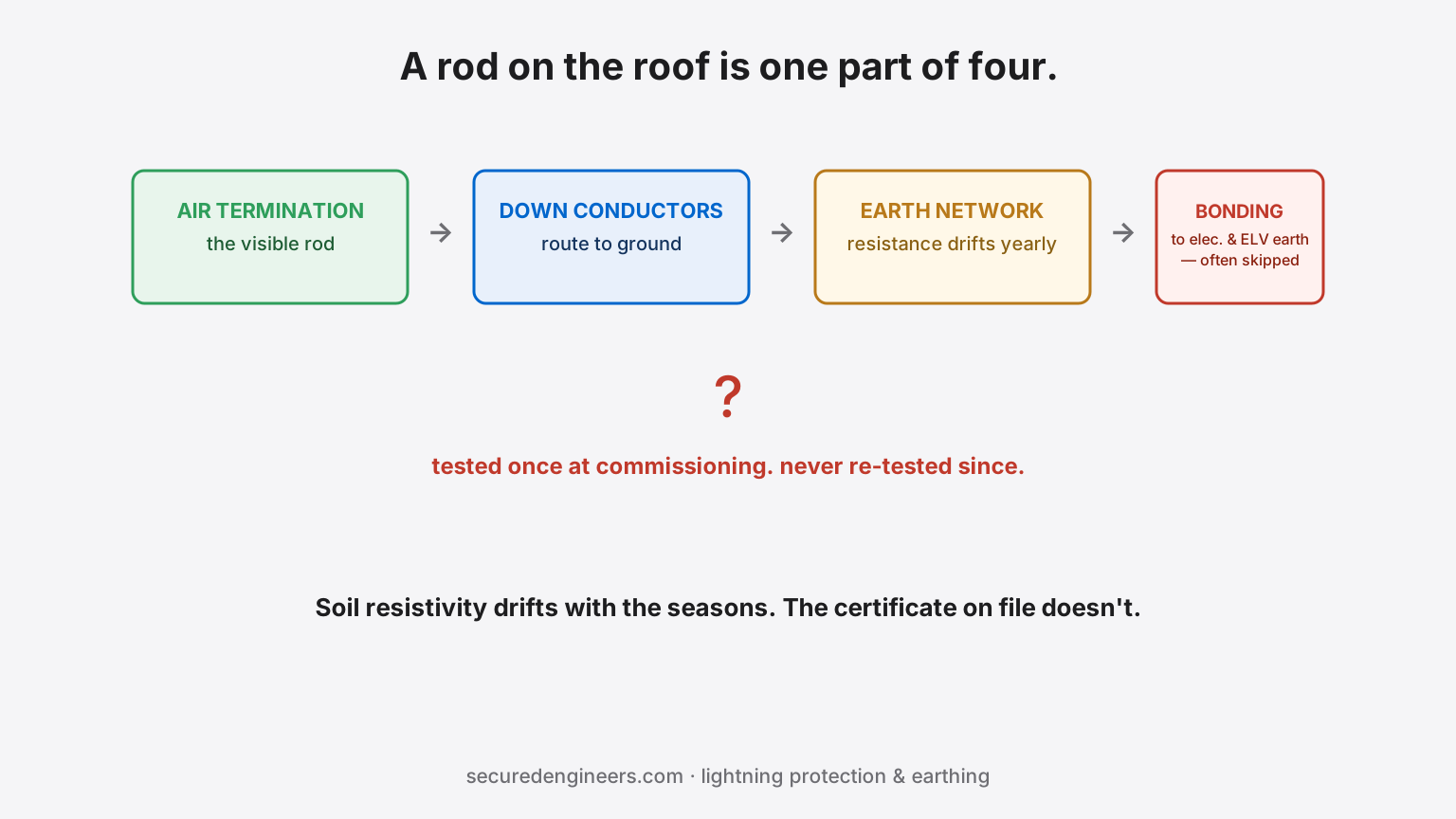
A Lightning Rod Isn't a Lightning Protection System. It's One Component of One.
A metal spike on the roof gets called "lightning protection" — but a real lightning protection system is a complete path from air termination through down conductors to a tested earth termination network, bonded to the building's other earthing. Most buildings have the rod. Fewer have the tested, verified path underneath it, and earthing resistance drifts with the seasons whether anyone re-tests it or not.
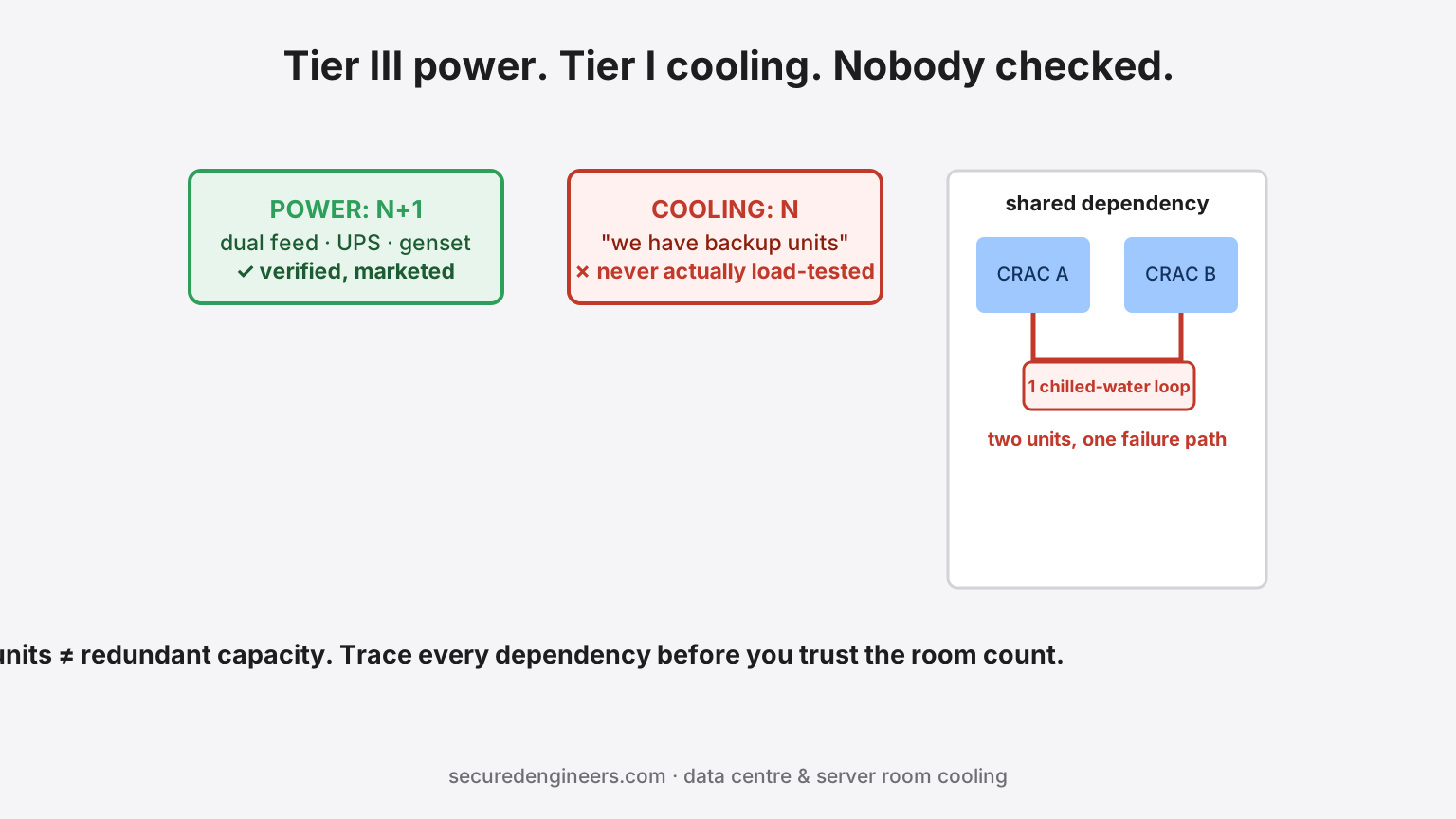
You Bought a Tier III Server Room. The Cooling Is Tier I.
Uptime-tier ratings get quoted for power — dual utility feeds, UPS, generator backup — while cooling redundancy quietly gets value-engineered to N, not N+1. A data centre or server room with redundant power and single-string cooling has exactly one Achilles' heel: the day that one CRAC unit fails. What redundancy actually means for cooling, and how to verify you have what you paid for.
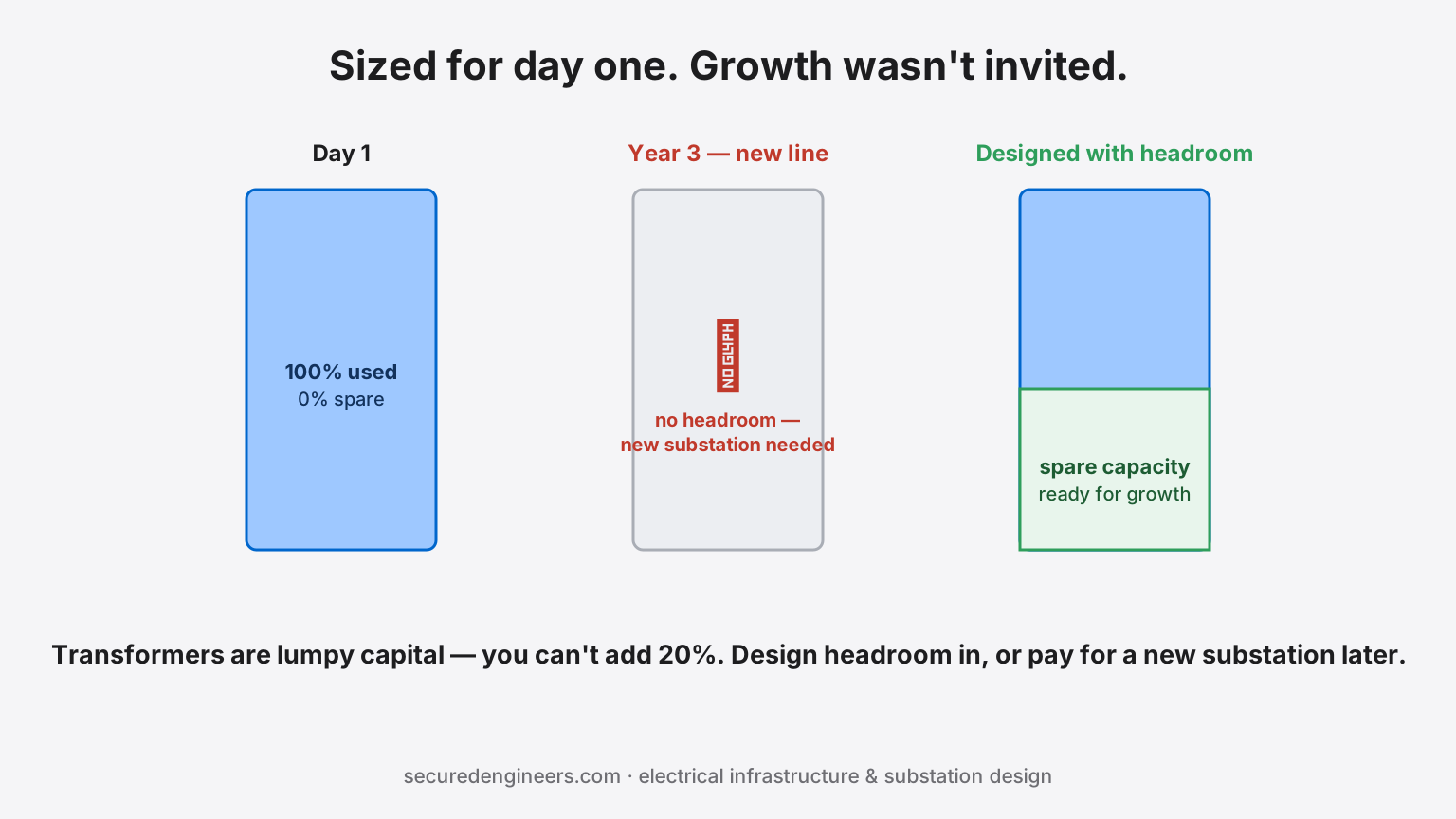
Transformer Capacity for Factory Growth: Start From Measured Demand
Sizing a transformer for an expansion starts with the demand your meter has actually recorded, adds only the new load that will run at the same time as today's peak, and then checks the conditions the rating assumes, the redundancy you need and what the DISCOM and the Electrical Inspector will require.
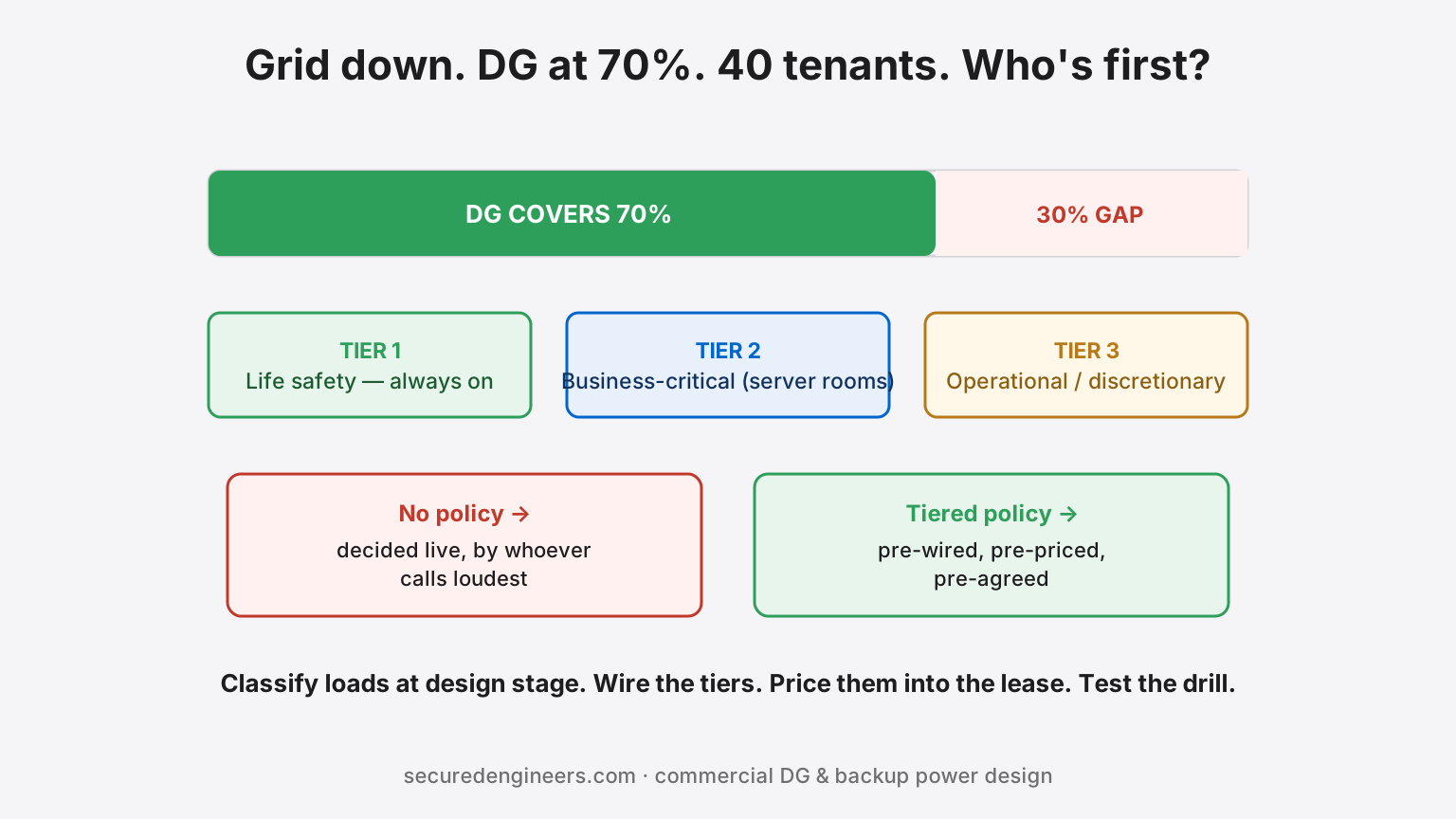
Grid Down. DG Running at 70% Capacity. 40 Tenants. Who Gets Power First?
Your building's DG covers 70% of connected load — an entirely normal design ratio. The day the grid actually fails, that 30% gap becomes a very personal argument between 40 tenants, none of whom knew where they stood in the queue. Backup power allocation is a policy decision, not an electrical one — and most buildings never make it.
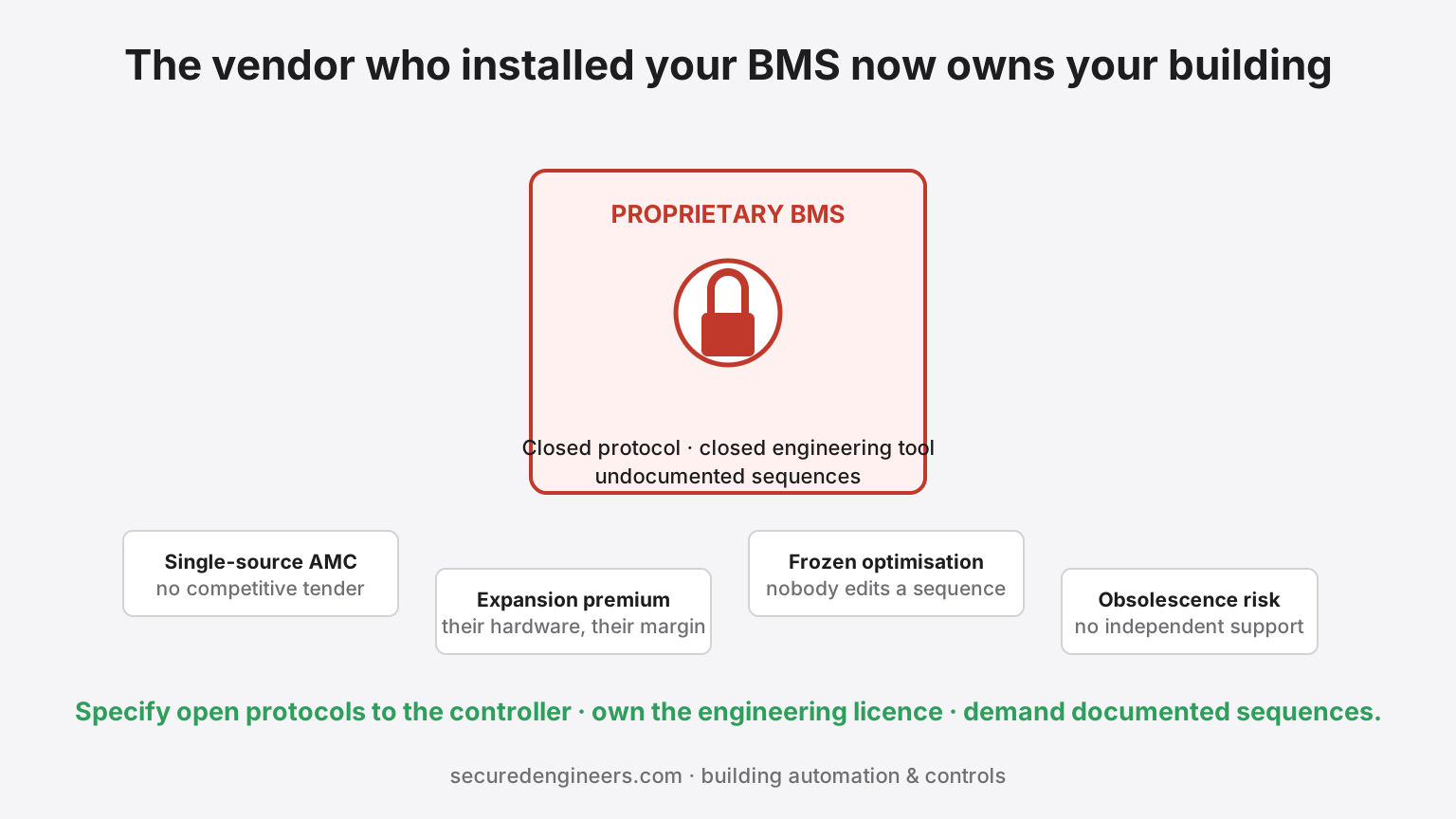
BMS Retrofit Without Losing Control of Your Building
A building management system can leave the owner unable to change a schedule, add a chiller or tender the maintenance without the original vendor. How to plan a BMS retrofit so you own the point list, the trend data and the licences, and can prove what the new system does.
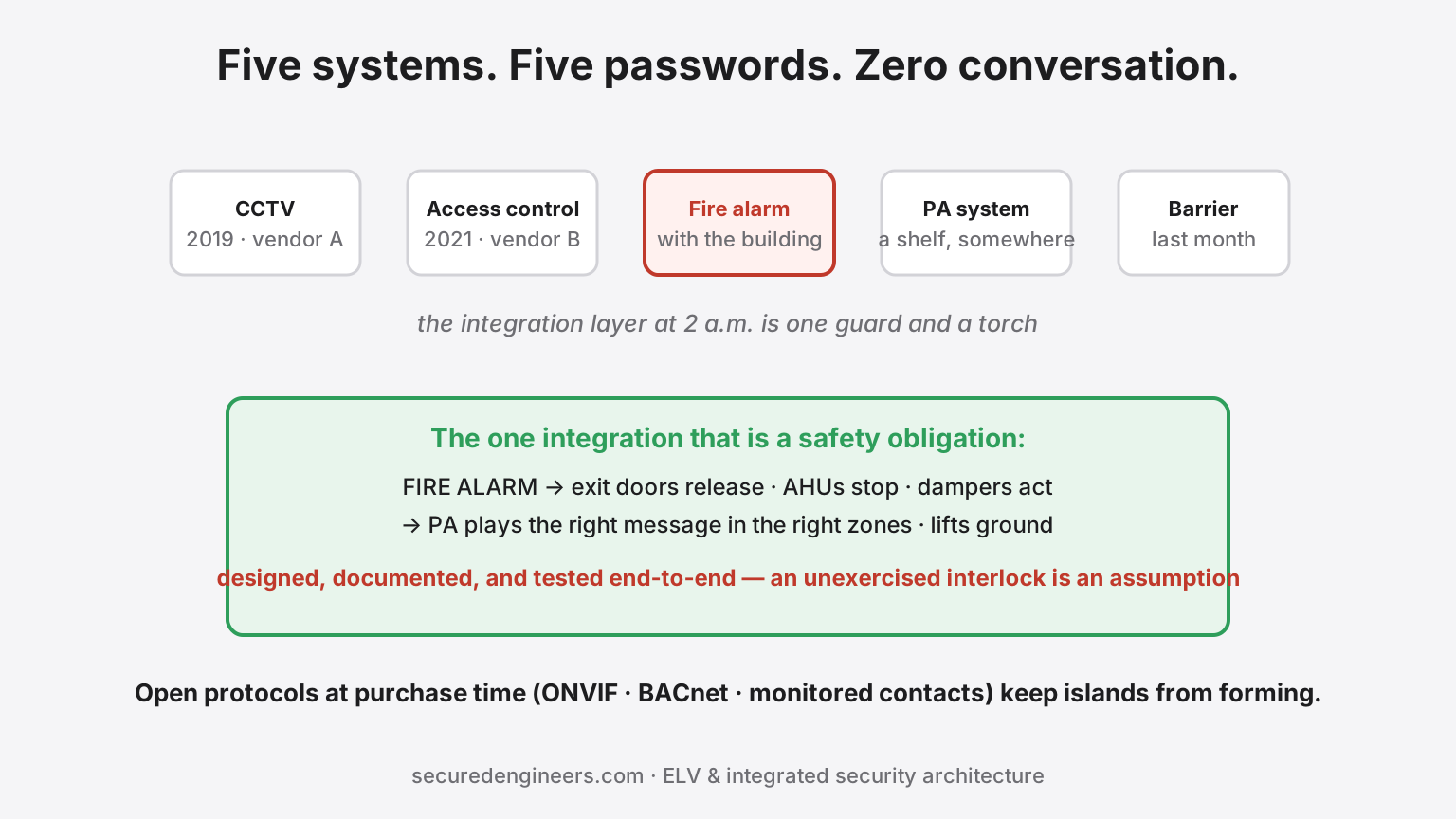
Factory CCTV Expansion Planning: Cameras, Access Control and the Fire Alarm
When a site expands, new cameras and doors get added to systems bought years apart. Settle each camera’s purpose and privacy limits, the network, storage and PoE capacity, who owns the fire-alarm interface, and the acceptance tests and operating ownership before you buy.
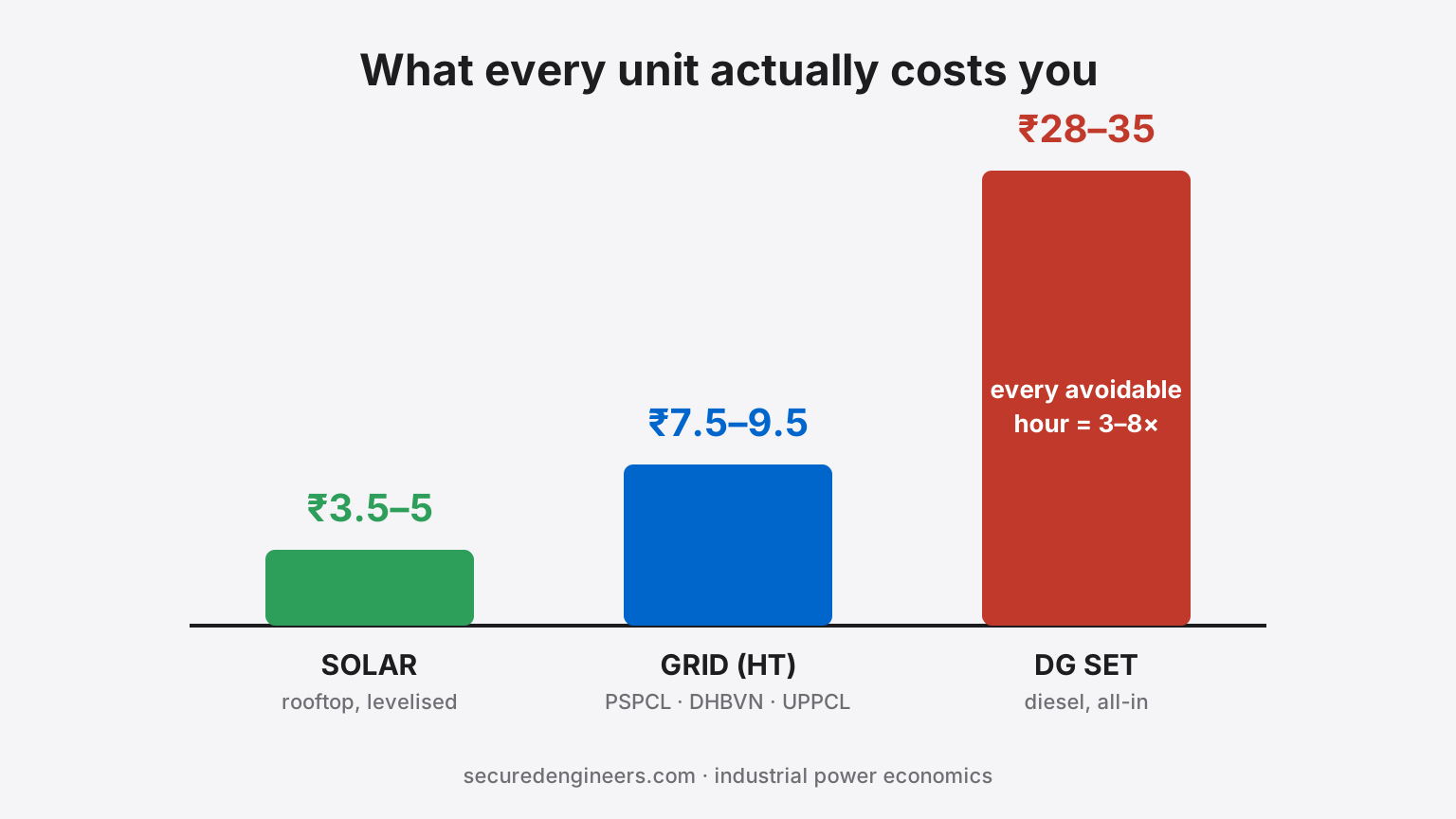
Your DG Is a ₹30/kWh Habit. Here Is What Every Unit Actually Costs.
Factories treat the DG as free backup and the bill as fate. Line up diesel, grid and rooftop solar on one table and the picture is brutal: every DG hour is the most expensive electricity you will ever buy. The honest per-unit economics, and the load strategy that follows.
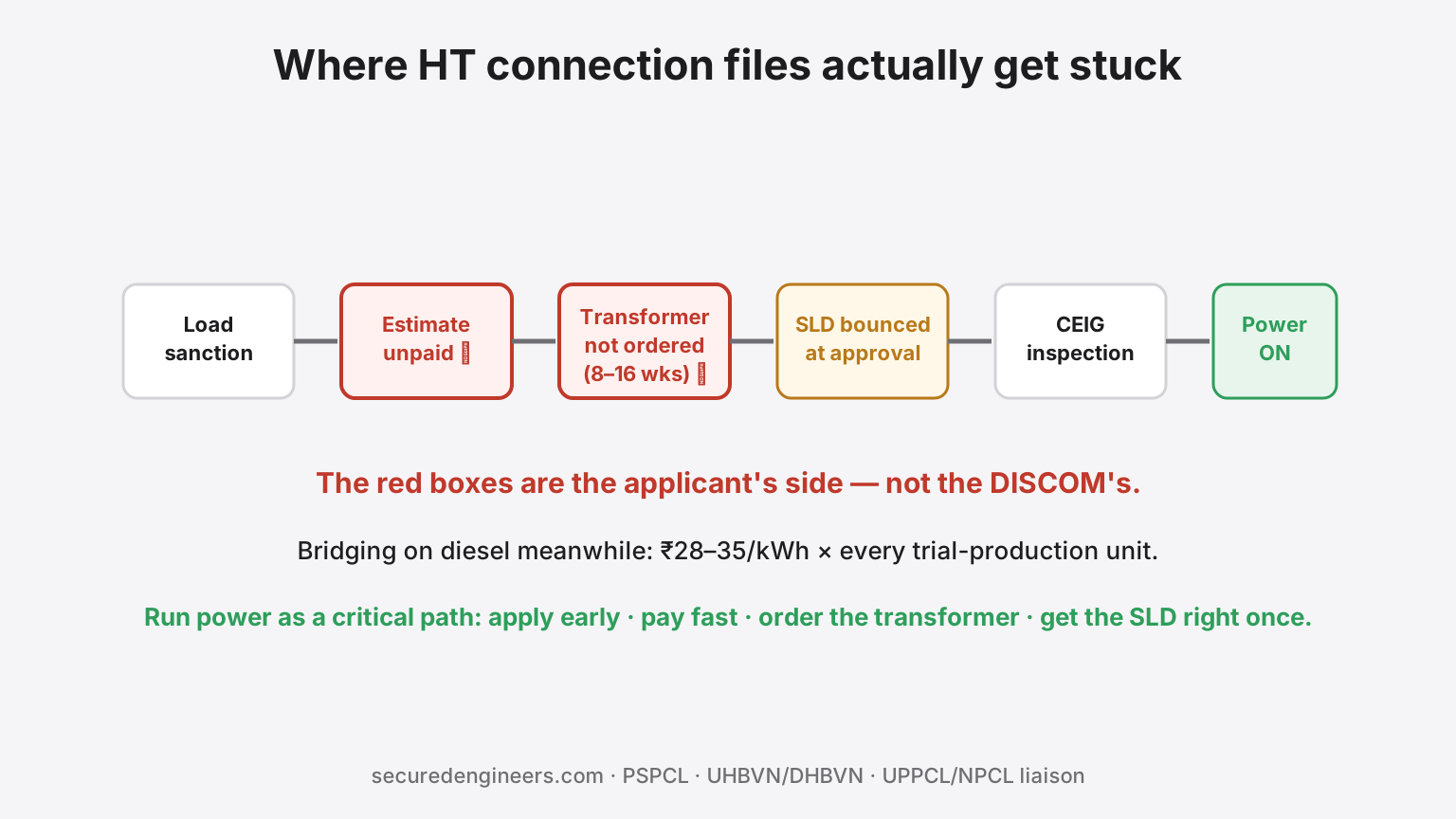
The Plant Is Ready. The Power Isn't. Decoding HT Connection Delays in North India.
Machines installed, staff hired, trial orders waiting — and the HT connection is "under process" for the fourth month. Where connections actually get stuck at PSPCL, UHBVN/DHBVN and UPPCL/NPCL, which delays are the applicant's own fault, and how to run power as a critical path.
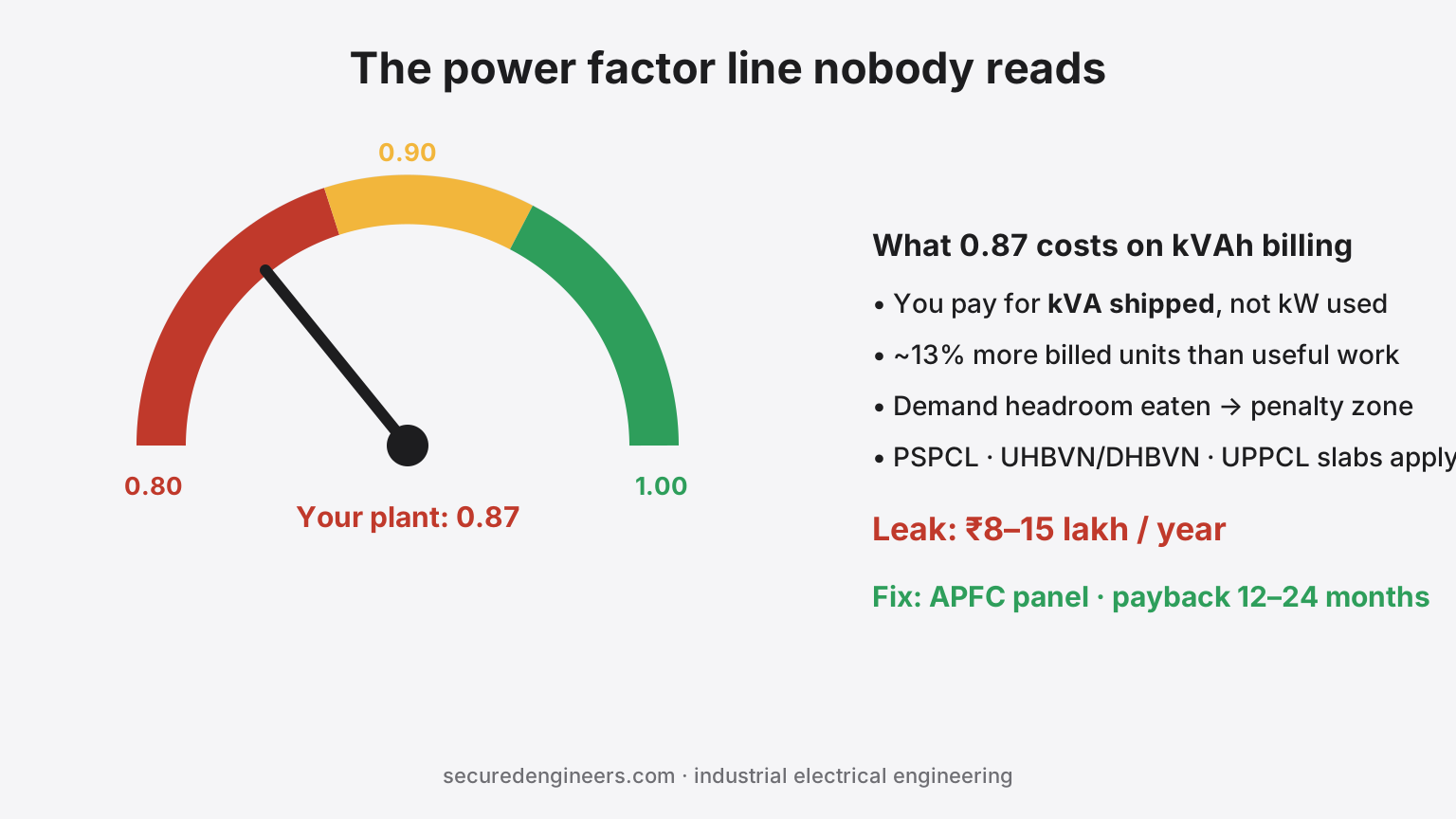
Factory Power Factor Correction: Read the Bill, Size the kVAr, Check for Resonance
Before adding production load, find out what power factor costs you under your tariff and how much transformer and contract-demand headroom it uses. Read the bill terms, size kVAr from measurements, and review harmonics first.
Ready to start your project?
Get a free consultation and quote. We design, prepare and file your approvals, and execute — you deal with one team.