
The Factory Looked Perfect. The Data Room Was Missing One Folder: Approvals.
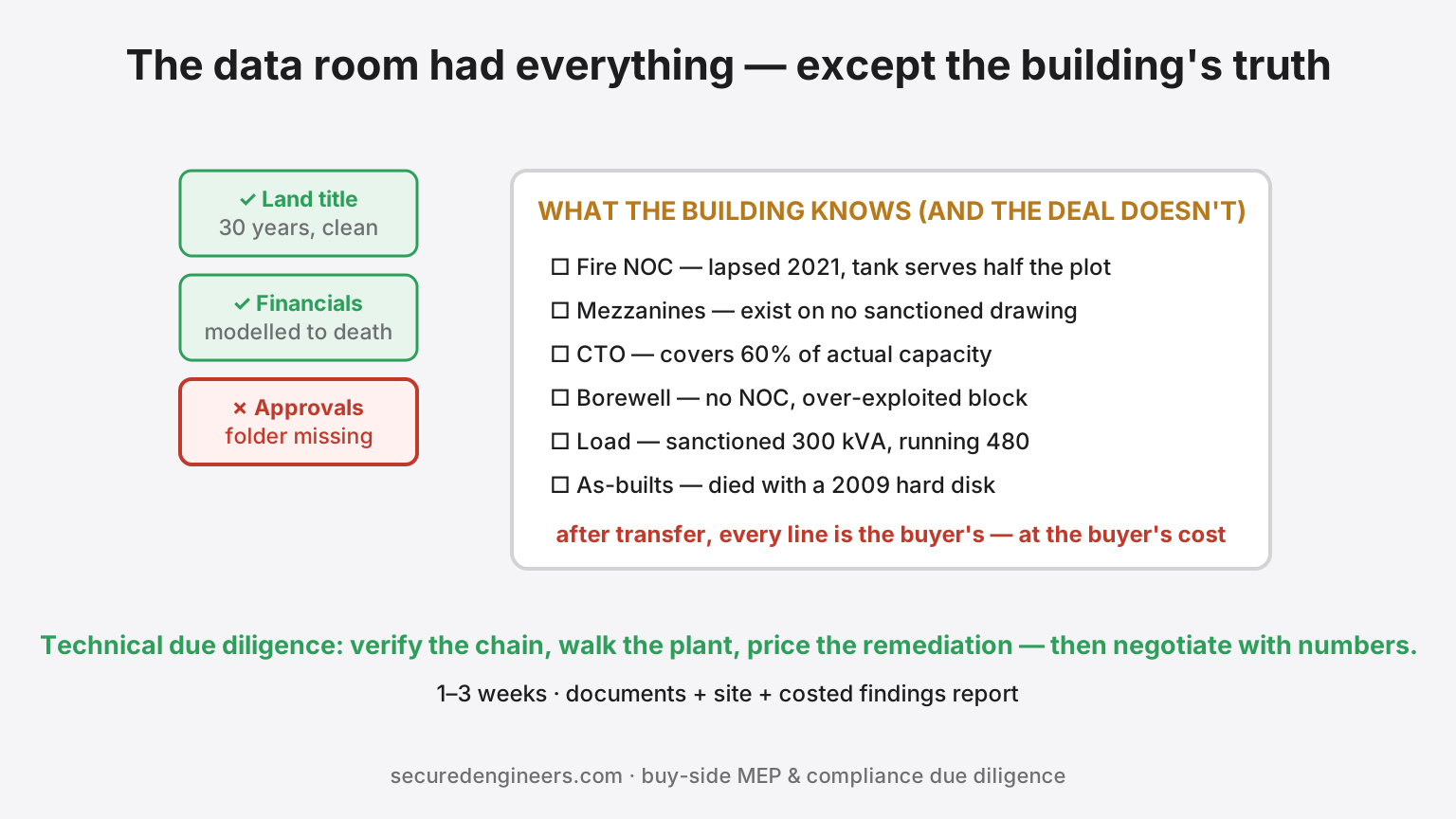
Industrial transactions have a strange blind spot. The lawyers chase the land title back thirty years. The bankers model the price per acre against the corridor. And then the deal closes on a building — with electrical, fire, structural and environmental systems, and a two-decade compliance history — that nobody with an engineering background ever examined.
The seller is not necessarily hiding anything. Often the seller genuinely does not know what the accumulated years of add-ons and expansions did to the compliance position. But after transfer, every skeleton in that building is yours — at your cost, on the authority's timeline, usually discovered exactly when you apply to change or expand something.
The paper chain: what must exist and match
| Document | What you are actually verifying |
|---|---|
| CLU / land-use status | The use you are buying it for is the use it lawfully has — and estate-plot allotment conditions permit your industry |
| Sanctioned building plans + completion/occupancy | The building on the ground matches the building on paper — measure, don't assume; unapproved mezzanines and sheds are the single most common skeleton |
| Factory licence + approved factory plan | Valid, renewed, and describing the actual layout, worker count and horsepower |
| Fire NOC | Current (not lapsed), matching today's building and stacking — and the systems behind it actually work (pump-room truth beats certificate truth) |
| CTE/CTO + waste authorisations | Valid, covering the real capacity and process — and no pending directions or show-cause history at the board |
| Electrical: load sanction, CEIG records, test reports | The connection, transformer and installation are approved at the capacity you plan to use — a load-enhancement need changes your timeline math |
| Water: groundwater NOC, meter returns, extraction position | The borewells are lawful and the charges paid — an unregularised borewell over an over-exploited block is a real liability |
| Structural stability certificates, as-builts, O&M records | The building has an engineering history, not just an electricity bill |
The physical audit: two days that reprice deals
Papers verify the story; the site verifies the papers. A competent technical due-diligence walk covers: transformer and panel condition (thermography tells the truth), earthing measurements, fire pump function tests, hydrant-line pressure, structural distress signs, roof condition, drainage and effluent routes, and the honest question of what the plant would cost to bring to current code for your intended use — because your use, not the seller's, sets the compliance bar (a storage buyer inherits the racking-height fire mathematics on day one).
Converting findings into deal terms
- Price the remediation, not the fear. A lapsed NOC or an unapproved shed is not a deal-killer — it is a number: regularisation cost + upgrade cost + time. Put the number on the table.
- Assign the skeletons contractually. Seller regularises before closing, or the price adjusts, or an escrow holds against defined milestones — any of the three beats silence.
- Buy the timeline, not just the asset. If the plant needs a load enhancement and a consent amendment before your production starts, that is 3–6 months of carrying cost that belongs in the valuation — the same approvals arithmetic as any project.
- Leases deserve the same diligence. A tenant operating in a non-compliant building carries operational risk the lease rarely compensates — and your customers' auditors will not care whose name is on the title.
FAQs
What does technical due diligence cost and take?
For a typical single-site industrial asset: one to three weeks including document verification, site audit and a costed findings report. Against the crores in the deal — and the leverage the findings create — it is the cheapest work in the transaction.
The seller says all approvals are "in process" — is that a red flag?
It is a number and a date, not a promise. "In process" items get verified at the authority, priced for the risk they fail, and assigned contractually. Deals can absorb known risks; they choke on discovered ones.
We already bought — should we still audit?
Yes, immediately: voluntary regularisation on your initiative is consistently cheaper and calmer than discovery during your first expansion or renewal. The audit converts unknown exposure into a managed worklist.
Do you do buy-side technical due diligence?
Yes — documents, site, remediation costing and negotiation support, for purchases and leases across India. Start here.
More insights
"Net Zero Carbon" Sounds Like a Certificate. It's Actually a Design Constraint.
IGBC's Net Zero Energy, Water, Waste and Carbon rating systems now have over 350 committed organisations chasing them, and the council has registered over 19,000 green building projects covering 15.74 billion square feet nationally. But Net Zero Carbon is a materially different, harder brief than a general green-building or LEED certification — it demands MEP systems designed against an actual carbon-accounting target, not a checklist of efficient-equipment credits.
ComplianceDISH Approval: The Factory Clearance Most Projects Discover Too Late
DISH is the Directorate of Industrial Safety and Health — the authority that approves factory building plans and issues the factory licence. It is a separate approval from fire, electrical and pollution clearances, it applies before construction rather than after, and missing it is one of the more expensive sequencing errors in an industrial project.