
Why the 3rd Floor Gets a Trickle, the 1st Floor Gets a Jet, and the Pipes Bang at Night
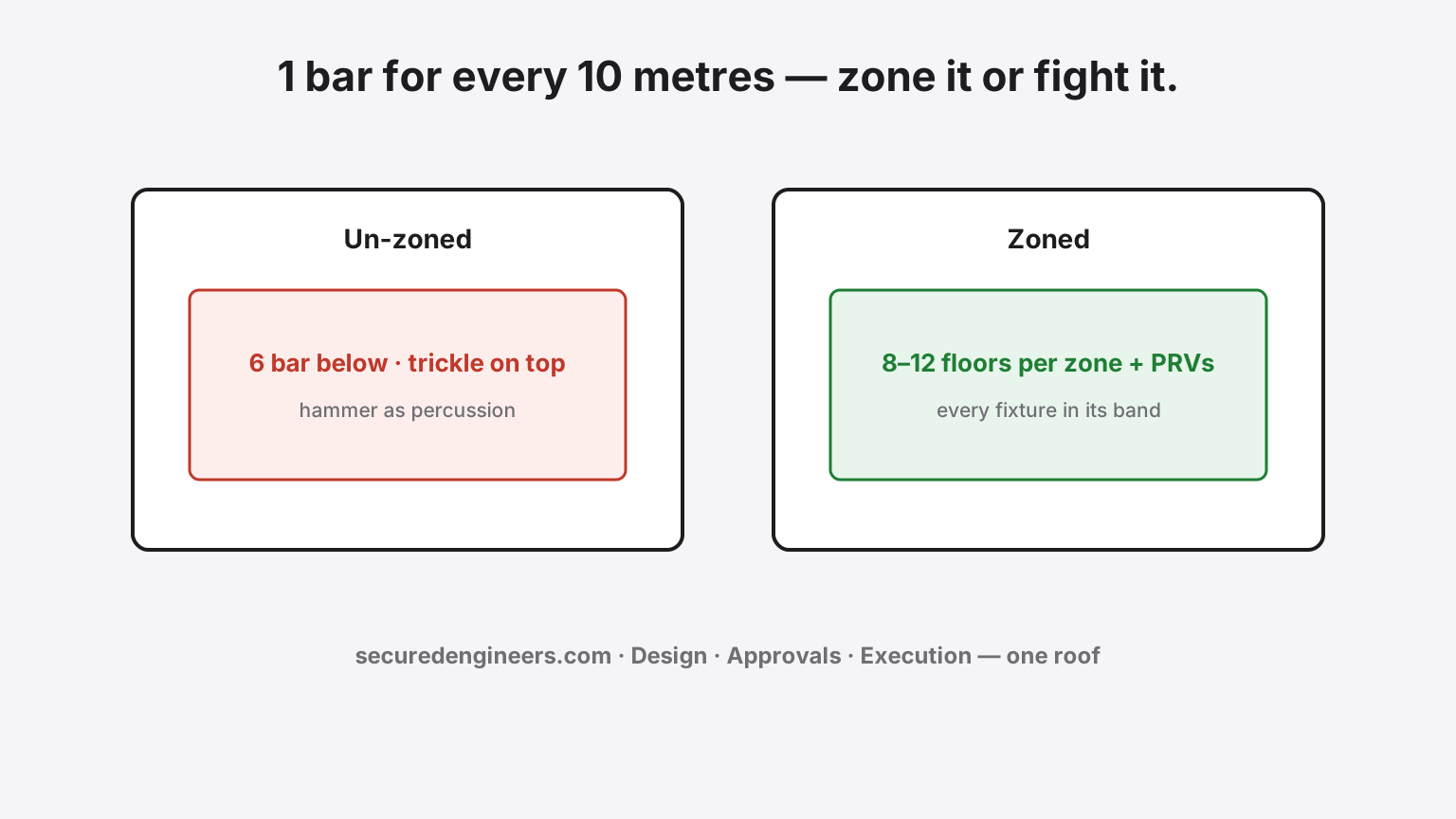
Water is heavy, and buildings are tall — that one sentence generates most of high-rise plumbing's problems. Every 10 metres of water column adds about 1 bar of static pressure. Feed a 60-metre building from a single rooftop tank and the physics is fixed before any pump is chosen: the top floor sees almost nothing, and the ground-floor fittings live at 6 bar — far beyond the comfortable service band of roughly 1.5–4 bar that fixtures, geysers and flexible connectors are happy in.
Everything that follows — burst braided hoses, weeping angle valves, showers that alternate between drizzle and sandblast, and the midnight banging that residents report as ghosts — is that single arithmetic, unmanaged.
Pressure zoning: the actual architecture
- Divide the building into vertical zones so that no fixture sees pressure outside its service band — with a 1 bar/10 m gradient, zones work out to roughly 8–12 floors each, set by your chosen band, not by habit.
- Serve each zone deliberately: either its own down-feed from tank level with a pressure-reducing valve (PRV) station where the zone's head demands it, or dedicated risers from a hydro-pneumatic system with zone-wise PRVs. What must die is the single unzoned riser feeding twenty floors raw.
- PRV stations are engineering, not accessories: sized for the zone's flow range (a PRV that never sees its minimum flow chatters and fails), installed with strainers, gauges up/downstream, bypasses for maintenance — and located where a human can actually service them, which is precisely what shaft-planning fights about.
- Gravity vs hydro-pneumatic: gravity systems are serene and power-cut-proof but need the tankage and give the top floors the least head exactly where demand is finest; hydro-pneumatic (VFD pump sets + vessel) delivers steady pressure everywhere and shrinks rooftop tankage, at the price of running machinery and honest standby power. Most serious towers land on a hybrid — and the decision belongs to a demand calculation, not a brochure.
Water hammer: percussion you designed in
A column of moving water carries momentum; stop it abruptly — a solenoid valve on a washing machine, a quarter-turn tap snapped shut, a check valve slamming on pump stop — and the kinetic energy becomes a pressure spike that can transiently multiply line pressure. The bang is the pipe announcing the spike; the damage is cumulative: joints loosen, hangers work free, valve seats erode.
| Hammer source | Mechanism | Fix at source |
|---|---|---|
| Solenoid/quick-closing valves (appliances, flush systems) | Milliseconds-fast closure on a long moving column | Water-hammer arrestors at the fixture branch — sized units, not air chambers that waterlog |
| Pump stop/start | Check valve slams as the column reverses | Soft-start/VFD pumps, non-slam (spring/axial) check valves, controlled ramp-down |
| High zone pressure | Same closure, more energy — hammer severity rides on static pressure | Zoning/PRVs (see above) — half the cure for hammer is honest pressure |
| Unsecured pipework | Not a cause but the loudspeaker — loose pipes convert spikes into wall-transmitted noise | Clamp spacing per pipe size, isolation pads at supports, sleeves at wall crossings |
Details that separate a serviceable tower from a leaky one
- Air management on tall risers: automatic air-release valves at high points and column tops — trapped air causes spitting taps, false pressure readings and its own hammer variant.
- Zone isolation that works: full-bore isolation valves per zone and per floor branch, tagged and mapped — the difference between a one-flat repair and a building-wide shutdown.
- Metering per zone/branch makes leak detection arithmetic instead of folklore — the night-flow reading is the cheapest leak audit in existence.
- Materials matched to pressure class: the lowest-zone pipework and fittings live a harder life — specify pressure ratings by zone, not one class for the tower.
- Geysers and appliances: where zone pressure runs high-normal, individual PRVs/expansion control at water heaters prevent the classic relief-valve dribble that residents report as "geyser leaking".
The whole design starts from an honest demand number: size daily demand and tankage with our Water Demand & Tank calculator, and pin the pump duty with the Pump Head & Power calculator — static head, friction and residual pressure done as arithmetic rather than optimism.
What we do differently
Our plumbing & public-health scope designs towers as zoned hydraulic systems from day one — zone schedules and PRV stations on the drawings, non-slam valves and arrestors specified where the physics says so, and shafts planned with our own design team so every PRV is reachable for the thirty years it must serve. The night-time silence is a deliverable.
The three takeaways
- 1 bar per 10 metres is non-negotiable physics — zone the building so every fixture lives in its comfort band.
- Water hammer is designed out at the source — arrestors, soft pump control, non-slam checks, honest pressures.
- Serviceability is design: reachable PRVs, tagged isolation, zone metering — decided on drawings, not on site.
Tower on the boards, or one that already bangs? Book a Free Project Blueprint & Statutory Approvals Roadmap or call +91 70099 85817.
Related services
More insights
What Does an MEP Contractor Do? (And Why Fire Protection Belongs In-House)
A plain-English guide to what an MEP contractor delivers — the mechanical, electrical, plumbing and fire scope — and why the smartest teams keep fire protection under one roof.
MEP EngineeringThe Chiller Gave Three Weeks of Warning Before It Failed. Nobody Was Listening.
Automated fault detection and diagnostics — sensors plus analytics watching chillers, pumps and AHUs — now catches degradation weeks before failure, and has shifted from luxury to standard practice at serious operators. But the technology is the easy half; the hard half is metering, connectivity, and someone who actually acts on alerts.
More on Plumbing & Public Health · all insights