ZLD and Greywater Get the Attention. Backflow Prevention Gets the Rejection Letter.
Our ZLD guide and greywater recycling guide cover the treatment technology side of industrial water compliance. Neither covers the permitting sequence that has to happen before any of that technology is legally allowed to operate — and that sequence is where a surprising number of industrial projects lose weeks they didn't budget for.
The approval most buyers under-scope
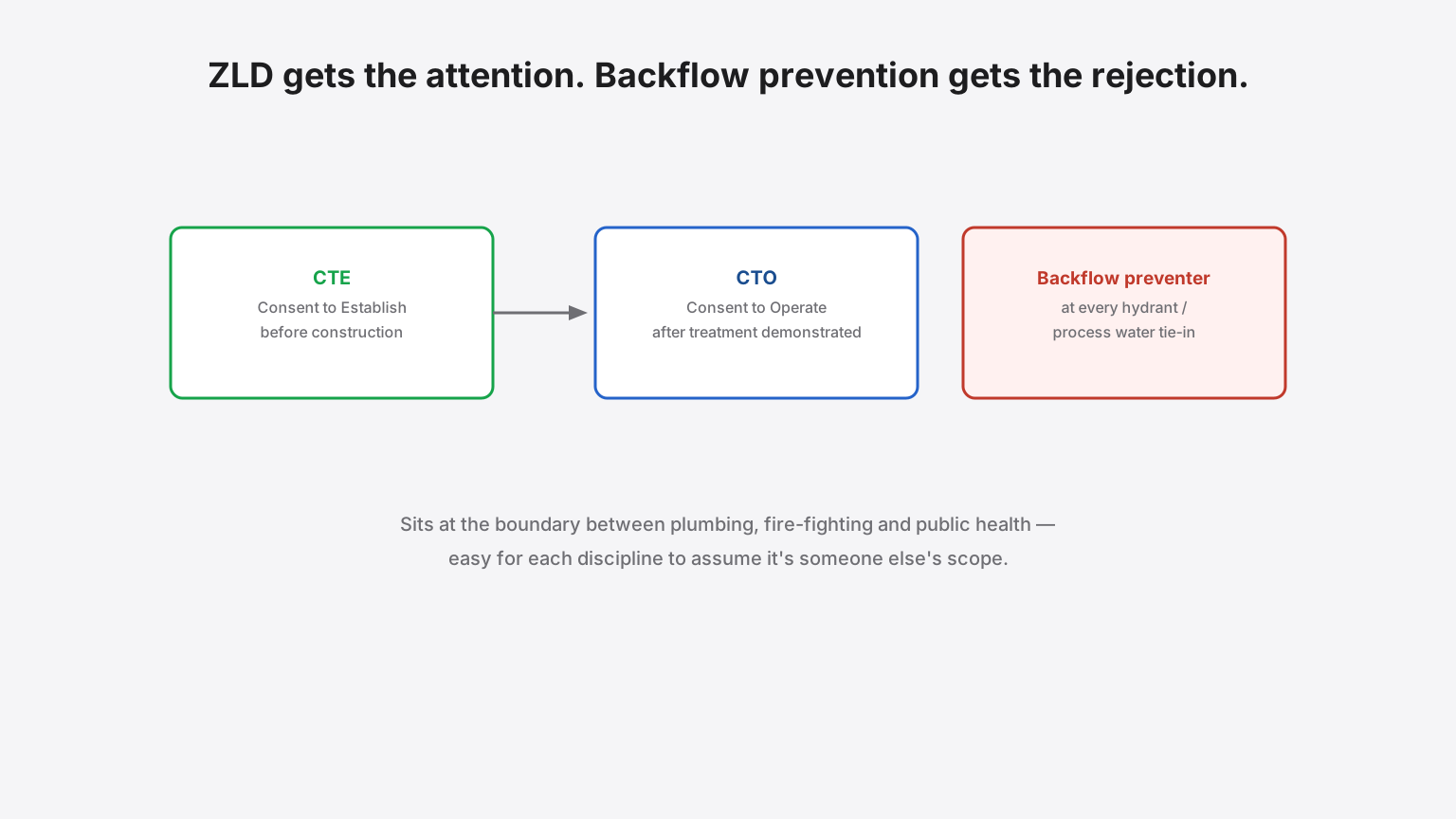
Consent to Establish (CTE), and later Consent to Operate (CTO), from the State Pollution Control Board is the primary gate for any industrial facility with a meaningful effluent stream — and increasingly, for facilities with only moderate water use, depending on the category the SPCB places you in. CTE has to be secured before construction of the effluent-handling infrastructure begins; CTO is granted after the plant is built and the treatment system is demonstrated to work. Filing CTE late, or filing it against a treatment scheme that changes before construction, restarts a review that can run months.
What the CTE/CTO application actually needs to show
| Element | Common gap |
|---|---|
| Water balance — intake, process use, discharge/reuse | Estimated rather than calculated from actual process data, which invites a query the applicant can't answer precisely |
| Treatment scheme matched to the facility's actual discharge category | A generic STP/ETP scheme proposed for a facility that's actually in a category requiring ZLD or tighter norms |
| Groundwater extraction NOC, where applicable | A separate approval (via the Central Ground Water Authority framework where it applies) that gets missed when a facility assumes its water source doesn't need separate clearance |
Backflow prevention: the approval nobody budgets for
Where a facility's potable water supply connects to a fire-hydrant system, a cooling system, or any process water loop, backflow prevention — cross-connection control that stops contaminated water siphoning back into the potable supply — is a genuine, specific requirement, not a generality. It rarely gets its own line item in early planning because it sits at the boundary between plumbing, fire-fighting and public-health design, and each discipline can quietly assume it's someone else's scope. An inspector who finds a missing backflow preventer at a hydrant tie-in doesn't treat it as minor — cross-contamination of a public or campus potable supply is a life-safety issue, and the fix (retrofitting a preventer into a completed system) costs far more than specifying it at design stage.
What we do differently
Our Plumbing & Public Health team scopes CTE/CTO requirements and backflow prevention into the design from day one, and files the pollution-board consent sequence on the timeline the construction programme actually needs — not as an afterthought once the treatment plant is already speced.
More insights
The Drugs Controller, the Pollution Board and the Fire Department All Have an Opinion on Your Cleanroom.
Our GMP HVAC and WHO-GMP guides cover how to design a cleanroom that passes its audit. A separate problem sits alongside the engineering: a pharma or food manufacturing facility answers to several regulatory bodies at once, and their requirements don't always agree with each other.
ComplianceThe Occupancy Certificate Is a Milestone. It Is Not a Finish Line.
Our occupancy certificate guide covers the chain that has to close before a building can be legally possessed. Compliance doesn't end there — fire systems need periodic testing, water tanks need documented cleaning against legionella risk, and larger energy consumers carry ongoing reporting obligations that start counting from handover, not before.