
A Fixed Price for 14 Months of Copper. Someone Is Carrying That Risk.
An MEP package is unusually commodity-exposed. Copper runs through every cable, winding and busbar. Steel runs through pipe, conduit, tray, ducting and support structure. Aluminium, PVC and refrigerant gases add more. On a fourteen-month programme those inputs will move — the only question is who absorbs it.
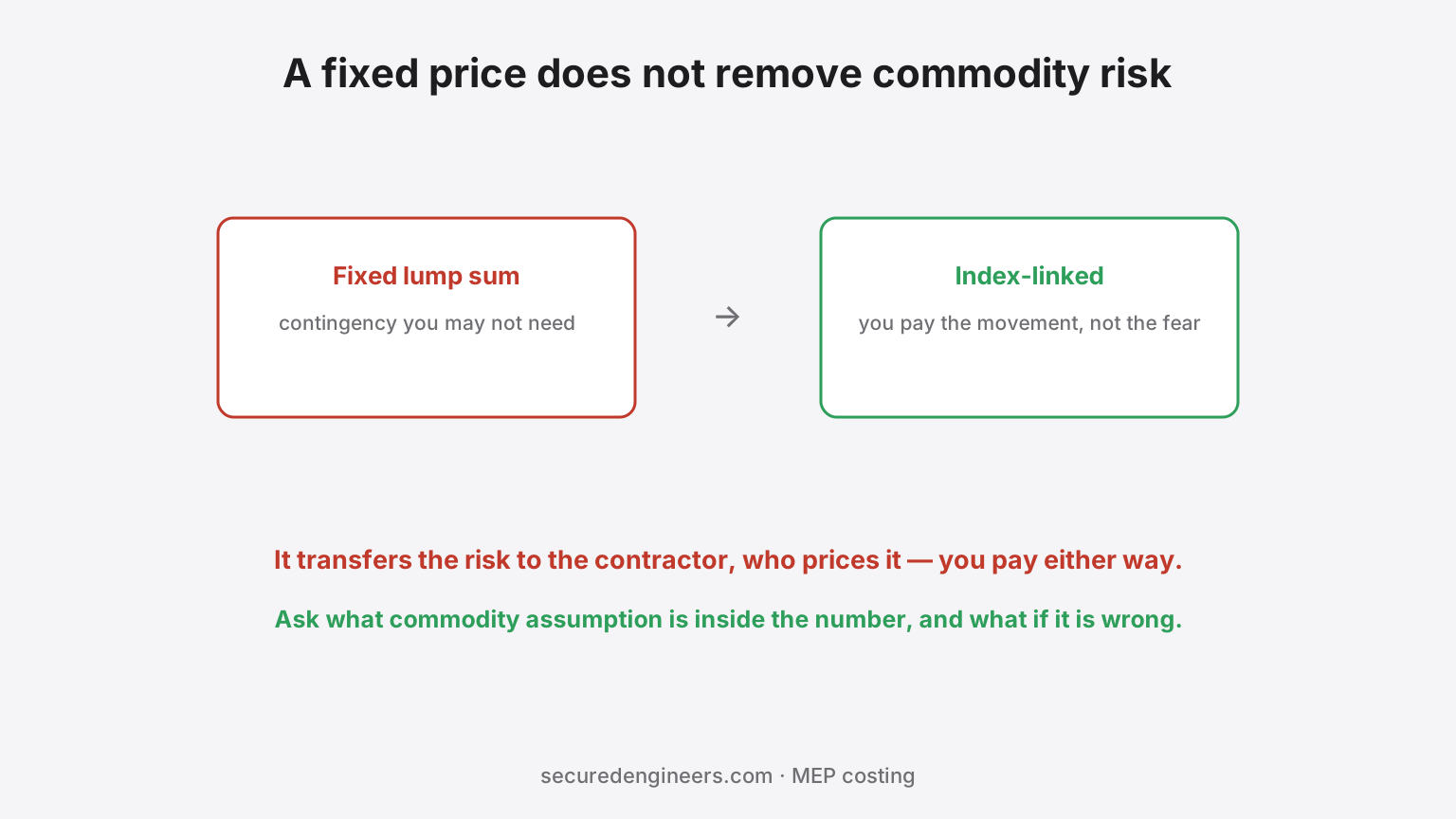
A fixed lump sum does not remove that risk. It transfers the risk to the contractor, who prices it. You pay for it either way; the difference is whether you pay for the risk or for the outcome.
What a contractor does with unpriceable risk
- Adds a contingency. A margin sized for an adverse move. If prices stay flat, you paid for protection you did not need.
- Buys early and stores. Locks the cost, but adds financing, storage and damage risk — and commits to quantities before the design is fully coordinated.
- Prices thin and hopes. The dangerous one. A contractor squeezed on rate and exposed to a rising market has three exits: substitute material, chase variations, or fail. All three are your problem.
That third path is the real argument against pushing a long fixed price to its limit. It does not eliminate the risk — it converts it into quality risk and dispute risk, which are harder to see and harder to price.
How escalation clauses actually work
| Mechanism | What it does |
|---|---|
| Index-linked adjustment | Ties a defined portion of the price to a published commodity index — transparent, and cuts both ways |
| Threshold / collar | Adjustment only applies beyond a stated movement, so small fluctuations stay with the contractor |
| Fixed for a stated period, then reviewed | Certainty over the near term where most procurement happens |
| Client-procured key materials | Client buys the cable or the major equipment directly and carries the price |
| Rate-only, quantity-on-measure | Separates price risk from quantity risk; useful where the design is not frozen |
When each is the right answer
Short programmes with a frozen design are genuinely suited to fixed price — the exposure window is small and the contingency is cheap. Long programmes, phased work, or a design still moving are where a fixed price gets expensive, because the contingency has to cover a wider range of outcomes.
The question worth asking a bidder is simply: what commodity assumption is inside this number, and what happens if it is wrong? A contractor who can answer has priced it deliberately. One who cannot has either absorbed it invisibly or not thought about it — and both show up later.
What we do differently
We state the commodity assumption rather than burying it, and will quote both fixed and index-linked so the cost of certainty is visible as a number you can decide about. Ask for a budgetary proposal. Related: why MEP quotes vary and why the cheapest bid backfires.
More insights
The Headline Says 25% Costlier. Nobody Says Which 25%.
India's construction sector has absorbed a widely reported 25% cost spike, forcing a cyclical moderation across the market. That number gets quoted at the project level, but it doesn't land evenly — MEP scopes, with their heavy exposure to copper, steel, and imported components, are absorbing a disproportionate share of that inflation, and budgets set even a year ago are already stale.
Costing & ProcurementMEP / MEPF Cost per Sq Ft in India — Factory, Warehouse, Hospital, Hotel
What MEPF really costs per square foot in India, benchmarked by building type — and what legitimately moves a project inside (or outside) its band.