
A Fire Alarm That Cries Wolf Is Worse Than No Alarm at All
The first false alarm empties the building and costs you a production hour. The third one teaches everyone that the panel lies. By the sixth, someone has silenced the sounders "until we sort it out" — and now you have a detection system, an attendance register that says it works, and a building that will not be warned when it matters.
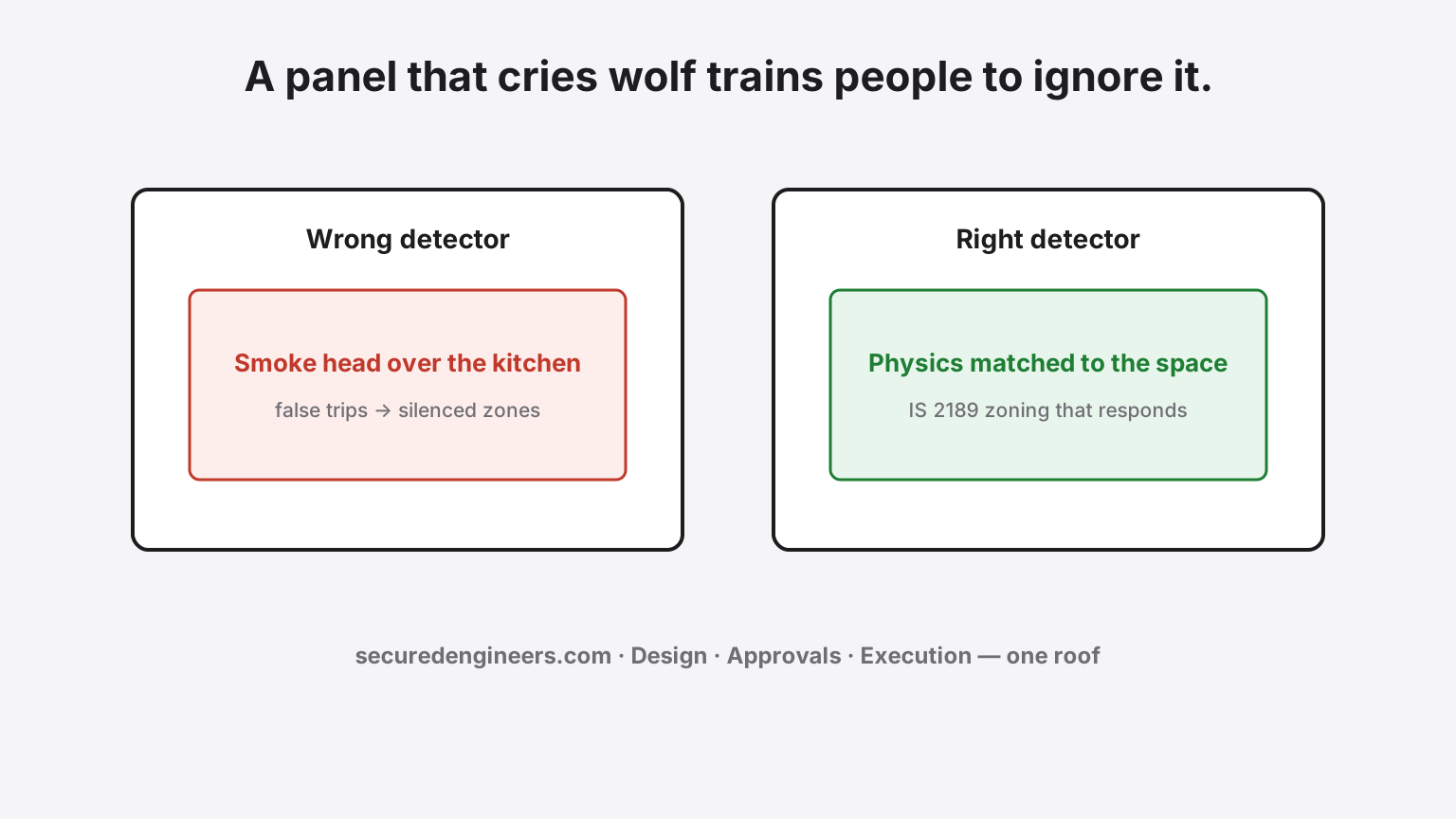
Here is the engineering truth behind that spiral: false alarms are a selection problem, not a reliability problem. Modern detectors are extremely dependable at detecting what they are designed to detect. Put a smoke detector above a diesel forklift lane, a chapati griddle, or an AHU discharge, and it will faithfully detect exactly what is there — dust, combustion aerosols, condensation — and call it fire. The device did its job; the design did not.
Detection layout in India is governed by IS 2189 alongside NBC 2016 Part 4 — but the code tells you spacing and zoning, not judgement. Judgement is matching the sensing physics to the space.
Match the detector to the space, not the catalogue
| Space | Right detection | Why the default fails |
|---|---|---|
| Offices, control rooms | Photoelectric smoke | Rarely fails — this is the easy case |
| Kitchens, canteens | Heat (rate-of-rise or fixed ~57–70 °C class) | Smoke detectors read cooking aerosols as fire, daily |
| Dusty shopfloors, flour/textile areas | Heat, or smoke with dust-discrimination and disciplined cleaning | Dust ingress = drift = nuisance trips |
| Diesel zones — DG rooms, forklift lanes, loading bays | Heat, or CO/multi-criteria | Exhaust particulates trigger optical chambers |
| High-bay warehouses (10 m+ ceilings) | Beam detection or aspirating (ASD) | Point detectors on a 12 m ceiling respond late and maintain terribly |
| Server / electrical rooms | Aspirating (very early warning) | You want minutes of warning before flashover, not seconds after |
| Humid or open-to-weather areas | Heat, IP-rated | Condensation inside optical chambers reads as smoke |
Placement errors that manufacture false alarms
- Detectors in the throw of AC diffusers — turbulence and condensation cause both false trips and, worse, delayed real detection. Keep detectors out of the direct airstream.
- Point detectors in dead-air pockets — corners and deep beams shelter detectors from the smoke they are meant to catch.
- No zoning logic — a panel that says "Zone 3" for half the factory sends the responder to the wrong end of the building; IS 2189's zoning discipline exists so a human can find the origin fast.
The management layer: verification before evacuation
Modern addressable panels support alarm verification and coincidence logic — a first knock alerts the security desk, a second detector or a persistent signal escalates to full evacuation. For an operating factory this is the difference between investigating a corridor and emptying three shifts. Two cautions:
- Verification delays must stay within what your fire scheme and authority accept — configure them consciously and record the settings.
- Coincidence logic is for spaces with nuisance sources, not a blanket setting — a server room aspirating alarm should escalate immediately.
An honest false-alarm audit, in one afternoon
- Pull the panel's event log — false alarms cluster by device address. Ten minutes of reading names your worst offenders.
- Stand under each offender and look up: wrong type for the space, in an airstream, filthy chamber, or genuinely faulty — it is nearly always one of these four.
- Fix by substitution and relocation, not by silencing zones. A disabled zone is an uncovered zone, and it is the first thing an investigator looks for after a loss.
- Close the loop: detector cleaning belongs on the AMC schedule; chambers drift dirty long before they fail self-test.
Detection is one layer of the scheme the authority will ask for. Which systems your height and occupancy attract under NBC 2016 and state law is settled in the approved fire scheme; our Fire NOC document readiness checklist tracks the documents the application usually needs.
What we do differently
Our ELV and detection scope starts from the space schedule, not the device catalogue — every area gets a detection technology chosen for what it actually contains, zones a responder can navigate, and panel logic documented in the handover file. Integrated with our fire protection and Fire NOC work, the same team answers for the design and the approval.
The three takeaways
- False alarms are selection and placement errors — the fix is engineering, not tolerance.
- Never buy quiet by disabling zones; buy it with the right sensing physics and verification logic.
- The panel log is a free audit — read it quarterly and act on the clusters.
Sick of the false trips? Book a Free Project Blueprint & Statutory Approvals Roadmap or call +91 70099 85817 — our engineers will audit the panel log with you on the first call. Build without the circus.
Related services
More insights
BMS Retrofit Without Losing Control of Your Building
A building management system can leave the owner unable to change a schedule, add a chiller or tender the maintenance without the original vendor. How to plan a BMS retrofit so you own the point list, the trend data and the licences, and can prove what the new system does.
ELV SystemsFactory CCTV Expansion Planning: Cameras, Access Control and the Fire Alarm
When a site expands, new cameras and doors get added to systems bought years apart. Settle each camera’s purpose and privacy limits, the network, storage and PoE capacity, who owns the fire-alarm interface, and the acceptance tests and operating ownership before you buy.
More on Electrical & Power · all insights