The DG Set You Bought in 2019 Is Not the DG Set You Can Buy Today
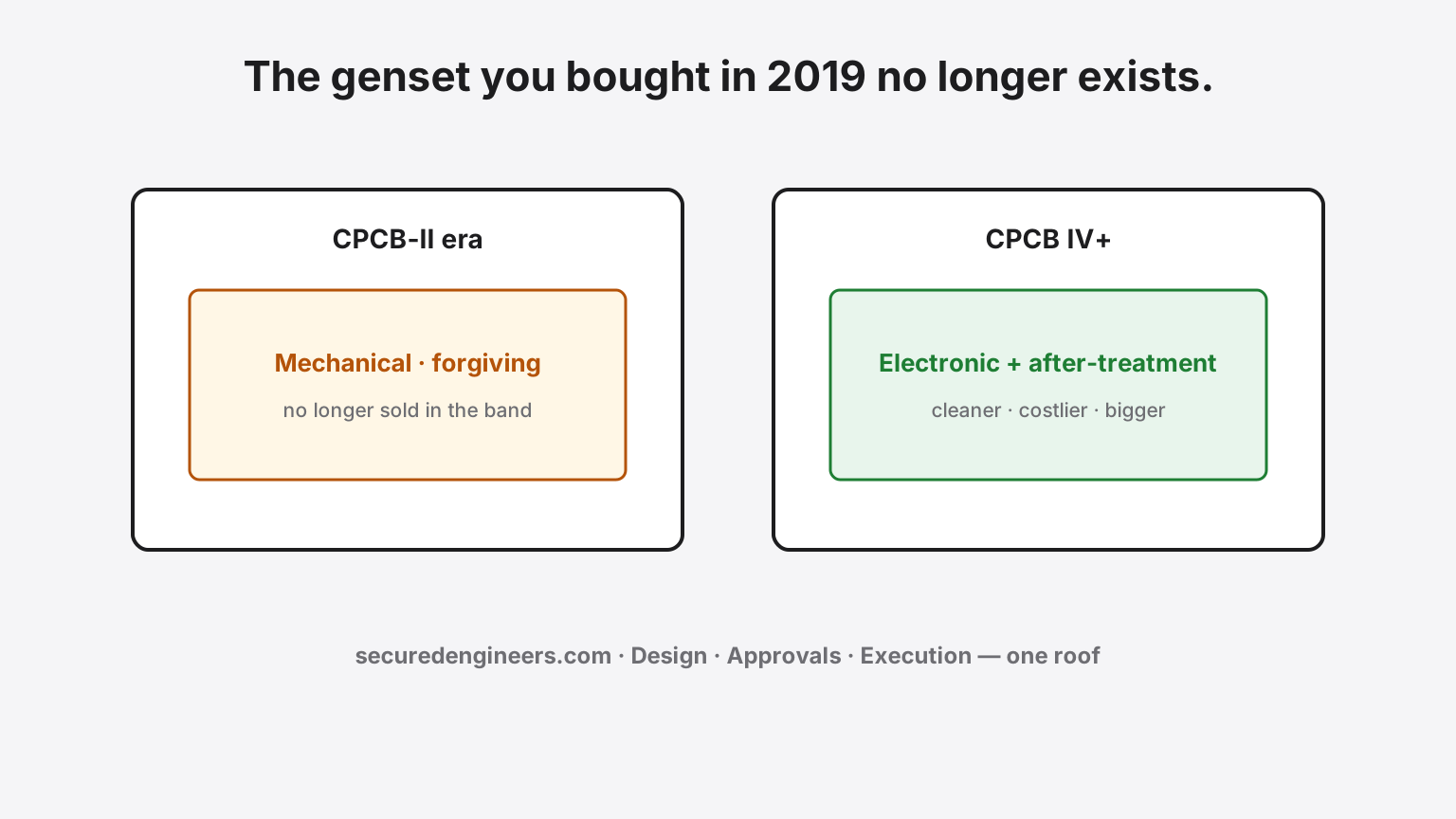
For two decades, buying a diesel genset in India was a settled routine: pick the kVA, pick the brand, negotiate. The machine itself was a known quantity. CPCB IV+ ended that. New-generation gensets are cleaner by an order-of-magnitude class, more electronic, somewhat hungrier for space — and priced accordingly. Meanwhile, in the NCR airshed, a second layer of directions targets the gensets you already own.
If your expansion plan, your data-room fit-out or your tender BOQ still describes the old machines, this is the update.
What CPCB IV+ actually changed
- Drastically tighter emission limits for new gensets in the regulated power band — cutting oxides of nitrogen, particulate matter, CO and hydrocarbons far below the previous CPCB-II era machines.
- Technology followed the limits: meeting them takes electronically governed common-rail engines and, on most models, exhaust after-treatment (catalytic devices / particulate control). The genset became a machine with an ECU, sensors and service items the old mechanical engines never had.
- It applies to new manufacture and sale in the covered band — from the applicability date (mid-2023 as notified; verify the current notification text for your capacity band), non-compliant new machines cannot be sold into it. Existing installed sets were not banned by CPCB IV+ itself — their pressure comes from elsewhere (below).
What it means when you buy your next genset
| Dimension | Old-era assumption | CPCB IV+ reality |
|---|---|---|
| Price | Mature, commoditised | Meaningfully higher — budget the step, not the memory |
| Footprint & stack | Engine + canopy | After-treatment adds space and exhaust-design constraints; check room and stack drawings against the new GA |
| Fuel & oil discipline | Forgiving | Electronic engines and after-treatment want clean fuel and scheduled service — contamination now has a failure price |
| Electrical integration | AMF panel, basic sensing | ECU-level data available — use it: modern controllers give real monitoring, load history and fault codes |
| Noise | Acoustic enclosure norms already applied | Unchanged obligation — the 75 dB(A)-class enclosure rules continue as before |
Practical sizing note: with cleaner, costlier kVA, oversizing hurts twice. Diesel engines dislike sustained light loading — chronic under-loading invites wet stacking and after-treatment issues on the new machines too. Size to the load study, not to fear.
The NCR overlay: your existing sets are the target
Inside Delhi-NCR, the Commission for Air Quality Management's directions have progressively restricted how installed gensets may run — seasonal GRAP restrictions, requirements for retrofit emission-control devices on eligible sets, and pressure toward dual-fuel (gas + diesel) conversion or gas/cleaner alternatives for regular use. The specifics are capacity- and period-dependent and have been revised repeatedly — treat the current CAQM direction as the source of truth before winter planning.
- If your NCR facility leans on DG for scheduled outages, the honest engineering answers are increasingly: retrofit where eligible, convert to dual-fuel where gas is available, and shift the base of your backup strategy toward solar + storage for predictable daytime support.
- Outside NCR, CPCB IV+ shapes what you buy next; run-hour economics still favour cutting DG dependence — diesel units remain the most expensive electricity most factories ever generate.
Put numbers on that last sentence with our DG Running Cost calculator — true ₹/unit including fuel and maintenance — and compare the daytime share against the DG vs Solar calculator. For sizing a new set against your actual essential load, start with the DG Set Sizing calculator.
What we do differently
Our power systems scope treats backup as a system, not a purchase: load study first, then the DG sized and specified to the current CPCB regime, integration and room/stack design done against the new machine drawings, and where the site earns it, solar with storage engineered to shrink the run-hours the genset — and the airshed — pay for. Statutory interfaces (CEIG for the installation, consent conditions) handled by the same team.
The three takeaways
- CPCB IV+ made new gensets cleaner, more electronic and pricier — update budgets, room drawings and BOQs before you tender.
- NCR sites must plan around CAQM's evolving directions on existing sets — retrofit, dual-fuel and usage limits are live obligations, not rumours.
- The cheapest DG unit is the one you don't run — solar + storage now competes directly with run-hours.
Planning backup for a new line or building? Book a Free Project Blueprint & Statutory Approvals Roadmap or call +91 70099 85817. One roof: sizing, compliance, installation, approvals.
Related services
More insights
The IE Rules Are Gone. Here Is What You Are Personally on the Hook for Now.
Generations of Indian electrical practice ran on the Indian Electricity Rules, 1956. They have been replaced — the CEA's safety regulations now define an owner's duties: designated supervision, periodic testing, records, and accident reporting. Most facility owners have not read a line of them.
ComplianceThe Occupancy Certificate Is a Milestone. It Is Not a Finish Line.
Our occupancy certificate guide covers the chain that has to close before a building can be legally possessed. Compliance doesn't end there — fire systems need periodic testing, water tanks need documented cleaning against legionella risk, and larger energy consumers carry ongoing reporting obligations that start counting from handover, not before.
More on Statutory & Approvals · all insights