
Two Rooms in Your Factory Are Quietly Manufacturing an Explosive Atmosphere
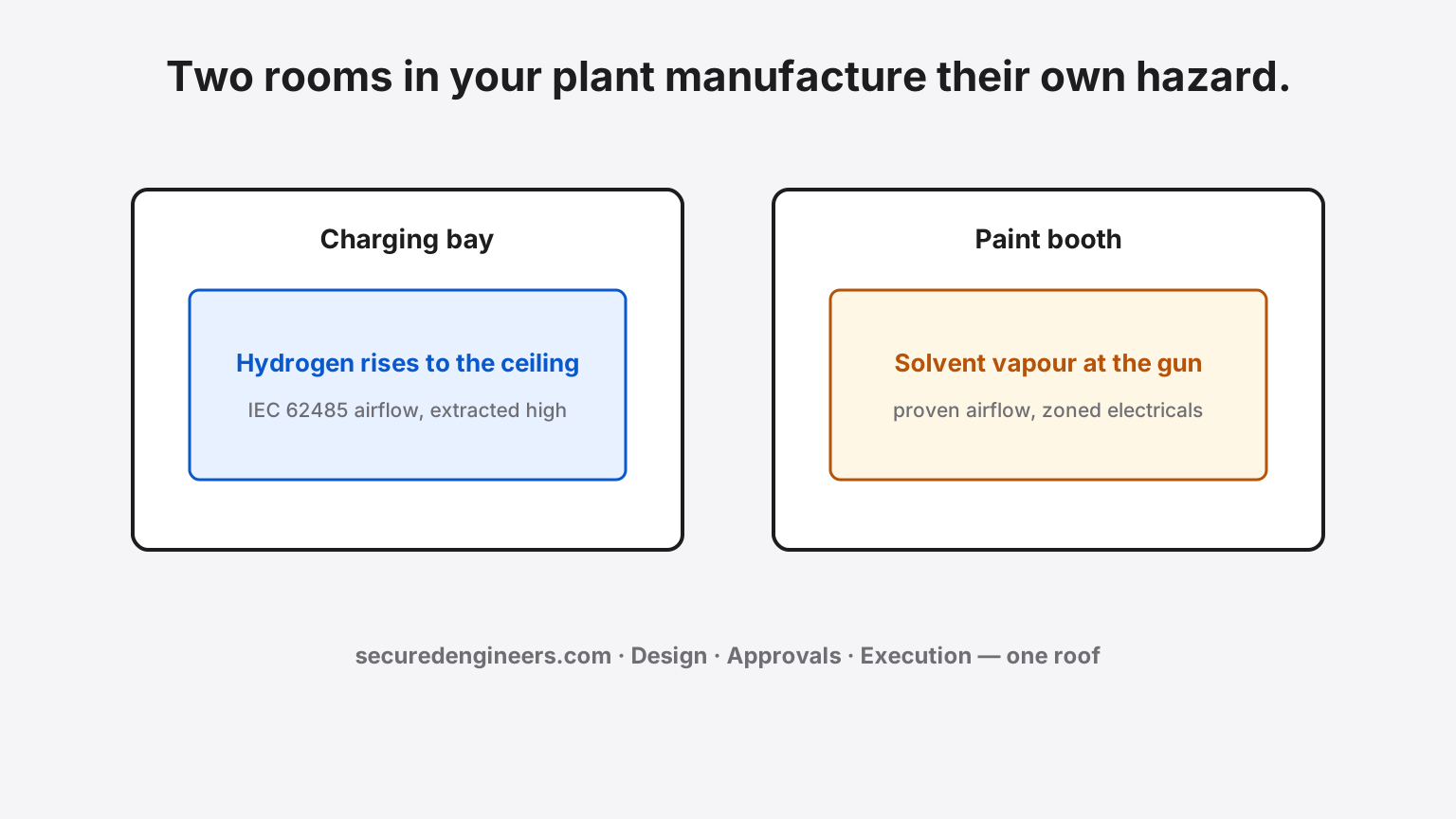
Most factory ventilation is about comfort or heat. Two rooms are different in kind: spaces where the process itself continuously generates a flammable gas or vapour, and where ventilation is the primary — sometimes only — barrier between routine operation and an explosive atmosphere. In a typical Indian plant those rooms are the battery charging bay and the paint booth.
Both fail the same way: the room worked when commissioned, then racking moved, a fan quietly died, a domestic switch replaced a broken fitting — and nobody recalculated anything, because nothing visible changed.
The charging bay: hydrogen, the invisible tenant
Lead-acid traction batteries electrolyse water during charging — especially in the gassing phase near end-of-charge — releasing hydrogen. Hydrogen is flammable from roughly 4% concentration in air, rises immediately, and pools at the ceiling: which is why the classic fatal detail is a flat roof with dead pockets and the light fitting mounted exactly where the gas collects.
- Design ventilation to the standard, not to instinct: the recognised method (the IEC 62485 family of practice for battery installations) computes required airflow from the number of cells, charging current and charger behaviour, with the goal of keeping hydrogen far below its flammable limit. Have the calculation on file — it is one page, and it is the document that proves the room is engineered.
- Extract high, supply low: hydrogen collects at the ceiling; extraction must be at the highest points with no dead pockets (beams create them — duct accordingly). Natural ventilation can satisfy the math for small bays if openings are genuinely high+low and unblockable.
- Electrical fittings above the batteries deserve suspicion: keep switching, sockets and luminaires out of the gas-accumulation zone or select them for it; bond and earth the racking; ban open flames and grinding with signage that is enforced, not laminated.
- Interlock chargers to ventilation where mechanical extraction is what the calculation relies on — fan fails, charging pauses. This one relay is the difference between a design and a hope.
- Lithium changes the room, not the seriousness: Li-ion traction batteries don’t evolve hydrogen in normal charging — the hazard shifts to thermal runaway, so the design conversation moves to charger management, separation distances, and detection. Different chemistry, different room; don’t reuse the old drawing either way.
The paint booth: solvent vapour and everything downstream
- Capture velocity first: a booth exists to pull vapour away from the operator and the work faster than it can drift — face velocity across the booth opening is the design number, maintained by fan condition and filter cleanliness. Loaded filters silently cut airflow; a manometer across the filter bank plus a marked change-out point is basic instrumentation, not luxury.
- The zone doesn’t end at the booth wall: vapour-laden extract ducting, the fan itself, and the discharge point are part of the hazardous envelope — spark-resistant fan construction, motors out of the airstream or rated for it, ducting routed and terminated away from ignition sources and air intakes.
- Electricals per the zone classification: flameproof/increased-safety fittings within the classified volume around spraying — the ordinary switchboard someone added “just outside” the booth is the audit finding that writes itself. Bond the workpiece, the booth and the operator against static.
- Interlocks: spray equipment enabled only with extraction proven (airflow switch, not the fan contactor’s opinion); lighting through sealed panels; no extraction, no atomisation.
- Statutory overlay: solvent storage quantities, SPCB consent conditions on VOC discharge, and the Factories Act’s dangerous-operations provisions all touch this room — keep the paperwork aligned with the hardware.
A one-afternoon audit for both rooms
| Check | Pass looks like |
|---|---|
| Ventilation calculation on file | Sized to standard, matches installed fans/openings as they exist today |
| Airflow proven, not presumed | Measured face velocity / extraction volume; interlock trips charging or spraying on fan failure |
| Ceiling geometry (battery bay) | High-point extraction, no dead pockets, fittings out of the accumulation zone |
| Electrical fittings vs zone | Rated equipment inside the envelope; no domestic hardware migrations |
| Housekeeping & signage | No smoking/hot-work regime enforced; filters within change-out marks |
Size the mechanical answer with our Ventilation / Fresh Air calculator — and if the same survey is going to touch the wider services picture, the MEPF Cost Estimator frames the budget conversation early.
What we do differently
Our ventilation scope treats these two rooms as safety systems: calculations to the applicable standard delivered with the drawings, interlocks wired and witnessed, electricals selected to the zone by the same electrical team — and the annual airflow re-verification written into the AMC so the room that passed commissioning is still that room in year five.
The three takeaways
- These rooms make their own hazard continuously — ventilation is the primary barrier and must be calculated, not assumed.
- Interlock the process to proven airflow — fan fails, process stops, automatically.
- The hazardous envelope includes ceilings, ducts and “just outside” — audit fittings against the zone, yearly.
When was your charging bay's airflow last measured? Book a Free Project Blueprint & Statutory Approvals Roadmap or call +91 70099 85817.
Related services
More insights
Your Most Expensive Utility Is Whistling Away Through a Hundred Small Holes
Compressed air costs many times what the same energy costs as electricity at the socket — and in unmanaged plants a fifth to a third of it typically escapes through leaks before doing any work. The fix is unglamorous engineering: piping design, pressure discipline, and a leak-hunting habit.
IndustrialCold Storage Expansion Requirements: Refrigeration, Power and NCCD Checks
A cold store expansion is sized by how much product arrives each day, how warm it arrives and how fast it must be pulled down — not by chamber volume. The checklist for throughput, room conditions, plant and power reserve, and what NCCD’s 2025 guidelines ask of an assisted expansion.
More on HVAC & Mechanical · all insights