
Three Power Sources, One Bus, and Nothing Deciding Between Them.
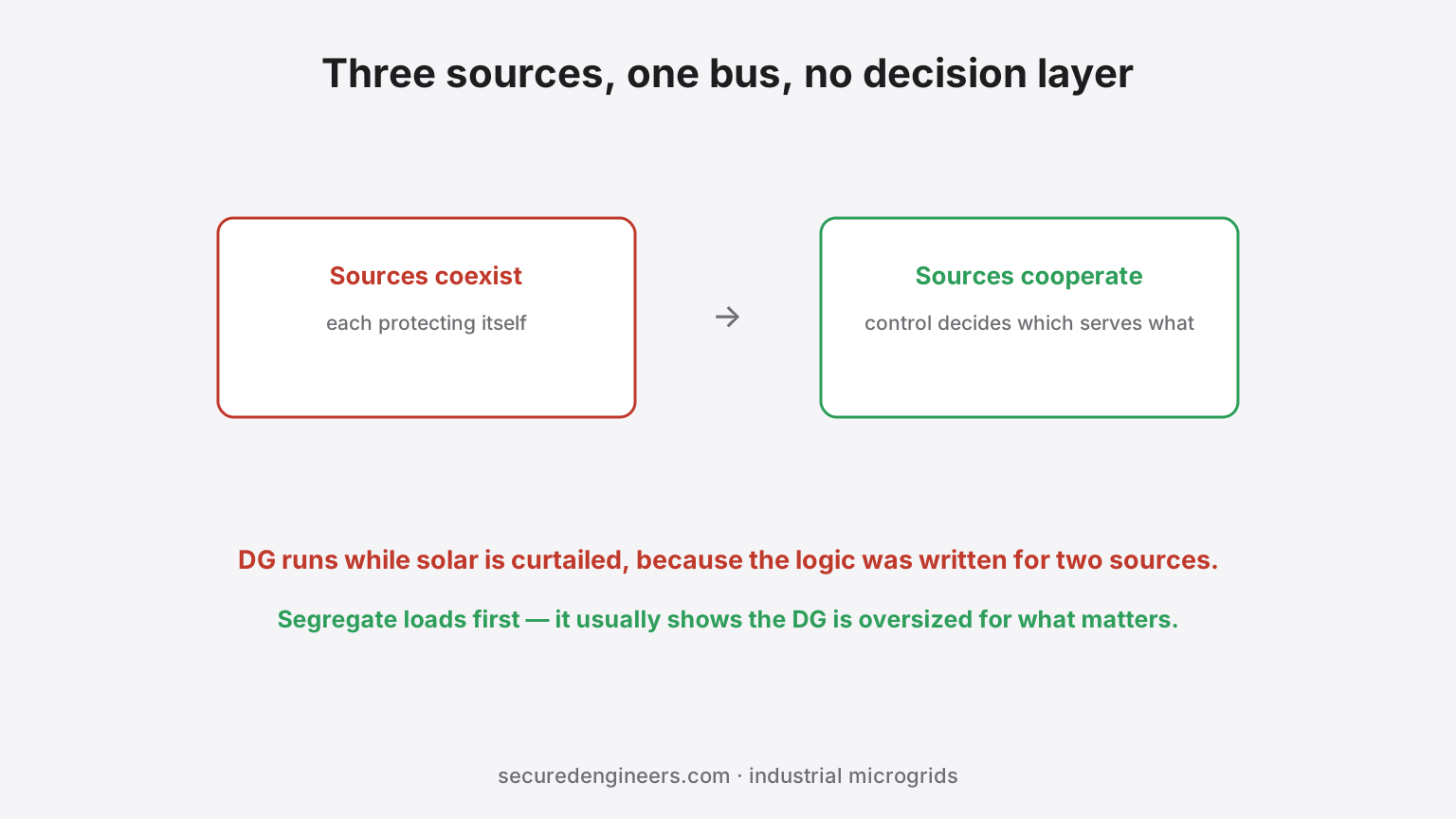
Most established Indian factories already own microgrid hardware without calling it that: a grid connection, one or more DG sets, and increasingly a rooftop solar plant. What they usually do not own is the layer that decides which source serves which load at any moment. Without it, the sources coexist rather than cooperate.
What coexisting costs you
- DG running when solar could carry the load. On a short outage at midday the DG starts and the array is curtailed or disconnected, because the interlock logic was written for two sources, not three.
- Solar curtailed to protect the DG. Where solar and DG run in parallel without proper control, the inverters are often throttled or blocked outright to avoid reverse power into the genset — you keep the asset and lose the generation.
- Peaks nobody is managing. Demand charges accrue against a recorded peak that no source is deliberately shaving. That is the case for storage, covered in BESS and peak shaving.
- Non-critical loads riding on expensive power. Without load segregation, DG carries the whole plant during an outage instead of the loads that actually justify diesel.
What the control layer has to decide
| Decision | What it depends on |
|---|---|
| Which source serves which bus | Load criticality — segregated at design, not improvised |
| Whether solar runs in parallel with DG | Genset minimum loading, reverse-power protection, inverter capability |
| When to shed load | A pre-agreed priority list, not an operator's judgement at 2am |
| When to charge or discharge storage | Tariff structure, recorded peak, state of charge |
| How to re-synchronise on grid return | Sequence and protection settings |
The protection question people skip
Adding generation sources changes the fault current the installation can see, and it changes direction of flow. Protection settings calculated for a single grid infeed may no longer discriminate correctly once inverters and a genset can both contribute — which is the same discrimination problem described in what an electrical safety audit finds, made harder by multiple sources.
Anti-islanding matters here too: the plant must not energise a dead utility network. That is a statutory interconnection requirement, not a preference, and it is verified at inspection.
Where to start on an existing plant
Not with equipment. Start with load segregation — establishing which loads genuinely need to ride through an outage and which can shed — because that single exercise usually reveals that the DG is oversized for what actually matters and that the solar could carry more than it does. Establishing the real load profile is what every subsequent decision depends on.
What we do differently
We treat the control and protection layer as part of the design under Electrical Infrastructure, not as a commissioning afterthought, and take the interconnection approvals through the inspectorate via CEIG approval consultancy — because a multi-source installation is exactly the case inspectors scrutinise.
More insights
You Sized the DG. Nobody Sized the Safety Distance Its Diesel Tank Needs.
A DG set is easy to place; its diesel storage tank isn't. Safety-distance rules from the fire and PESO frameworks can push a tank — and everything around it — further from your building than the plot allows for. Decide tank type and location at layout stage, not after the DG is ordered.
ElectricalYour Shopfloor Is Probably Lit Wrong in Both Directions at Once
Walk most factories with a lux meter and you find both failures together: inspection benches squinting under 200 lux while empty aisles blaze at 400. Lighting design is matching lux to task, watts to code, and fixtures to mounting height — then not undoing it with dirt.