
Your Solar Plant Sleeps Through Your Evening Peak. A Battery Doesn't Have To.
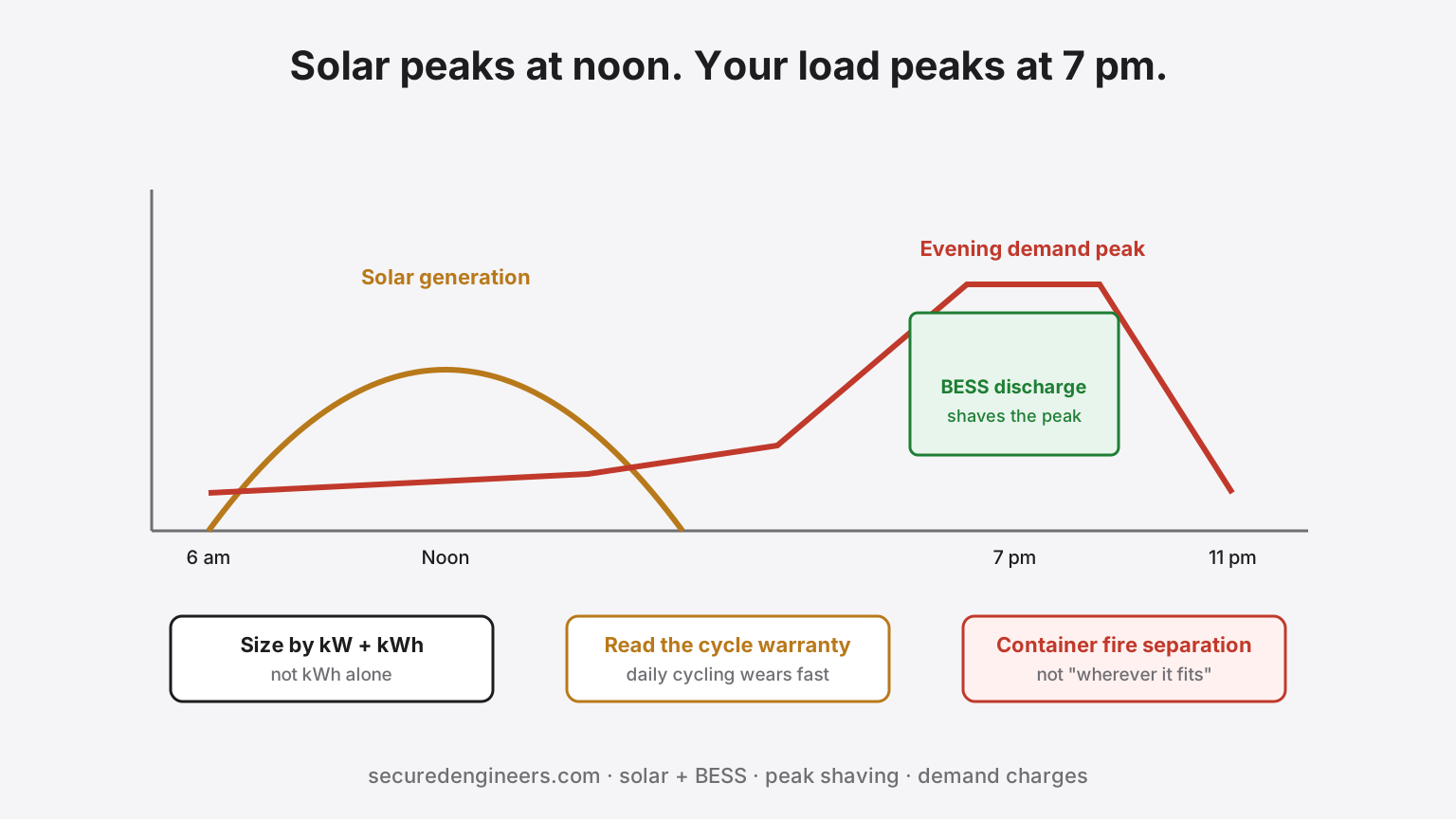
Rooftop solar has one structural weakness for a factory: it generates when the sun decides, not when your load peaks. A plant whose demand spikes at 7 pm — second shift ramping up, compressors and furnaces overlapping — gets nothing from an array that stopped producing an hour earlier. For years the answer was "run the DG" or "pay the demand charge." A Battery Energy Storage System (BESS) is the third answer, and in 2026 it has moved from conference-slide territory to something North Indian industrial buyers are genuinely pricing.
What a battery actually does for a factory's bill
- Peak shaving — the battery discharges during your highest-demand intervals, flattening the peak the DISCOM bills you on. Industrial tariffs bill contract demand and recorded maximum demand separately from energy; shaving the peak attacks a charge that solar alone never touches.
- Demand-charge and penalty avoidance — exceeding sanctioned or contract demand draws penal billing in most North Indian states. A battery that caps your recorded peak is effectively insurance against those exceedance months.
- Shrinking DG runtime — short outages and evening peaks that today force a DG start can instead ride through on stored solar energy. Diesel is consistently the most expensive unit of energy a factory buys — our DG vs grid vs solar cost comparison and DG running cost calculator put numbers on exactly how wide that gap runs.
- Time-of-day arbitrage — where ToD tariffs apply, charging from midday solar surplus and discharging into peak-rate evening hours stacks a second saving on top of peak shaving.
Why 2026 is the inflection point
Two things changed. First, lithium cell prices have fallen steadily for years, and the landed cost of containerised BESS in India has dropped to a level where industrial paybacks are measured in years, not decades — especially for facilities already paying demand penalties or running DGs daily. Second, solar-plus-storage hybrid tenders from central and state agencies have mainstreamed the technology: vendors, integrators and financiers who previously treated BESS as exotic now treat it as a standard line item, which shows up directly in quote quality and warranty terms available to private industrial buyers.
The three decisions buyers get wrong
| Mistake | What actually matters |
|---|---|
| Sizing by kWh alone | Power (kW) and energy (kWh) are separate ratings. A battery with plenty of kWh but insufficient kW cannot shave a sharp peak; one with high kW but thin kWh runs dry mid-peak. Size against your actual load curve, not a round number. |
| Ignoring cycle life and warranty terms | A battery cycled daily for peak shaving works far harder than a backup battery. Warranties are written around cycles, depth of discharge and throughput — a cheap quote with a weak cycle warranty is a battery you replace years early. |
| Treating the container as freight, not fire load | A lithium BESS container is a significant fire risk requiring separation distances, thermal-runaway detection and suppression planning — the same discipline covered in our lithium battery fire-safety guide. Parking it against the factory wall because that's where the cable run was shortest is how a battery becomes an insurance problem. |
Sizing it as a system, not a gadget
The right BESS size falls out of three curves laid on top of each other: your interval-metered load profile, your solar generation profile, and your tariff structure (demand charges, ToD slabs, penal rates). A battery sized without all three is guesswork — usually oversized on energy, undersized on power, and justified with an optimistic payback. The honest exercise is boring: a month or more of logged interval data, a realistic cycle count per day, and a warranty read closely enough to know what the battery is actually guaranteed to deliver in year eight.
What belongs in the RFQ, in writing
Because BESS is new territory for most industrial buyers, quotes arrive in wildly different shapes, and the differences hide in the annexures. Insist every bidder states usable energy at the system level (not cell-level nameplate, which round-trip losses and depth-of-discharge limits quietly shrink), continuous and peak discharge power, warranted throughput or cycle count at a stated depth of discharge, degradation curve to year ten, auxiliary consumption of the container's own cooling (a real running cost that thermally managed containers carry year-round), and the fire detection and suppression scheme with the separation distances the vendor's own manual demands. A quote that goes vague on any of these is a quote you cannot compare against the others — and the vagueness is rarely accidental. The same discipline applies to the balance of system: the paralleling switchgear, protection settings and DISCOM intimation requirements for a grid-interactive battery are electrical engineering scope, and the projects that go badly are usually the ones where nobody owned that scope.
Where this fits an existing solar plant
If you already have rooftop solar, BESS is an add-on decision: the inverter architecture (AC-coupled retrofit vs DC-coupled) is settled by what's on your roof today. If you're planning solar now, deciding on storage-readiness at design stage — inverter selection, spare panel capacity, container placement earmarked with fire separation in mind — costs almost nothing and keeps the option genuinely open. Our Solar EPC team designs both paths, with 15+ years of industrial electrical work behind the fire-safety and switchgear side that battery vendors typically leave as "by others."
More insights
Your Factory Has a Reservoir, an ETP Pond, or a Cooling Tank. That's Roof Area You Haven't Counted.
Floating solar puts panels on water instead of roof or ground — a genuine option for factories, textile mills and campuses that already have a reservoir, effluent pond or cooling water body. It isn't free capacity, though: anchoring, water quality and access all add real engineering that a roof-mount quote doesn't have to price.
Solar EnergyGreen Hydrogen Needs a Lot More Solar Than the Slide Deck Shows.
Green hydrogen — solar power run through an electrolyzer to split water — is the path being discussed for decarbonising steel, fertiliser and other hard-to-electrify heavy industry. For most Indian industrial buyers today it's a genuine future direction, not a retrofit decision, and the honest reason why is the scale of solar capacity it actually requires.