
MEPF for WHO-GMP Pharma: The Audit Is Won in the Services Design
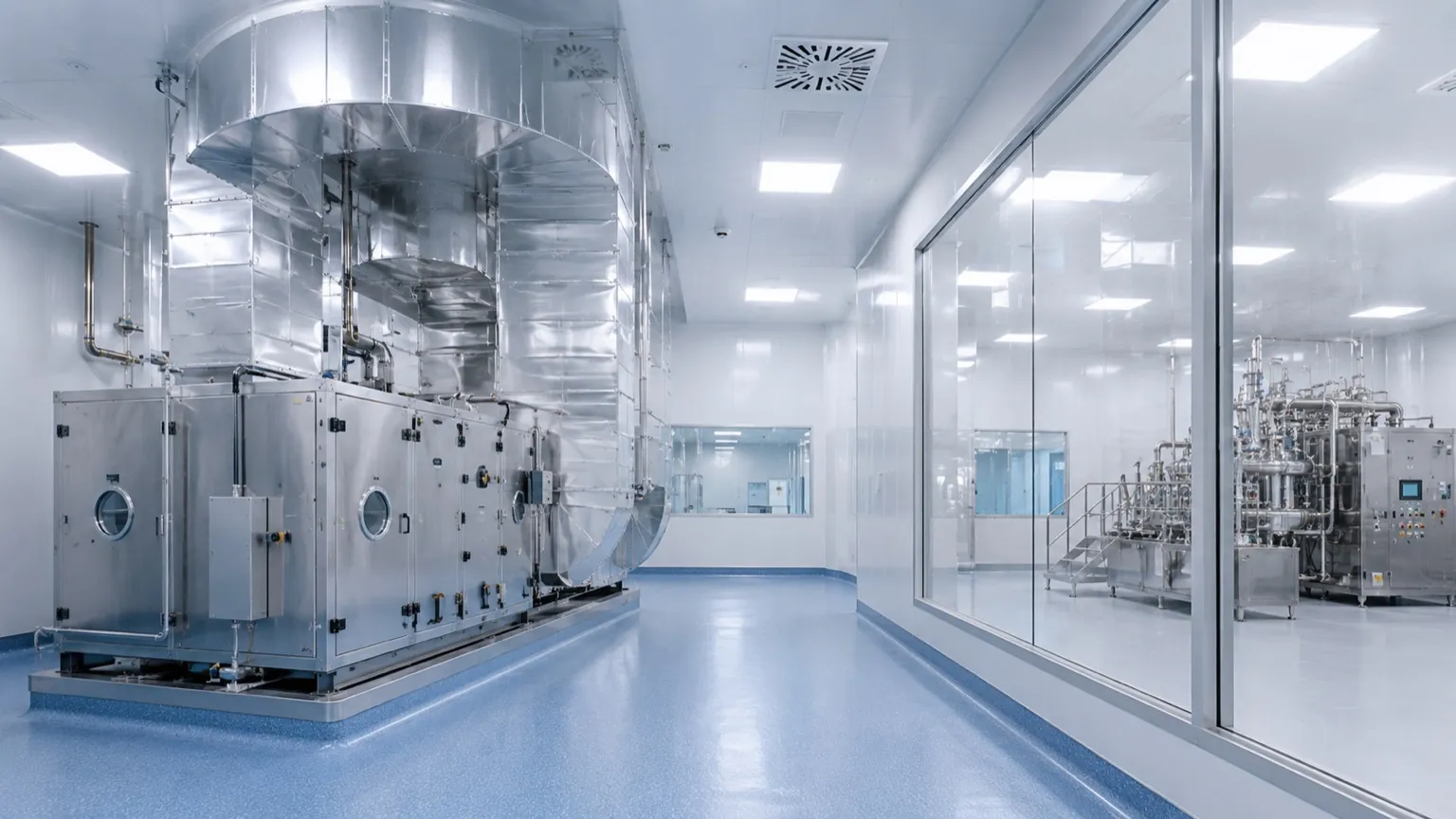
Most pharma plant owners obsess over the civil structure. The real compliance risk sits elsewhere: in your MEPF systems. In a regulated facility, HVAC pressure cascades, cleanroom classification and fire design decide whether you pass — or fail — a WHO-GMP audit.
A ₹5 crore+ WHO-GMP facility, in practice
On a recent ₹5 crore+ pharma project, our engineering team designed and executed the full services scope:
- HVAC with AHU zoning for cleanroom classification (ISO Class 7 & 8), holding the pressure cascade that GMP depends on.
- Fire detection & suppression designed to NBC 2016.
- Electrical distribution with DG-synchronised panels rated for 24/7 pharma operations.
- Plumbing with WFI-grade piping isolation to protect process water integrity.
The result: zero non-conformances in the WHO-GMP pre-audit.
The insight most contractors miss
Your MEP contractor must understand pharma process flows — not just plumbing layouts and duct routes. The HVAC pressure cascade alone can make or break your GMP status. If you are planning a pharma, food-processing or cleanroom facility, the MEPF scope is where your compliance — and your ROI — actually lives.
Planning a regulated facility? Talk to our team about cleanroom HVAC and turnkey MEPF.
Related services
More insights
UPS Planning for Critical Factory and Office Loads: Size the Gap, Not the Outage
A UPS earns its cost in the seconds and minutes between a disturbance and the DG or grid taking over. Plan it from a load and autonomy schedule, keep the load within both its kW and kVA limits, choose topology and bypass for the duty, and size the battery for its end of life.
Costing & ProcurementThe AC Failed in Month 11 of a 12-Month DLP. Is That a Defect, or Just... Life?
The defect liability period sounds simple: the contractor fixes anything that goes wrong for 12 months after handover. In practice, 'goes wrong' is exactly where owner and contractor start disagreeing — is a filter clog a defect or routine maintenance the owner skipped? Is a compressor failure a manufacturing fault or normal wear? The DLP works only when 'defect' is defined before it's argued about.
More on HVAC & Mechanical · all insights