
Delhi NCR Is Not One Jurisdiction. Your MEP Approvals Prove It.
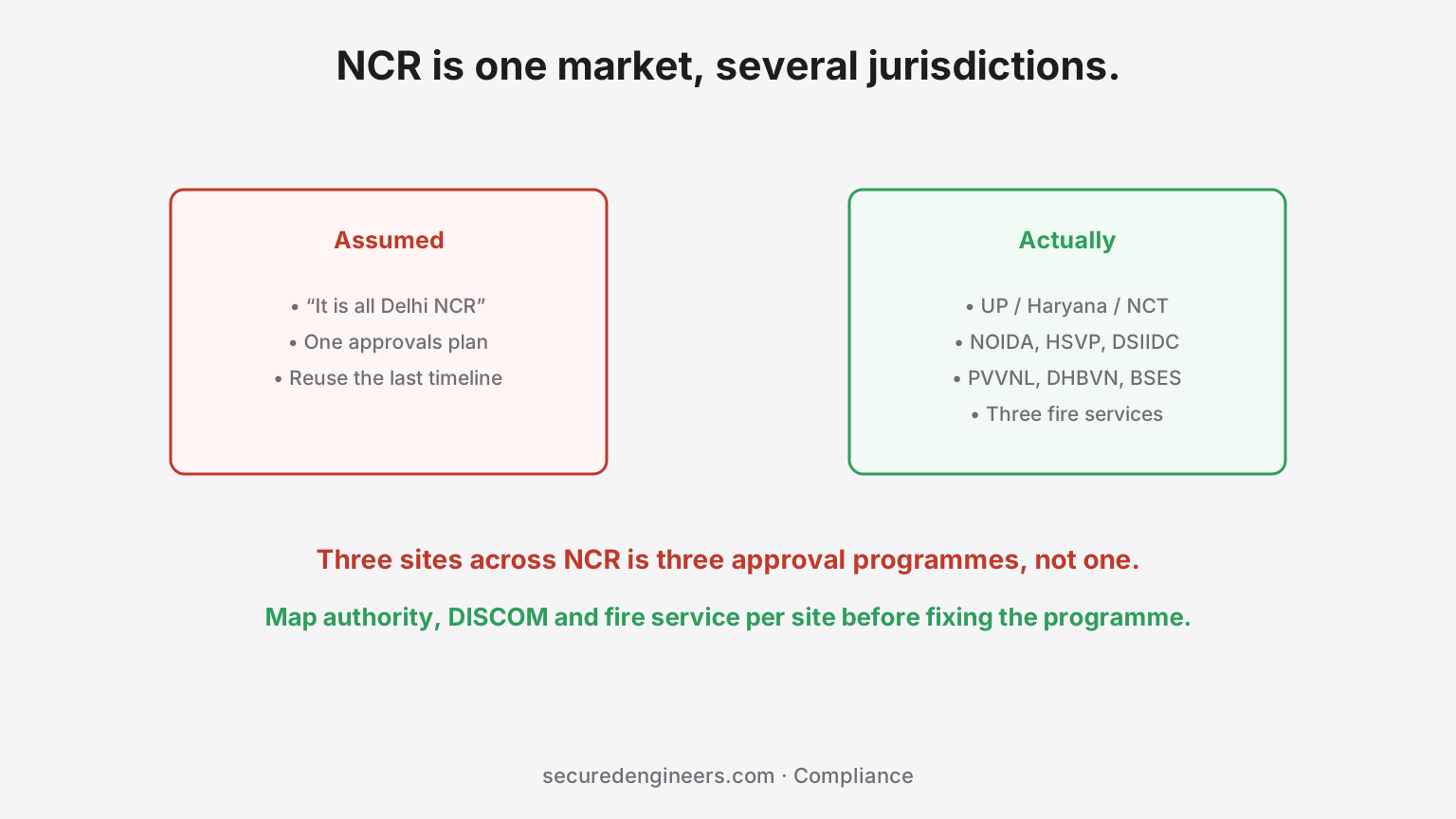
"Delhi NCR" is a commercial region, not an administrative one. It reads as a single market, and for MEP approvals it behaves as several — Uttar Pradesh, Haryana and the NCT of Delhi, each with its own building authority, its own electricity distribution company and its own state fire service.
A company that cleared approvals smoothly in Noida and assumes Gurugram will run the same way is planning against the wrong facts.
What changes as you cross the boundary
| Location | State | Typical building authority | Electricity |
|---|---|---|---|
| Noida / Greater Noida | Uttar Pradesh | NOIDA / GNIDA | PVVNL / NPCL |
| Ghaziabad | Uttar Pradesh | GDA / local body | PVVNL |
| Gurugram / Manesar | Haryana | HSVP / DTCP, HSIIDC in IMTs | DHBVN |
| Faridabad / Ballabgarh | Haryana | HSVP / local body | DHBVN |
| Delhi (Okhla, Bawana, Mayapuri…) | NCT of Delhi | DSIIDC / MCD / DDA | BSES / TPDDL |
Fire NOC follows the state as well — Uttar Pradesh, Haryana and Delhi Fire Service each administer their own law and process. So does electrical inspectorate approval, and so does pollution-board consent.
What this does to a programme
- Timelines are not transferable. A schedule built on last year's Noida experience is not evidence for Gurugram. Different authority, different queue, different query practice.
- Documentation differs. The same fire scheme may need repackaging to another state's expectations. The engineering carries across; the submission does not.
- The DISCOM changes the electrical programme. Sanctioned load, metering and net-metering all run through a different utility with different practice.
- Industrial-estate authorities add a layer. In an HSIIDC estate or a NOIDA industrial plot, the estate authority sits alongside the statutory approvals, with its own building-plan sanction.
- Contractor familiarity is location-specific. "We work all over NCR" can mean genuine multi-state experience or one state plus optimism — worth asking which authorities they have personally filed with.
The mistake that costs most
Running a multi-site NCR rollout on one approvals plan. A company opening three facilities across Noida, Gurugram and Delhi has three approval programmes, not one with three addresses — and the critical path is usually set by whichever site's authority is slowest, not by construction.
The related error is sequencing: treating approvals as a parallel workstream that runs alongside construction and lands when needed. Some clearances gate others, and where a plan approval is meant to precede construction, discovering that after the shell is cast means changing built work.
Plan the approvals per site
Map each site's authority, DISCOM and fire service before the programme is fixed, and sequence the clearances against each other rather than assuming they run in parallel. The full ordering is in our industrial approvals roadmap, state-by-state fire practice in the Fire NOC guide, and location detail for Noida and the wider region on our location pages. Authority practice changes — confirm current requirements for your specific plot.
What we do differently
We hold the approvals in-house under Design & Approvals across UP, Haryana and Delhi rather than sub-contracting them locally, and sequence them per site against the construction programme — so a three-site NCR rollout runs as three plans, which is what it actually is.
Frequently asked
Why do MEP approvals differ across Delhi NCR?
Because crossing an NCR boundary changes the state, the building authority and the electricity utility at the same time. Noida and Greater Noida sit in Uttar Pradesh under NOIDA/GNIDA with PVVNL or NPCL supply; Ghaziabad, Gurugram, Faridabad and Delhi each combine a different authority with a different DISCOM. The building may be twenty kilometres away; the approval process is not the same one.
Can I reuse a Noida approval timeline for a Gurugram project?
No. Timelines are not transferable — a schedule built on last year's Noida experience is not evidence for Gurugram. Different authority, different queue, different query practice. Programmes that assume otherwise lose the difference as slippage.
What does the authority maze do to a project programme?
It breaks the assumption that approval duration is a fixed input. Each jurisdiction has its own queue and its own query practice, so the same documentation can clear quickly in one and bounce in another. The planning fix is to treat approvals as a per-jurisdiction path rather than a single sitewide duration.
More insights
The New Shed Is Easy. It's Your 1998 Building That Fails the Inspection.
You add one line, one shed, one mezzanine — and suddenly the fire officer is asking about hydrants your 1998 building never had. Why brownfield expansions in Ludhiana, Faridabad and the NCR belt trigger whole-site compliance, and how to expand without opening a Pandora's box.
ComplianceYou Have a Valid Fire NOC. It Does Not Cover What the Building Is Now.
A Fire NOC is issued against a specific building, occupancy and fire scheme. Add a mezzanine, raise the racking, change what you store or convert a shed — and the NOC you hold may no longer describe the building you have.