
Rooftop solar without roof leaks — penetrations, ballast and the monsoon test
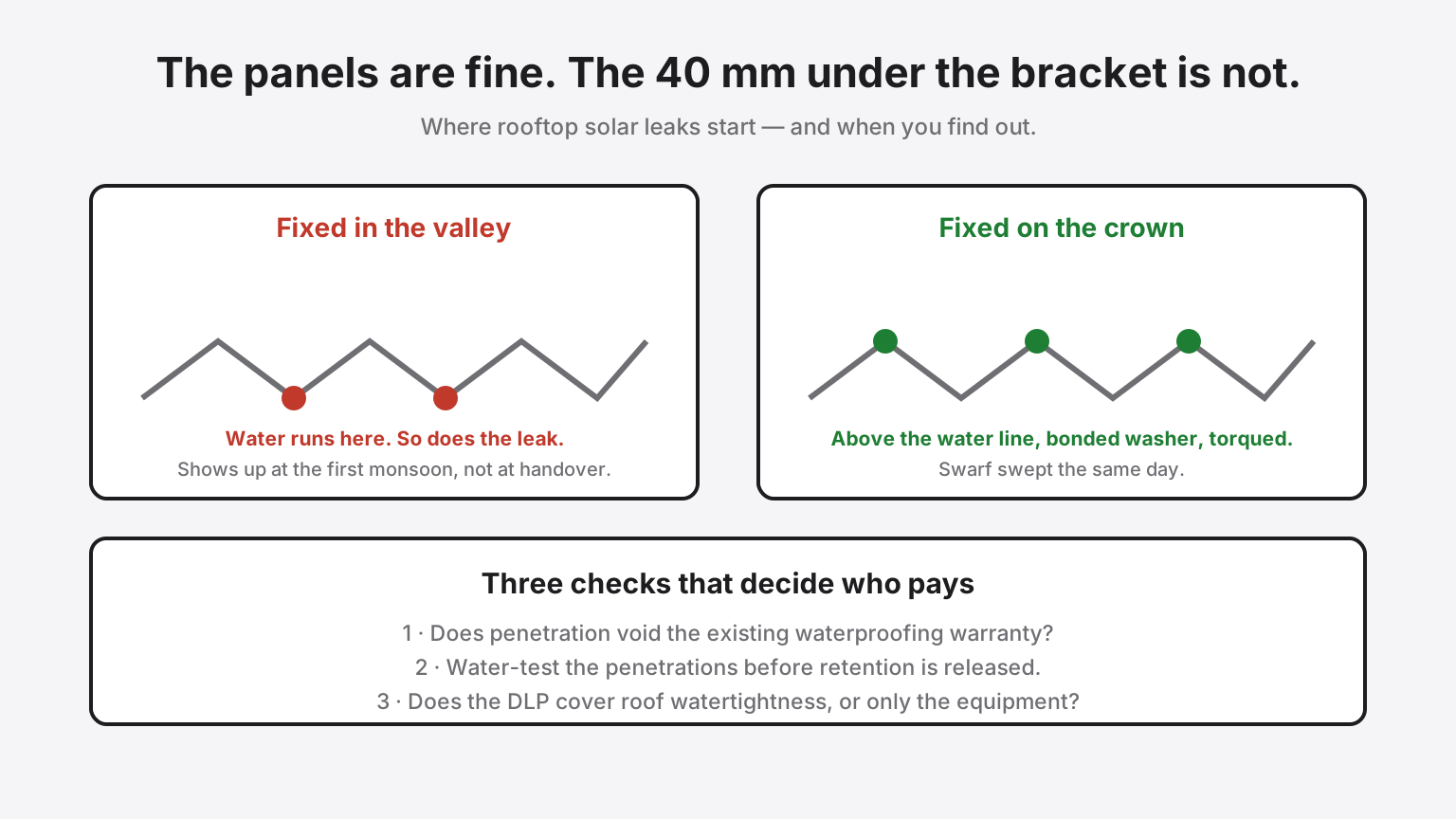
Rooftop solar has one failure that owners never see in a proposal and never forget once it happens: the plant generates perfectly, and the roof underneath starts leaking. It rarely shows at handover. It shows at the first serious monsoon — by which time the crew has demobilised, the retention is released, and the conversation has become a claim.
The engineering under the panels gets discussed endlessly. The 40 millimetres where a bracket meets the roof almost never does. That interface is where the money leaks out.
Every mount is a hole in a working roof
A rooftop array is anchored one of two ways, and the choice is not a preference — it is dictated by the roof.
| Penetrated (bolted) | Ballasted (non-penetrative) | |
|---|---|---|
| How uplift is resisted | Transferred into the structure through fixings | Mass and friction holding the array down |
| Added dead load | Low | High — often the deciding constraint |
| Waterproofing risk | Every fixing is a hole to seal and maintain | No new holes; risk moves to membrane wear and drainage |
| Typical fit | Metal sheet roofs; slabs with no load headroom | Sound RCC roofs with structural capacity to spare |
| Warranty friction | May void an existing waterproofing warranty | Usually preserves it |
Before either conversation is worth having, you need to know what the roof can carry. Run a first number with the solar roof load calculator, and if the building is not new, read what old roofs do under solar loading — because ballast solves a waterproofing problem by creating a structural one.
The detail, by roof type
Trapezoidal metal sheet
The single most common industrial roof and the one most often got wrong. Fixings belong on the crown of the profile, never in the valley where water runs. Fasteners need bonded sealing washers — an EPDM-backed washer compressed correctly, not over-torqued until it deforms and not left loose enough to breathe. Self-drilling screws into thin sheet without the right pilot behaviour will spin, widen the hole and guarantee a leak in year two.
Where a rail crosses a lap joint, the detail has to respect the lap, not bridge it. And every drilled hole produces swarf: hot steel filings left on a coated sheet rust into it and stain, then pit. Sweeping the roof at end of shift is not housekeeping — it is corrosion control.
RCC slab
Chemical anchors or cast-in inserts, sleeved and collared, with the waterproofing membrane dressed up and terminated above the finished water line rather than cut flush around a bolt. The failure here is subtle: the seal is fine on day one and fails at the third summer, because a rigid sealant was asked to absorb thermal movement between a steel pedestal and a concrete slab it is bonded to.
Where an existing waterproofing system is in place, the sequencing matters more than the product. Penetrate first, then re-waterproof around the pedestals — not the reverse.
Asbestos and fragile sheeting
Treat as a safety question before a waterproofing one. Fragile roofs need crawler boards and fall protection, and in many cases the honest answer is that the roof should be replaced before an array with a 25-year life is bolted onto it.
The warranty trap
This one costs owners real money and is entirely avoidable. If your roof carries a waterproofing or sheet warranty, read its terms before design freeze. A great many are void if the covering is penetrated by anyone other than the original applicator. Discovering that after the array is installed leaves you with a roof you can no longer claim against and a solar contractor whose scope stopped at the bracket.
The clean fix is contractual, not technical: have the waterproofing contractor execute or formally witness the penetrations, and record it. It costs a site visit and preserves a warranty worth lakhs.
Drainage is the half nobody checks
An array changes how water moves across a roof. Rails and modules interrupt sheet flow, ballast blocks channels, and cable trays make convenient dams. Leaves and dust collect on the upstream side of every obstruction, and by the second monsoon a rainwater outlet that used to run clear is holding water against a membrane joint.
Ponding is what turns a small detailing defect into a leak. Check that outlets remain accessible after the array is built, that nothing blocks the fall, and that there is a maintenance route to reach them. The same logic that governs stormwater failures at ground level applies twelve metres up.
Test it before you accept it
The test that settles this is unglamorous: flood or spray the penetrated zones and inspect the underside before handover. Do it while the contractor is still mobilised and the retention is unreleased — that is the entire point.
Two practical notes. A plant commissioned in February will not be rain-tested by nature until June, so schedule an explicit pre-monsoon re-inspection inside the defect liability period rather than waiting for the weather to run the test for you. And insist the DLP wording covers roof watertightness at the penetrations, not just the solar equipment — a defect liability period that excludes the roof is exactly the clause that fails you. The wider point is the one made in what to check in a performance guarantee: a promise with no remedy attached is a sentence, not a guarantee.
What good looks like on site
- Fixings on crowns, never valleys, with bonded washers torqued to spec — not by feel.
- Swarf swept the same day, before it rusts into the coating.
- Sealant chosen for movement, not for being what was in the van.
- Penetration schedule recorded — how many, where, sealed by whom, on what date.
- Walkways and access so future O&M does not mean stepping on modules or crushing a seal. Cleaning and thermography inspections happen for 25 years; the roof has to survive them.
The takeaways
- The array is not the risk — the interface is. Nearly every rooftop solar leak traces to a fixing detail, not to the solar equipment.
- Check the waterproofing warranty before design freeze. Penetration by others voids many of them, and it cannot be undone after drilling.
- Water-test before handover, re-inspect before the first monsoon. Rectification is the contractor's while they are still mobilised and retention is unreleased.
Planning a rooftop array on a building you intend to keep? Book a Free Project Blueprint & Statutory Approvals Roadmap — we survey the roof, not just the roof area — or call +91 70099 85817. If you are still shortlisting contractors, start with how to choose a solar EPC company, or see how we deliver solar EPC.
Frequently asked
Does rooftop solar damage your roof?
Properly detailed, no — the mounting system should outlive the roof covering under it. Damage comes from execution, not from solar itself: unsealed or badly sealed penetrations, fasteners without bonded washers, drilling through a sheet profile at the wrong point, or ballast concentrated on a slab that was never designed for it. The failure almost always appears at the first heavy monsoon, not at handover.
Is ballasted or penetrated mounting better for rooftop solar?
Neither is universally better. Ballasted (non-penetrative) systems avoid holes but add dead load and rely on friction and mass against wind uplift, so they suit sound RCC roofs with structural headroom. Penetrated systems transfer uplift into the structure and suit metal sheet roofs and constrained slabs, but every fixing is a hole that must be sealed and stay sealed. The roof type, its condition and the wind-load basis under IS 875 (Part 3) decide it.
Will installing solar void my roof waterproofing warranty?
It can. Many waterproofing and sheet-roof warranties are conditional on the membrane or sheet not being penetrated by others. Check the warranty terms before design freeze, not after drilling — and where a warranty exists, get the waterproofing contractor to carry out or witness the penetrations so cover survives.
How do you test for leaks before handover?
Flood or spray test the penetrated areas and inspect the underside before the plant is handed over, and again after the first heavy rain within the defect liability period. A pre-monsoon test on a plant commissioned in February is the difference between a rectification the contractor performs and one you pay for two years later.
Related services
More insights
Carport Solar for Factory and Office Parking: Structure, Cost Premium and Payback
When solar carports for factory and office parking make sense: what the steel structure adds, how to size a canopy, what the Government's EV charging guidelines say, approvals, and how to test the payback.
Solar EnergySolar Tender BOQ Format for an Industrial Rooftop Plant: A Paste-Ready Structure
A ten-section BOQ structure for an industrial rooftop solar tender, with units, what to specify, where lump sums hide risk, what bidders should attach and how to compare the bids against the published cost band.
More on Solar & Renewables · all insights