
Common problems we find in existing fire pump rooms
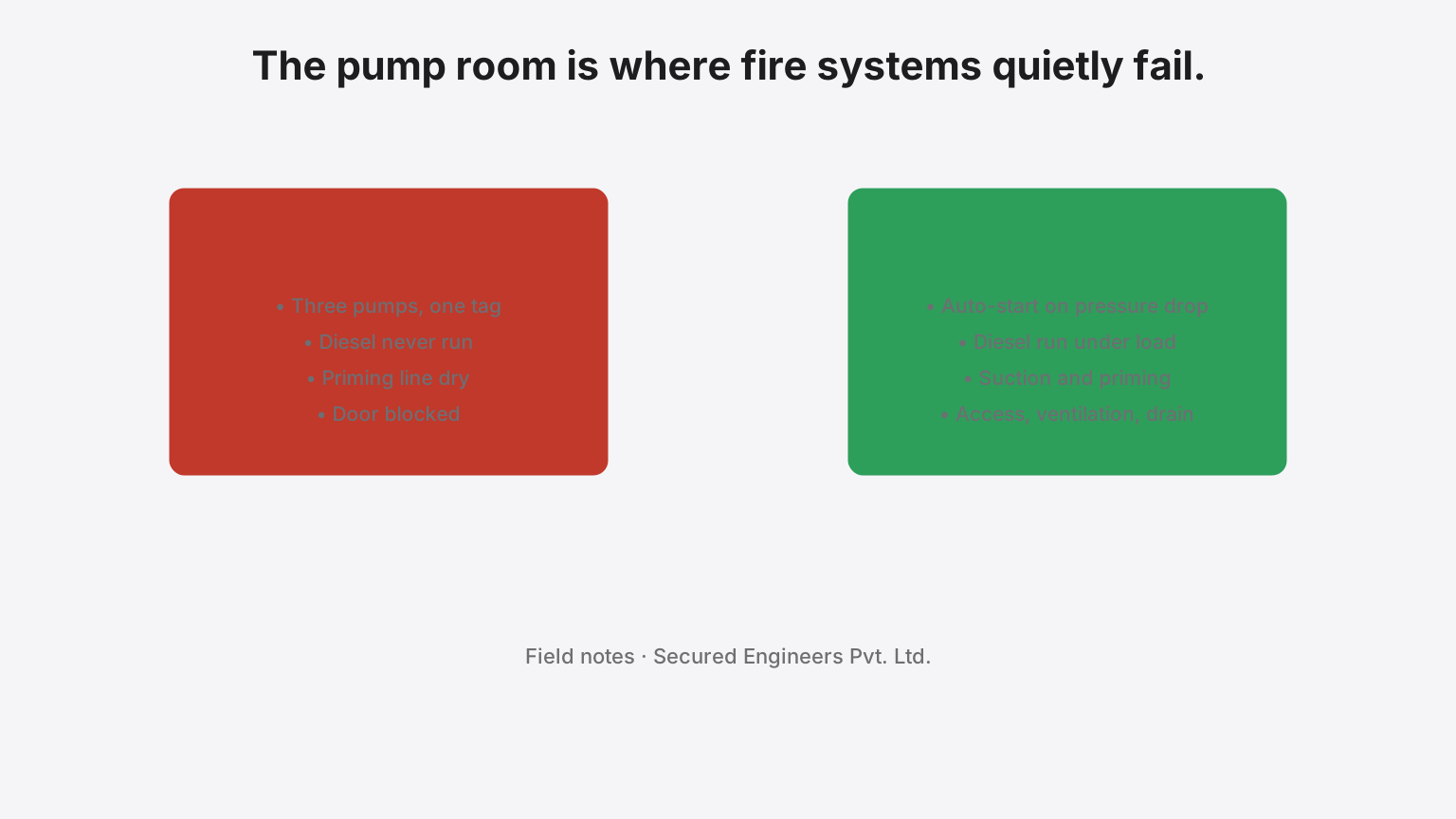
A fire pump room looks finished long after it has stopped being reliable. Three sets, a header, a controller with lights on — and no evidence any of it will start on a pressure drop with the fire officer watching. This is what our engineers check when they take over an existing pump room for an AMC, an audit or a renewal, and the kinds of problem they find.
What we check
- Auto-start on pressure drop. We open a hydrant and watch: the jockey should hold, the electric main should start on the first drop, the diesel on a further drop or on failure of the main. If the controllers are in manual, or the pressure switches are set so that nothing starts, the system is manual — which in an emergency means off.
- The diesel set under load. Run for the duration the standard requires, with a discharge: batteries, fuel, cooling water or radiator, exhaust, and the engine controller's alarms. A diesel that starts and is switched off in thirty seconds has not been tested.
- Suction and priming. Whether the suction is flooded from the tank; if not, whether the priming tank or line exists, is full and works. A pump that cannot prime cannot pump.
- Pressure and flow against the curve. Gauge readings at the pump against the nameplate curve, and pressure at the remote hydrant with the pump running.
- The tank connection and level. Whether the tank holds the approved capacity and the suction is connected as drawn; whether the level is monitored; whether the domestic draw-off is above the fire reserve.
- Valves, header and the brigade inlet. Every valve in the position it should be in, tagged and locked where required; the header pressure-tested; the fire-brigade inlet reachable.
- The room itself. Access, lighting, ventilation and exhaust for the diesel, drainage, and whether the room has become a store.
- Records. The test logbook, the last inspection report, the AMC visit reports, the pump curves. The absence of a record is treated as the absence of the test, by us and by the inspector.
What we commonly find
- Controllers left in manual or bypassed after a nuisance start.
- Diesel standby never run under load; batteries flat; fuel degraded.
- Priming line dry or disconnected; a pump that cannot draw from the tank.
- Pressure switches set so that the jockey does all the work and the main never starts.
- Tank capacity reduced by a later domestic connection, or a tank that was never filled to the approved level.
- No logbook, so the renewal inspection starts from zero.
- The room used as storage; the diesel exhaust disconnected; the door locked with the key elsewhere.
What follows
A condition report with the readings, the defects in order of consequence, and what it takes to restore the room to what the NOC was granted against. The pump-room page describes the arrangement a room should have; the layout mistakes that make rooms hard to maintain are a separate piece. Under an AMC the tests above are run on a schedule and logged, which is what the renewal depends on.
Frequently asked
How often should a fire pump be tested?
The pump auto-start and the diesel run should be tested at the interval the State Fire Service and the AMC schedule require — commonly weekly for the auto-start and monthly under load — and logged. The renewal inspection asks for the log.
What is the most common fire pump room fault?
A diesel standby set that has never been run under load: batteries flat, fuel stale, cooling never proven. It looks complete and does nothing on the day.
Related services
Guides that reference this page
- Fire Pump Set for a Factory: Duty, Standby, Jockey and Cost Drivers
- Fire Pump Room Planning and Retrofit Checklist
- Fire NOC for a Factory in Tamil Nadu: TNFRS Process and Documents
- Fire NOC for a Factory in Telangana: TG-iPASS Route and Fire Services Process
- Fire NOC for a Hospital: Occupancy Rules, Systems Required and the Inspection
- Fire NOC Renewal for a Factory: Timelines, Documents and Why Renewals Fail
Related on this site
- termJockey Pump
- termSprinkler K-Factor
- termFire Extinguisher Rating
- serviceGas & Special-Hazard Suppression (Fire Protection)
- serviceFire Pumps & Pump Room (Fire Protection)
- calculatorMEP Maintenance Budget Calculator
- calculatorSprinkler Calculator
- buyer's guideHow to Evaluate Fire Protection Quotes
- guideFactory approvals roadmap, India
- guideCLU for industrial land
More on Fire Safety · all insights