
A Digital Twin Is Not a 3D Model. It Is a Live Data Obligation.
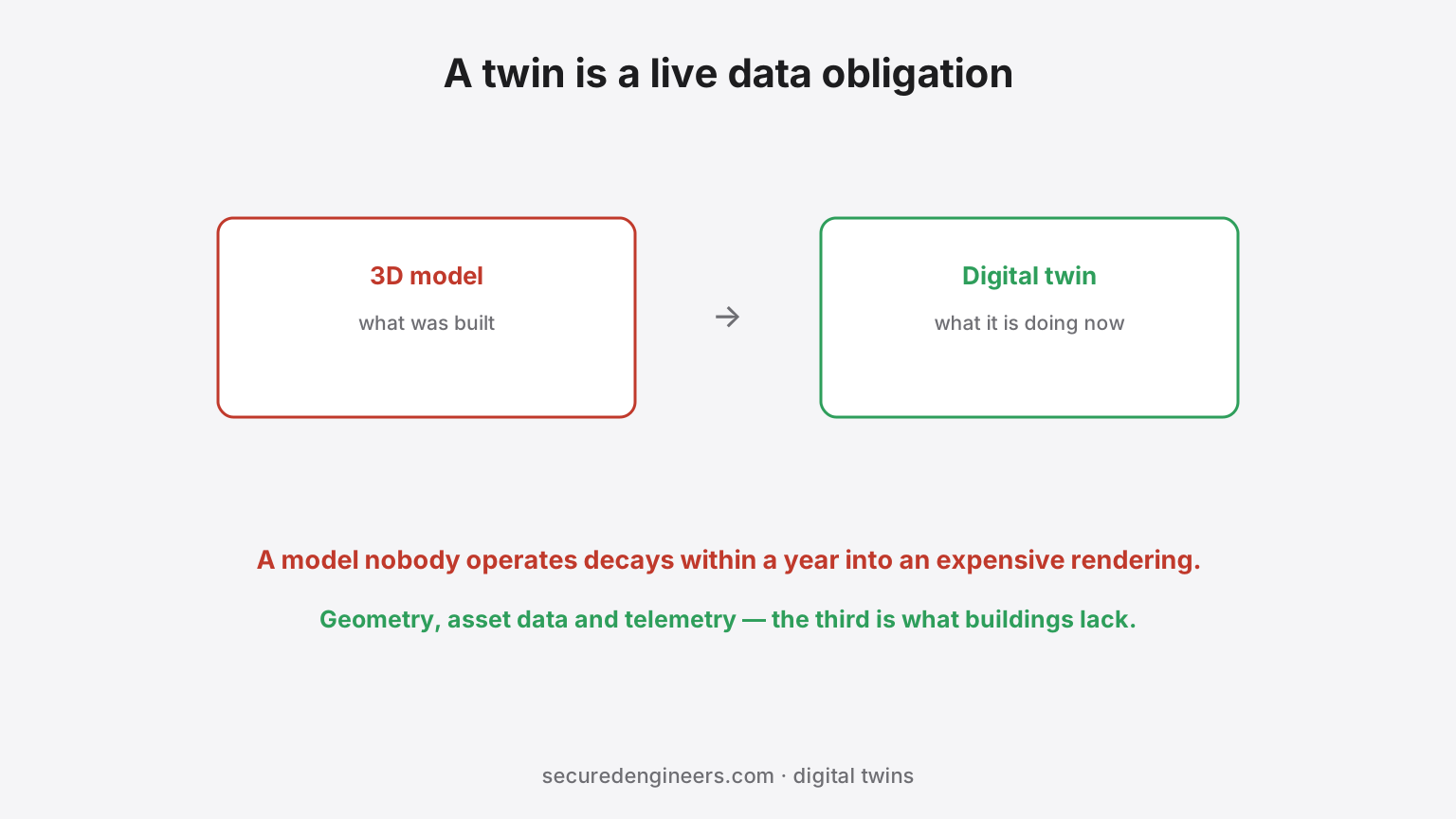
"Digital twin" gets used for anything from a rendered walkthrough to a full simulation environment. For a facilities team the distinction that matters is simple: a 3D model tells you what was built; a twin tells you what it is doing right now. The second requires the first, plus live data, and the live data is the hard part.
The three layers, and where each usually breaks
- Geometry. An as-built model that reflects the building as constructed, not as designed. This breaks when site changes are never fed back into the model — which is the normal outcome unless someone is contractually responsible for it.
- Asset data. Every plant item carrying make, model, rating, install date, warranty and service interval. This breaks when handover documentation is a folder of PDFs rather than structured data, which is what the commissioning handover gap produces.
- Live telemetry. Readings from BMS, energy meters, and sensors, arriving continuously. This breaks when the building was never metered at the granularity the twin needs — you cannot visualise consumption per zone if consumption is measured at one incomer.
What it needs from the MEP installation
| Requirement | Why it has to be decided at design stage |
|---|---|
| Sub-metering granularity | Retrofitting meters into a live panel is a shutdown, as in sub-metering economics |
| BMS points list and open protocol | A closed proprietary system limits what can ever be read out |
| Sensor coverage | Temperature, pressure, flow and CO₂ points have to be installed, not inferred |
| Network and cabling to plant | Comms containment is cheap with the electrical package, expensive later |
| Structured asset register at handover | Data, not scanned manuals |
What it is genuinely good for
Two things repay the effort. Energy attribution — knowing which system, zone or tenant is consuming what, which turns an energy bill into a list of actions. And maintenance decisions — trending a chiller's approach temperature or a pump's power draw shows degradation before failure, which is the same logic as AFDD-based predictive maintenance applied to mechanical plant.
What it is not good for is impressing people in a boardroom, which is unfortunately the use case it is most often bought for. A twin nobody operates decays within a year into an expensive rendering.
The honest test before commissioning one
Ask who will act on it. If there is no named person whose job includes reading it weekly, and no budget line for keeping the model and asset data current, the project will produce a snapshot rather than a twin. That is a legitimate thing to buy — just buy it knowingly.
What we do differently
Where a twin is intended, we design the metering and BMS points list for it under ELV systems rather than retrofitting instrumentation afterwards, and hand over asset data in structured form as part of testing & commissioning.
More insights
The Duct and the Beam Both Fit. On Separate Drawings.
Every services trade produces a layout that works in isolation. They only conflict once installed — and on a 2D workflow that discovery happens on site, with steel already up. Clash detection moves the argument to a screen, where changing it costs nothing.
Design & CoordinationYour Municipality Already Auto-Checks the Building Envelope. It Doesn't Auto-Check Your MEP.
Many Indian municipal corporations now run Auto-DCR software that automatically checks a building's plan against local byelaws — setbacks, FAR, height. It's a genuine, useful system. It's also not an MEP code-checker, and treating BIM as if it feeds an automated MEP approval process overstates where the technology actually is today.