
How we approach an MEPF BOQ review for industrial projects
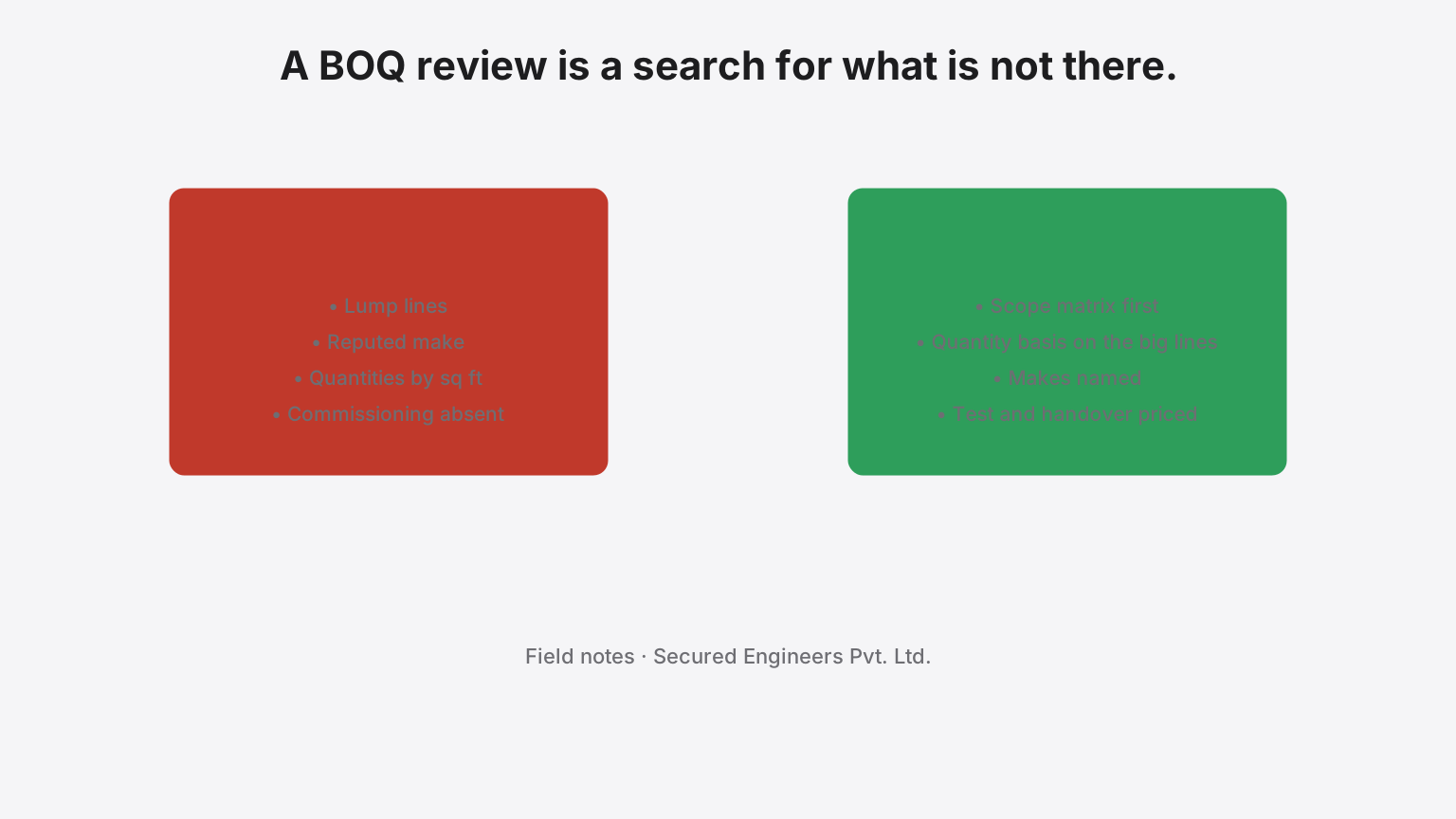
Most BOQ reviews start with the rates. Ours start with what the bill does not contain, because on an industrial project the money is lost in the missing line, not the mispriced one. This is the order our estimating office works in when a client sends a BOQ — theirs, a consultant's or a bidder's — for review.
1. Scope matrix before any rate
Every element of the work in rows; the BOQ's treatment of it — included, excluded, silent — in the column. The rows that decide the review: design; statutory approvals and their fees; owner-supplied items; testing, adjusting and balancing; integrated commissioning; as-builts and the O&M dossier; civil interfaces — plinths, trenches, sleeves, core cutting, fire-stopping; site power, water, storage and scaffolding; the defect-liability period. "Silent" is marked in red. It is where the variation orders live.
2. Design basis — whose loads is this bill built on?
An MEPF BOQ is priced to a design basis: a heat load, an electrical load list, a fire hazard class, a water demand. We ask for it. If the basis came from the client's brief, the bill is checkable; if it came from the bidder's own assumption, every bidder has priced a different building and the bills are not comparable until the basis is fixed.
3. Quantity basis on the five largest lines
Cable, pipe, duct, sprinkler heads and light fittings usually carry most of the value. For each we ask how the quantity was arrived at: measured from drawings, or a metres-per-square-foot figure. On an item-rate contract the quantity is the client's risk; on a lump sum it becomes a claim. The 470-metre argument is what an unmeasured cable line turns into.
4. Makes, named or not
For the major plant — chillers, transformers, switchgear, DG sets, fire pumps, inverters and modules — the make and model, or "reputed make". A bill that does not name the make has handed the specification to whoever prices lowest, and it cannot be compared with one that does.
5. Interfaces between trades
Where the HVAC contractor's electrical scope stops and the electrical contractor's starts; who supplies the BMS and who integrates to it; who provides fire dampers and who fire-stops the penetrations; who brings power to each item of plant. On an industrial project these are the lines that produce the site arguments, and a BOQ that does not settle them has priced the argument.
6. Commissioning and documentation, as lines
TAB, hydrostatic and electrical testing, the integrated fire cause-and-effect test, OEM commissioning attendance, as-built drawings, test certificates, O&M manuals and training. If they are not lines, they are not in the price — and they are the work that turns an installation into a system.
7. Exclusions and assumptions sheet
Read last, against the matrix from step one. Rate validity and escalation; "quantities subject to final measurement"; working hours and shutdown access on a live site; statutory fees. Each is a cost that will arrive from somewhere.
What we commonly find
- Approvals silent — the largest single gap on industrial bills.
- Commissioning and TAB absent from mechanical bills; relay testing and thermography absent from electrical bills.
- Cable and duct quantities from floor area, not drawings.
- Fire scheme "as per norms" with no hazard class stated.
- Passive fire protection — dampers, fire-stopping, doors — priced by nobody.
- "Reputed make" on the lines that carry the most value.
What the review produces
The matrix with the gaps priced at the rates the bill itself uses, a list of the questions to put to the bidder, and — where the bill is a tender document — the changes that would make it a bill that cannot be gamed. The method for comparing quotations and the checklist version follow from it. A BOQ review is one of the technical reviews we offer.
Frequently asked
What is the first thing to check in an MEPF BOQ?
Whether the scope is complete — a matrix of every element of the work marked included, excluded or silent — before any rate is read. A perfect rate on an incomplete scope is the expensive quotation.
Can a BOQ be reviewed without drawings?
Partially. Scope, makes, exclusions and the presence of commissioning and documentation can be reviewed from the bill alone. Quantities cannot — a quantity is only checkable against the drawings it should have been measured from.
Related services
Guides that reference this page
- MEP Installation Quality Checklist: What a Client's Engineer Should Inspect Each Week
- Controlling MEP Variation Claims: Change-Order Rules That Keep the Budget Honest
- The Most Dangerous Electrical Installation You Will Ever Own Is the Temporary One
- Three Vendors, One Roof, Three Different Generation Figures.
- Your BOQ Said 1,000 M. Site Said 1,470 M. Who Pays for the Missing 470 M?
- Solar EPC for Factories in Andhra Pradesh: DISCOM Rules, Approvals and Cost
Related on this site
- termTurnkey EPC
- termModule Mounting Structure
- termOpen Access (Solar)
- serviceIntrusion, X-ray & Entrance Automation (Low Voltage / ELV)
- serviceRainwater Harvesting & Recycling (Plumbing)
- calculatorMEP Maintenance Budget Calculator
- calculatorSolar Net Metering Savings Calculator
- buyer's guideHow to Compare MEPF Quotations
- guideFactory licence and DISH approval
- guideCTE/CTO pollution consent
More on Project Delivery & Commercial · all insights